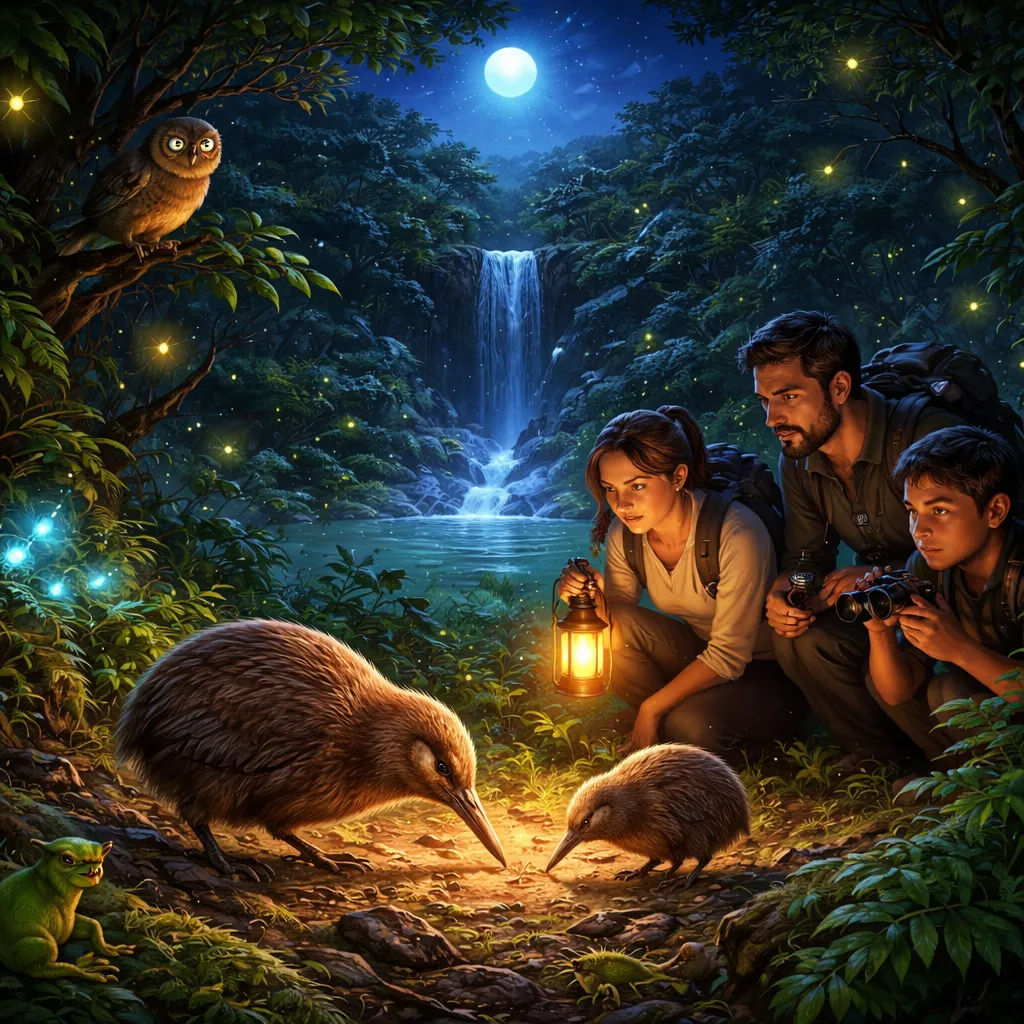

What Is This Animal?
A kiwi is a small, flightless bird with brown, fuzzy feathers that look like hair. It has a long, slender beak with nostrils at the tip. Its body is round. Its legs are strong. It has tiny wings hidden under its feathers. Kiwis are about the size of a chicken.
Kiwis are found only in New Zealand. They are the national bird of New Zealand. They are nocturnal. They sleep during the day in burrows. They come out at night to search for food. They have poor eyesight. They rely on their excellent sense of smell to find food.
These birds belong to a group called ratites. This group includes ostriches and emus. Kiwis are the smallest ratites. They cannot fly. Their wings are so small they are invisible under their feathers. They use their strong legs to run and dig.
For children, kiwis are delightful. Their fuzzy feathers and long beaks make them unique. Learning about kiwis teaches children about New Zealand wildlife, bird adaptations, and the importance of protecting endangered species.
English Learning About This Animal
Let us learn the English word kiwi. We say it like this: /ˈkiːwiː/. The ki sounds like “key.” The wi sounds like “wee.” Put them together: kiwi. Say it three times. Kiwi. Kiwi. Kiwi. The same word is used for the fruit and the bird.
Now let us learn words about a kiwi’s body. The beak is long and curved. The nostrils are at the tip of the beak. The feathers are brown and fuzzy. The legs are strong for running. The eggs are very large for the bird’s size. The chicks are baby kiwis.
There is a famous saying about kiwis. In New Zealand, people say, “The kiwi sleeps in the day and wakes when the moon rises.” This describes their nocturnal nature. Another saying is, “The kiwi’s egg is bigger than its heart.” This reflects how large the eggs are compared to the mother’s body.
These English words help children understand kiwi anatomy. When they say nostrils, they learn how kiwis smell. When they say chicks, they know the babies. Parents can practice these words while looking at pictures. Point to the parts. Say the words together.
Animal Facts and Science Knowledge
Kiwis belong to the ratite family Apterygidae. Their scientific name means “wingless.” There are five kiwi species. They are all found in New Zealand. Kiwis are one of the most ancient bird groups. They have existed for millions of years.
Kiwis live in forests, woodlands, and scrublands. They make burrows in the ground. They line their burrows with leaves. They have territories they defend. They are solitary birds. They only come together to mate.
Kiwis are omnivores. They eat worms, insects, berries, and seeds. They use their long beaks to probe the ground. Their nostrils at the tip help them smell food underground. They are the only birds with nostrils at the end of their beak.
Kiwis have special abilities. They have the largest egg relative to body size of any bird. A kiwi egg can be one-quarter of the mother’s body weight. The male sits on the egg. The egg takes about eighty days to hatch. Kiwis can live for fifty years.
Kiwis are endangered. Introduced predators like stoats, dogs, and cats kill many kiwis. Their habitat is disappearing. Conservation programs work to protect them. Many areas in New Zealand have predator control. Zoos have breeding programs.
How to Interact With This Animal Safely
Kiwis are wild and endangered. They are not pets. They are very shy. The best way to interact is to visit a kiwi sanctuary or zoo. Many places in New Zealand have special kiwi houses. You can see kiwis in dark, quiet environments that mimic their natural habitat.
Teach children to be very quiet around kiwis. Kiwis are sensitive to noise and light. In kiwi houses, follow the rules. Stay behind barriers. Do not use flash photography. Watch them forage and explore.
If you ever visit New Zealand, never try to find wild kiwis on your own. They are nocturnal and shy. Disturbing them can harm them. Join a guided tour if you want to see them. Guides know how to observe without disturbing.
Support kiwi conservation. Learn about organizations that protect kiwis. Share what you learn. Even from far away, we can help by learning and caring.
Kiwis need our help to survive. Learning about them is the first step. Telling others about them helps spread awareness. Protecting their habitat protects them.
What Can We Learn From This Animal
Kiwis teach us about being unique. They are birds that cannot fly. They have nostrils on their beak. Children learn that being different is special. What makes us different also makes us wonderful.
Kiwis teach us about adaptation. They live in forests. They hunt at night. Children learn that adapting to our surroundings helps us. Learning where we fit, what works for us, and how to use our strengths are all adaptations.
Kiwis teach us about family. The father sits on the egg. He protects the chick. Children learn that families come in many forms. Mothers, fathers, and caregivers all help raise children.
Kiwis teach us about conservation. They are endangered. They need protection. Children learn that we can help animals. Learning, sharing, and caring for nature make a difference.
Fun Learning Activities
Let us make learning about kiwi fun. One activity is the kiwi sniff game. Ask your child to walk like a kiwi. Tap the ground with a long nose. Smell for food. Find worms and berries. Say “kiwi sniffs” and “kiwi finds food.”
Another activity is drawing a kiwi. Look at pictures of kiwis. Notice the fuzzy feathers, long beak, and round body. Draw a kiwi in the forest at night. Add a large egg beside it. Label the parts. Say the words aloud.
Create a story about a kiwi father. Ask your child what the father does. Does he sit on the egg? Does he protect the chick? Do they hunt at night together? Write a few sentences together. Let your child draw pictures. Read the story aloud.
Make a kiwi craft. Use brown yarn or fuzzy paper for the feathers. Add a long beak. Add strong legs. Add a large egg. Move the craft kiwi. Practice saying “kiwi sniffs” and “father kiwi guards the egg.”
Learn about New Zealand animals. Talk about other animals that live in New Zealand. Compare kiwis to other flightless birds. Use words like “endemic,” “nocturnal,” and “conservation.”
Learn about bird adaptations. Talk about why kiwis have nostrils on their beak. Compare to other birds that hunt by smell. Use words like “adaptation,” “scent,” and “nocturnal.”
These simple activities bring learning to life. Children build English vocabulary while playing. They learn science through understanding bird adaptations. They develop awareness through learning about endangered species. Learning about kiwi becomes a journey to the forests of New Zealand. Each moment spent together strengthens language, curiosity, and a growing appreciation for the fuzzy, long-beaked birds that teach us that being different, adapting to our world, and protecting what is rare are some of the most important lessons of all.