
Who Is This Celebrity?
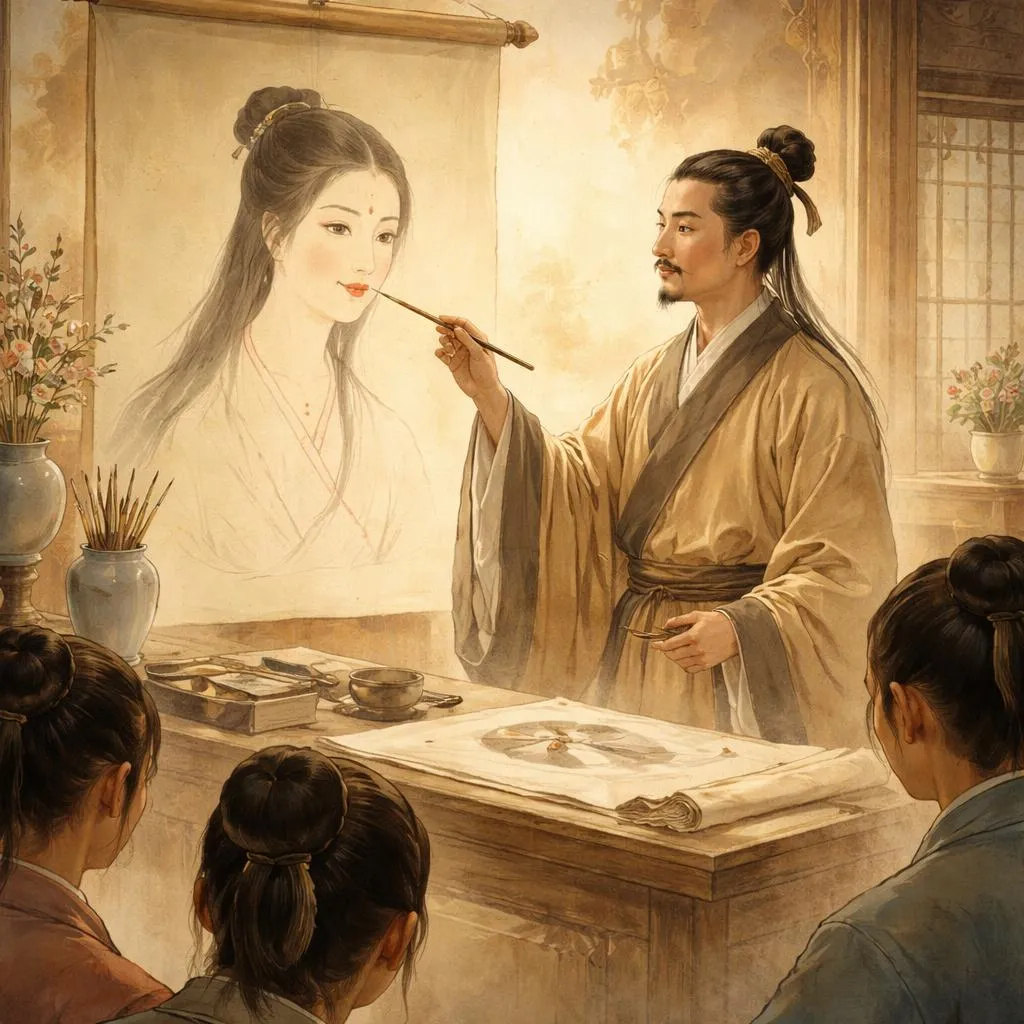
Gu Kaizhi was the greatest painter of ancient China. He lived about 1,700 years ago during the Eastern Jin Dynasty. People call him the "Father of Chinese Painting." He believed that a painting should capture the spirit, not just the appearance. He said the most important part of a portrait was the eyes. He would paint the body first and add the eyes years later. His most famous painting is "Nymph of the Luo River." His story shows that art is about capturing life.
Early Life and Childhood
Gu Kaizhi was born around 344 CE in Wuxi, Jiangsu Province, China. His family were scholars and officials. Young Gu showed artistic talent from a very young age. He loved drawing pictures of his family and friends. He also enjoyed writing poetry and calligraphy. His father died when Gu was still young. His mother died even earlier. Gu never saw his mother's face. He asked his father to describe her appearance. Then he painted her portrait based on his father's words. He painted and repainted until his father said, "That is her." Gu was only a teenager when he did this.
Education and Learning Journey
Gu Kaizhi studied with the best scholars and artists of his time. He learned the Confucian classics, history, and poetry. He also studied calligraphy under famous masters. He learned painting from earlier masters but quickly surpassed them. He read every book on art he could find. He believed that painting required both skill and intelligence. He said, "Painting is like writing poetry. Both express the heart." He spent hours observing people and nature. He watched how people stood when happy or sad. He noticed how clouds moved and trees bent in the wind. He filled notebooks with sketches and observations.
How Did They Become Successful?
Gu Kaizhi became successful because his paintings captured the spirit. Other painters could draw accurate outlines. Gu went further. He made his figures look alive. A famous story illustrates his skill. He once painted a portrait of a famous general. He did not paint the general's face. Instead, he added three dots where the cheek, forehead, and nose should be. People asked why. Gu said, "Those three dots capture the general's spirit. They make him look handsome and powerful. A full face would ruin it." Another time, he painted a portrait of a friend. He left the eyes blank for several years. When asked why, he said, "The eyes are the spirit of a painting. I must wait until I truly understand my friend before adding them."
Big Ideas and Achievements
Gu Kaizhi's biggest achievement was his painting "Nymph of the Luo River." This painting illustrates a famous poem about a man who falls in love with a river goddess. The original painting is lost. But later copies survive. The painting shows the goddess floating above the water. Her robes flow like clouds. Her expression is both joyful and sad. The man stands on the shore reaching toward her. The painting captures the feeling of longing perfectly. Gu also wrote three books on painting theory. He explained how to paint different subjects: mountains, trees, people, and animals. He taught that the goal of painting is to capture the "spirit resonance." This idea influenced Chinese painting for 1,700 years.
Challenges and Difficult Times
Gu Kaizhi lived during a chaotic time. The Jin Dynasty had collapsed, and China was divided. Wars and rebellions happened constantly. Gu had to flee his home several times. He lost many of his early paintings in these flights. He also faced the challenge of being misunderstood. Many people thought painting was a low craft, not a high art. Gu argued that painting was as noble as poetry. He also faced the challenge of his own perfectionism. He destroyed any painting that did not meet his standards. Only a few of his works survive. He likely destroyed thousands.
Fun Facts About the Celebrity
Gu Kaizhi loved eating fresh lychees while he painted. He believed the sweet fruit inspired him. He also enjoyed drinking tea made from wild chrysanthemum flowers. He never ate meat before painting. He believed a light stomach made his hand steady. He kept a small garden where he grew bamboo. He loved painting bamboo from life. He also loved playing a board game called Go. He played against other scholars to sharpen his mind. He never wore bright colors. He preferred simple black robes like his ink. He kept a pet parrot that would mimic the sounds of his brush on paper.
Why Is This Celebrity Important Today?
Gu Kaizhi is considered the father of Chinese painting. His theory of "spirit resonance" is still taught in art schools. His painting "Nymph of the Luo River" is one of the most famous in Chinese history. Copies of the painting are national treasures in China and Taiwan. His books on painting theory are still read by artists. His influence spread to Japan and Korea. Artists in those countries also study his ideas. His life story is taught in schools as an example of dedication to art. He represents the ideal of the artist as philosopher. He proved that painting is not just craft. It is a way of understanding the world.
What Can Kids Learn from This Story?
You can learn that art is about capturing feeling, not just appearance. Gu painted the spirit, not just the face. You can also learn to observe carefully. He watched people and nature for hours. You can learn to wait for the right moment. He waited years to paint the eyes. You can learn that less can be more. He used three dots to capture a face. You can also learn that painting is a form of poetry. He believed both arts express the heart.
Quick Quiz or Practice Time
Let's see what you remember about Gu Kaizhi.
Question 1: What is the name of Gu Kaizhi's most famous painting?
Answer: Nymph of the Luo River.
Question 2: What part of a portrait did Gu Kaizhi believe was most important?
Answer: The eyes.
Question 3: What fruit did Gu Kaizhi love eating while he painted?
Answer: Fresh lychees.
Question 4: How many dots did Gu Kaizhi use to capture a general's spirit in one famous portrait?
Answer: Three dots.
Question 5: What animal was Gu Kaizhi's pet that mimicked his brush sounds?
Answer: A parrot.
Activity: Draw a portrait of a family member. First, draw their face without the eyes. Put the drawing away for an hour. Think about that person's personality. Then add the eyes. Notice if the portrait looks more alive after you add the eyes. This is what Gu Kaizhi meant about capturing the spirit. Draw a picture of Gu adding the final dots to a portrait.
Gu Kaizhi could have painted perfect faces. He had the skill to copy every eyelash and wrinkle. Other painters admired his technique. But Gu wanted more. He wanted to paint the soul. He watched his subjects until he understood their inner selves. He sketched their posture and gestures. He noticed how they smiled and frowned. Then he painted. He painted the body in a few strokes. He left the face blank. He waited. He waited weeks or years. Then one day, he added three dots. Three dots that captured a general's power and dignity. Three dots that made a friend look alive. Three dots that no one else could see but everyone felt. That was Gu's genius. Not copying nature, but capturing its spirit. Not painting faces, but painting souls. His story teaches us that art is not about technical perfection. It is about seeing deeply. It is about understanding what makes a person or a thing unique. It is about capturing that essence on paper. You can do this too. You may not have a brush. You can use a camera. Or a pen. Or your voice. Observe carefully. Wait for the right moment. Capture the spirit, not just the surface. That is the way of Gu Kaizhi. That is your way too. Now go create something that captures a soul.