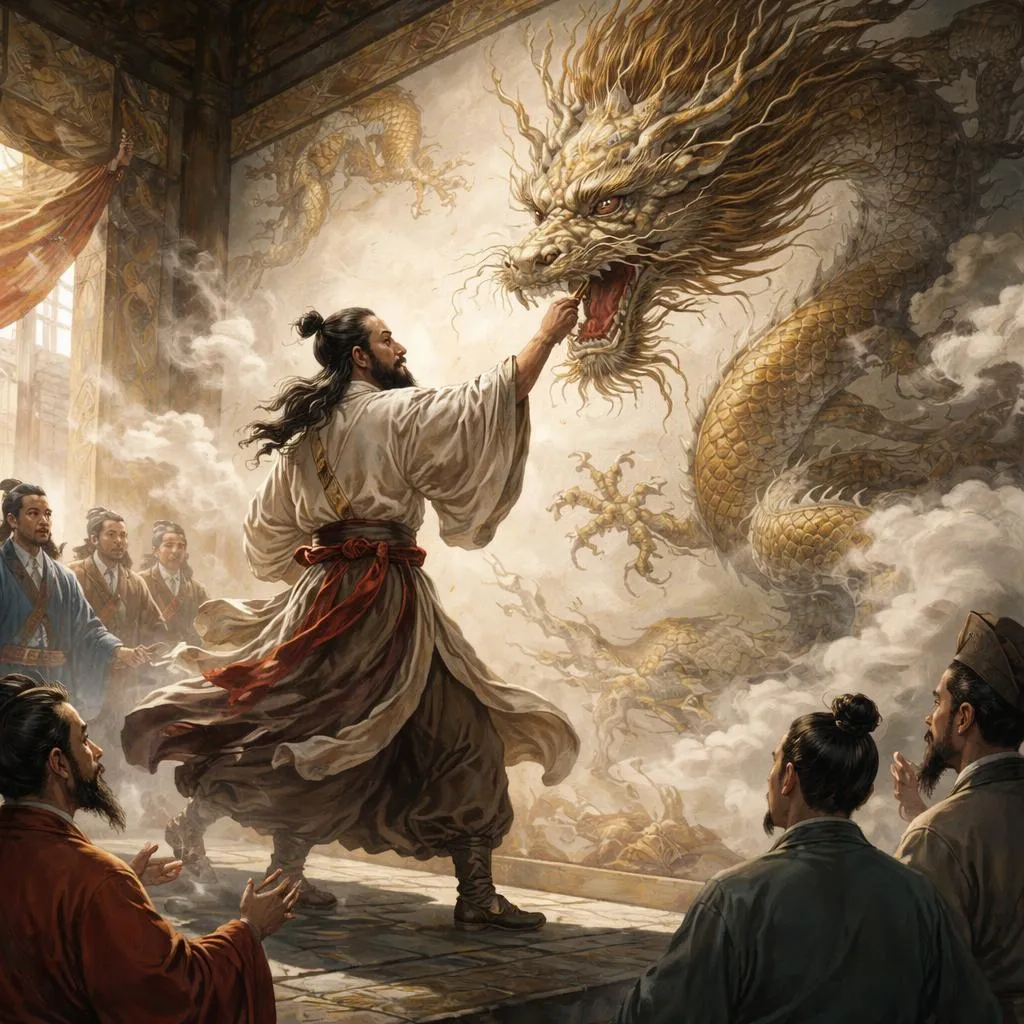

Who Is This Celebrity?
Wu Daozi was the most famous painter of the Tang Dynasty. He lived about 1,300 years ago in China. People call him the "Sage of Painting." He painted over 300 murals in Buddhist and Taoist temples. His figures looked so alive that people believed they could walk off the wall. He could paint a landscape in a single day using only ink. He never used rulers or compasses. His brush moved like dancing. His story shows that art can feel magical.
Early Life and Childhood
Wu Daozi was born around 680 CE in Yangdi, Henan Province, China. His family were poor farmers. Young Wu grew up with very little money. He loved drawing from a very young age. He would sketch on rocks, walls, and even leaves. He had no money for brushes or paper. He used a stick dipped in mud or charcoal from fires. He dreamed of becoming a professional painter. His family thought he was wasting his time. Painting was not considered a real job. But Wu would not stop. He drew every day, no matter what.
Education and Learning Journey
Wu Daozi studied with two famous calligraphers as a young man. He first learned calligraphy from Zhang Xu, the "Sage of Cursive Script." Then he studied with He Zhizhang, another master. Calligraphy taught him how to control a brush. He learned how to vary pressure and speed. But Wu preferred painting to writing. He left calligraphy to focus on art. He traveled to famous temples and studied the murals of earlier masters. He copied their figures thousands of times. He also studied nature. He watched how wind moved through bamboo. He observed how water flowed over rocks. He believed that painting required understanding the energy of life.
How Did They Become Successful?
Wu Daozi became successful by creating a new style of painting. Earlier painters used fine, careful lines. Wu used bold, flowing strokes. He painted with incredible speed. He could cover a wall with figures in one day. Other painters took weeks. The emperor heard about Wu's skill and summoned him to the capital. Wu became the official painter for Emperor Xuanzong. He painted murals in the imperial palace. He traveled with the emperor and painted scenes of court life. His fame spread across China. People traveled from distant provinces just to see his work.
Big Ideas and Achievements
Wu Daozi's biggest achievement was his mural "The Heavenly King Sending His Son." He painted this on a wall in a Buddhist temple. The figures seemed to float off the wall. Their robes flowed like they were blowing in the wind. Their faces showed real emotions. One legend says Wu painted a landscape for the emperor. He hid a cave entrance in the painting. He clapped his hands, and the cave opened. Wu walked into the painting and disappeared. No one ever saw him again. The emperor ordered soldiers to search for him. They found nothing. This legend shows how magical people believed his art was.
Challenges and Difficult Times
Wu Daozi faced the challenge of poor materials. He had no fine brushes or silk in his early years. He painted on rough walls with cheap ink. He made his own brushes from animal hair. He ground his own ink from soot. He also faced the challenge of competition. Many painters in the Tang Dynasty wanted the emperor's favor. They spread rumors about Wu's strange methods. They said his fast painting showed lack of skill. Wu ignored them. He continued painting in his own style. He also faced the challenge of lost works. None of his original paintings survive today. We only know them through copies and descriptions.
Fun Facts About the Celebrity
Wu Daozi loved eating fresh persimmons. He believed the sweet fruit helped his creativity. He also enjoyed drinking rice wine, but only a small cup. He said too much wine made his hand shake. He never wore silk robes, even after becoming famous. He preferred rough cotton. He kept a small garden where he grew bamboo. He painted the bamboo in different seasons to study its changes. He also loved playing a wind instrument called the xiao. He played it while waiting for his ink to dry. He kept a pet monkey that would sit on his shoulder as he painted. The monkey watched every stroke.
Why Is This Celebrity Important Today?
Wu Daozi is considered one of the greatest painters in Chinese history. His bold, flowing style influenced generations of artists. The "Wu Style" of figure painting was copied for centuries. His paintings are lost, but copies survive in museums. The most famous copy is "The Sending of the Son" in a Japanese temple. His legend of walking into a painting has inspired countless stories. Filmmakers and novelists have borrowed this idea. His life shows that art can achieve a kind of immortality. Even without original works, his name lives on. He represents the ideal of the artist as a magician who brings images to life.
What Can Kids Learn from This Story?
You can learn that skill matters more than tools. Wu painted on walls with cheap brushes. You can also learn to ignore competitors and critics. Other painters said his fast painting was sloppy. He kept working. You can learn to observe nature closely. He watched bamboo and water to improve his art. You can learn to develop your own style. He did not copy earlier masters exactly. He created something new. You can also learn that art can feel like magic. His paintings looked so alive that people believed in miracles.
Quick Quiz or Practice Time
Let's see what you remember about Wu Daozi.
Question 1: What is the name of Wu Daozi's most famous mural?
Answer: The Heavenly King Sending His Son.
Question 2: What fruit did Wu Daozi love eating to help his creativity?
Answer: Fresh persimmons.
Question 3: Where did Wu Daozi's legend say he disappeared into?
Answer: A painting of a landscape (into a painted cave).
Question 4: What instrument did Wu Daozi play while waiting for ink to dry?
Answer: The xiao (a wind instrument).
Question 5: What pet sat on Wu Daozi's shoulder while he painted?
Answer: A pet monkey.
Activity: Try painting with a brush on a large piece of paper. Do not use a ruler or pencil first. Let your brush move freely. Try to paint a figure or a tree in one continuous stroke. This is how Wu Daozi painted. You are practicing the art of spontaneous expression. Draw a picture of Wu Daozi walking into his painted landscape.
Wu Daozi painted over 300 murals. None survive. Invaders burned the temples. Weather crumbled the walls. Time erased his work. But his name did not disappear. Copies of his paintings survive in museums. Descriptions of his art survive in books. Legends about his magic survive in stories. People who never saw a single original stroke still call him the Sage of Painting. Why? Because his influence was greater than his works. He taught a generation of painters. They taught the next generation. And so on, for 1,300 years. His style spread across China, then to Japan, then to the world. His way of seeing, his way of moving the brush, his way of capturing the energy of life—these things did not die. They became part of the DNA of Chinese painting. His story teaches us that what you create matters less than how you create. The spirit of your work can survive even if the work itself crumbles. The way you see the world can change how others see it. The energy you pour into your art can flow through generations. Wu Daozi's murals are dust. But his spirit still dances on paper. You can leave a similar legacy. Not through fame, but through influence. Not through works, but through spirit. Paint with energy. Draw with passion. Create with life. That is the way of Wu Daozi. That is your way too. Now go create something that feels alive.