
What Is This Animal?
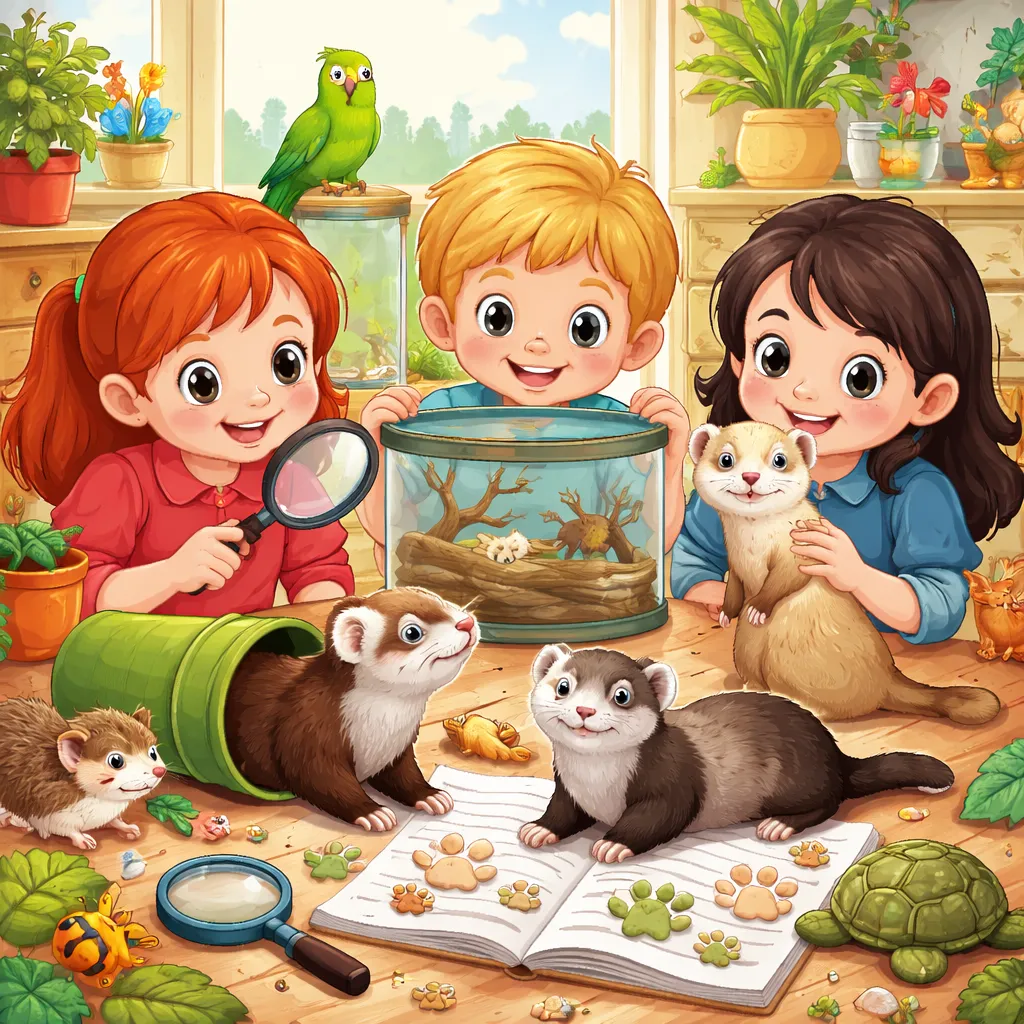
A ferret is a small, long-bodied mammal with soft fur and a pointed face. It has short legs, a long tail, and a curious nature. Ferrets are playful and energetic. They belong to the weasel family. They are related to minks, otters, and martens.
Ferrets were domesticated thousands of years ago. They were used for hunting rabbits and rodents. Today, they are kept as pets in many countries. Domestic ferrets are not the same as wild ferrets. They have been bred for centuries to be friendly companions.
These animals have flexible bodies. They can squeeze through small spaces. They love to explore tunnels and hide in cozy places. They are most active at dawn and dusk. They sleep much of the day.
For children, ferrets are delightful. Their playful antics and curious nature make them entertaining. Learning about ferrets teaches children about pet care, animal behavior, and the responsibilities of having a pet.
English Learning About This Animal
Let us learn the English word ferret. We say it like this: /ˈferɪt/. The fer sounds like “fair.” The ret sounds like “it.” Put them together: ferret. Say it three times. Ferret. Ferret. Ferret.
Now let us learn words about a ferret’s body. The fur is soft and can be many colors. The body is long and flexible. The claws are sharp for digging. The tail is long and bushy. The kits are baby ferrets.
There is a famous saying about ferrets. People say, “Curious as a ferret.” This describes their inquisitive nature. Another saying is, “The ferret finds its way into every hole.” This reflects their love of exploring tight spaces.
These English words help children understand ferret anatomy. When they say flexible, they learn how ferrets move. When they say kits, they know the babies. Parents can practice these words while watching a ferret. Point to the parts. Say the words together.
Animal Facts and Science Knowledge
Ferrets belong to the weasel family Mustelidae. Domestic ferrets are descended from the European polecat. They were domesticated over 2,500 years ago. They were used for hunting rabbits. Their name comes from the Latin word for “little thief.”
Domestic ferrets live in homes as pets. They need safe spaces to play and explore. They are kept in cages when unsupervised. They need time outside the cage to exercise. Wild ferrets live in Europe. They are called polecats.
Ferrets are carnivores. They eat meat. Pet ferrets eat specially made ferret food. They also eat raw meat. They have short digestive systems. They need to eat several times a day. They cannot digest plant material well.
Ferrets have special abilities. Their bodies are so flexible they can fit through spaces as small as their head. They love to burrow and hide. They have excellent hearing and smell. They are very social. They play with each other and with people.
Ferrets are social animals. They live in groups. They communicate with sounds and body language. They make noises like dooking when happy. They dance and hop when excited. They sleep in piles with other ferrets.
How to Interact With This Animal Safely
Ferrets can be wonderful pets. But they need care and attention. If your family is thinking about a ferret, learn about their needs first. They need space to play. They need a safe cage. They need regular vet checkups.
Teach children to handle ferrets gently. Ferrets have delicate bodies. Support their body when holding them. Do not squeeze them. Let them explore. Supervise young children with ferrets. Ferrets may nip when playing. They need training.
Ferrets are curious. They get into small spaces. Ferret-proof your home. Block holes where they could get lost. Remove dangerous items. Keep toilet lids closed. Ferrets can drown in toilets. Always supervise them when out of their cage.
Ferrets need exercise. Let them out of their cage for several hours each day. Provide tunnels and toys. Play with them. They love games like chase and hide-and-seek. A bored ferret can get into trouble.
Ferrets live about six to ten years. They need commitment. They need vaccinations and regular care. Learning about ferrets before getting one helps families make good decisions. A ferret is a pet for the whole family.
What Can We Learn From This Animal
Ferrets teach us about curiosity. They explore everything. Children learn that curiosity helps us learn. Asking questions, trying new things, and exploring the world are all forms of curiosity.
Ferrets teach us about play. They love to play. They dance and chase. Children learn that play is important for happiness. Playing with friends, running outside, and having fun are good for us.
Ferrets teach us about flexibility. Their bodies fit anywhere. Children learn that being flexible helps us. Adapting to new situations, trying different ways, and being open to change are important skills.
Ferrets teach us about responsibility. They need care every day. Children learn that pets depend on us. Feeding, cleaning, and playing with pets are responsibilities. Taking care of another living thing teaches kindness.
Fun Learning Activities
Let us make learning about ferret fun. One activity is the ferret tunnel game. Ask your child to crawl through tunnels made of blankets or boxes. Squeeze through small spaces. Hide in cozy spots. Say “ferret explores” and “ferret finds a tunnel.”
Another activity is drawing a ferret. Look at pictures of ferrets. Notice the long body, short legs, and curious face. Draw a ferret playing with a toy or exploring a tunnel. Label the parts. Say the words aloud.
Create a story about a ferret’s adventure. Ask your child where the ferret goes. Does it find a new tunnel? Does it play with other ferrets? Does it hide a toy? Write a few sentences together. Let your child draw pictures. Read the story aloud.
Make a ferret craft. Use tan, brown, or white paper for the fur. Add a long body and short legs. Add a bushy tail. Add small ears and eyes. Move the craft ferret. Practice saying “ferret explores” and “ferret plays.”
Learn about pet care. If you have a ferret, involve children in feeding and cleaning. Make a chart of daily tasks. Talk about why each task is important. Use words like “responsibility,” “grooming,” and “nutrition.”
Learn about the weasel family. Compare ferrets to weasels, minks, and otters. Notice the similarities in body shape. Talk about how ferrets were domesticated. Use words like “domesticated,” “ancestor,” and “species.”
These simple activities bring learning to life. Children build English vocabulary while playing. They learn science through understanding animal behavior. They develop responsibility through learning about pet care. Learning about ferret becomes a journey into the world of playful, curious companions. Each moment spent together strengthens language, curiosity, and a growing appreciation for the wiggly, dooking creatures that remind us that life is better when we explore, play, and care for one another.