
What Is This Animal?
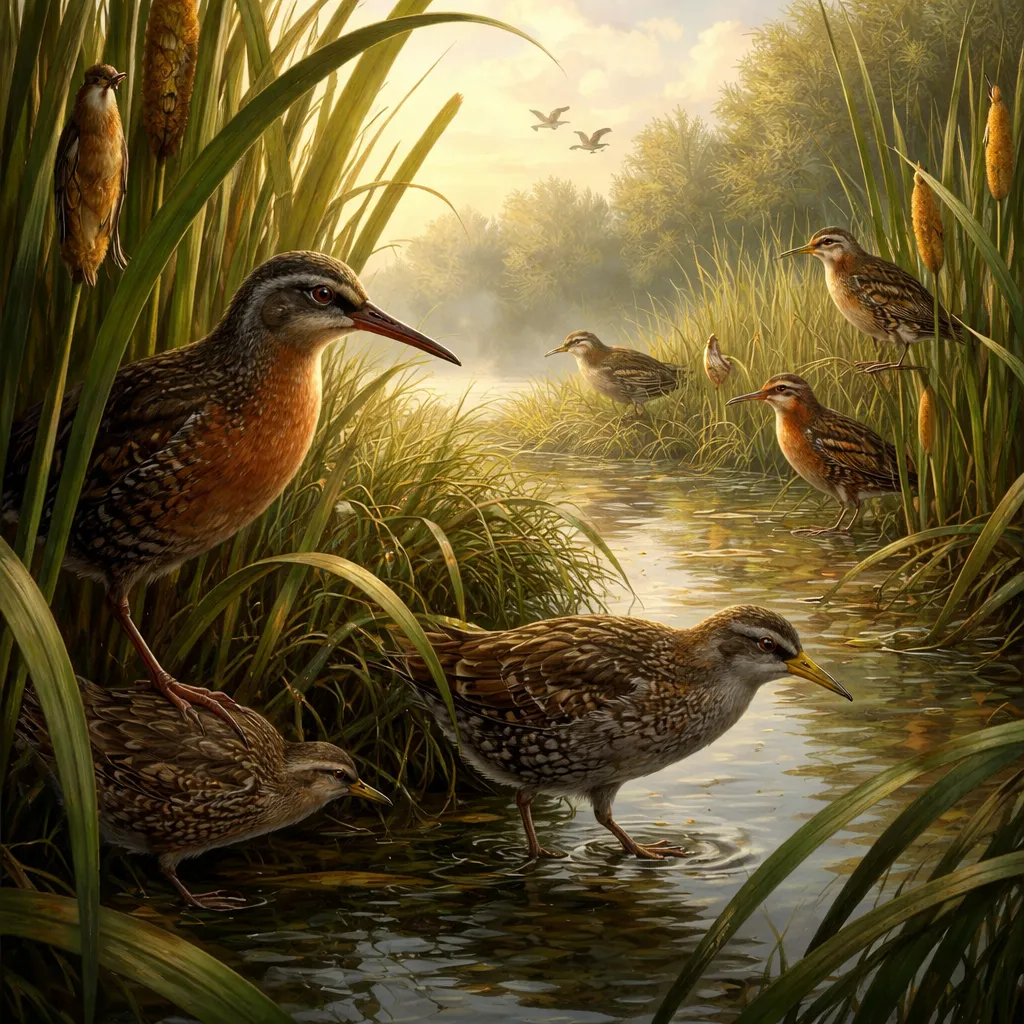
A rail is a slender, secretive bird that lives in marshes and wetlands. It has a long body, short wings, and long toes. Its body is flattened sideways. This shape helps it slip through dense reeds. Rails are more often heard than seen.
Rails live in wetlands around the world. They are found in marshes, swamps, and rice paddies. They hide among reeds and grasses. They are shy and elusive. They run quickly through the vegetation. They rarely fly.
These birds have many species. Some are brightly colored. Others are brown and streaked. They all share the same secretive habits. They call to each other with loud, surprising sounds. Their calls echo across the marsh.
For children, rails are mysterious. They are like ghosts of the wetlands. Learning about rails teaches children about marsh habitats, shy animals, and the importance of listening to nature.
English Learning About This Animal
Let us learn the English word rail. We say it like this: /reɪl/. The r sounds like “r.” The ail sounds like “ale.” Say it together: rail. Say it three times. Rail. Rail. Rail.
Now let us learn words about a rail’s body. The body is slender and flattened. The legs are long. The toes are long for walking on mud and floating plants. The beak is long and slightly curved. The chicks are baby rails.
There is a famous saying about rails. Birdwatchers say, “The rail is heard a hundred times before it is seen once.” This describes their secretive nature. Another saying is, “Where rails walk, the marsh is healthy.” This connects them to wetland ecosystems.
These English words help children understand rail anatomy. When they say toes, they learn how rails walk on mud. When they say chicks, they know the babies. Parents can practice these words while looking at pictures. Point to the parts. Say the words together.
Animal Facts and Science Knowledge
Rails belong to the family Rallidae. There are over one hundred rail species. They are found on every continent except Antarctica. The clapper rail lives in North American salt marshes. The water rail lives in Europe and Asia. The weka is a flightless rail from New Zealand.
Rails live in wetlands. They need dense vegetation for cover. They live in freshwater marshes, salt marshes, and swamps. Some live in forests. They are secretive. They stay hidden in thick plants.
Rails are omnivores. They eat insects, snails, worms, seeds, and small fish. They use their long beaks to probe in mud. They walk on floating vegetation. Their long toes spread their weight. They do not sink.
Rails have special abilities. Their bodies are flattened. They can slip through narrow gaps. They can swim. They can dive. They are fast runners. They prefer to run rather than fly. Their wings are short. They fly only short distances.
Rails are most active at dawn and dusk. They call to each other. Their calls are loud and varied. Some sound like grunts. Others sound like squeals. They use calls to defend territory and find mates.
How to Interact With This Animal Safely
Rails are wild birds. They are very shy. The best way to interact is to listen. Go to a marsh at dawn or dusk. Sit quietly. Listen for their calls. You may hear them, but you may not see them.
Teach children to be patient. Rails hide in the reeds. Moving slowly and quietly is the best way to see them. Stay on paths. Do not go into the marsh. You might disturb them.
Use binoculars. Look for movement in the reeds. Rails sometimes come to the edge of the marsh. If you are still, you may see one.
Do not try to catch or touch a rail. They are protected in many places. They are easily stressed. Give them space.
Rails need healthy wetlands. Pollution and development harm them. Protecting wetlands protects rails. Learning about them helps us understand why marshes matter.
What Can We Learn From This Animal
Rails teach us about being quiet. They hide in the reeds. They are heard more than seen. Children learn that being quiet can be powerful. Listening, watching, and being still help us see things we might miss.
Rails teach us about patience. They wait for the right moment to appear. Children learn that waiting helps us. Being patient, taking time, and not rushing are good habits.
Rails teach us about adaptation. Their bodies are perfect for marshes. Children learn that we all have places where we fit. Finding where we belong, using our strengths, and adapting to our surroundings help us thrive.
Rails teach us about wetlands. They show us that marshes are full of life. Children learn that wetlands are important. They filter water. They provide homes. Protecting wetlands protects rails.
Fun Learning Activities
Let us make learning about rail fun. One activity is the rail hide game. Ask your child to hide behind a blanket or in a tent. Peek out. Call like a rail. Run quickly through a pretend marsh. Say “rail hides” and “rail calls from the reeds.”
Another activity is the rail walk game. Ask your child to walk on tiptoes through pretend mud. Use long steps. Walk on floating leaves. Balance. Say “rail walks on mud” and “rail slips through the reeds.”
Draw a rail. Look at pictures of rails. Notice the slender body, long toes, and slightly curved beak. Draw a rail hiding in marsh reeds. Add water and mud. Label the parts. Say the words aloud.
Create a story about a rail family. Ask your child what the rails do. Do they hide in the reeds? Do they call to each other? Do they find food in the mud? Write a few sentences together. Let your child draw pictures. Read the story aloud.
Make a rail craft. Use brown and gray paper for the feathers. Add a slender body and long legs. Add long toes. Add a curved beak. Move the craft rail. Practice saying “rail hides” and “rail walks on mud.”
Learn about wetlands. Talk about what makes a healthy marsh. Discuss reeds, water, and animals. Use words like “marsh,” “wetland,” and “ecosystem.”
Learn about bird calls. Listen to recordings of rail calls. Try to imitate them. Use words like “call,” “secretive,” and “elusive.”
These simple activities bring learning to life. Children build English vocabulary while playing. They learn science through understanding wetland ecosystems. They develop patience through learning to watch quietly. Learning about rail becomes a journey into the marshes. Each moment spent together strengthens language, curiosity, and a growing appreciation for the secretive birds that teach us that being quiet, waiting patiently, and finding our place in the reeds are ways to thrive in a noisy world.