
What Is This Animal?
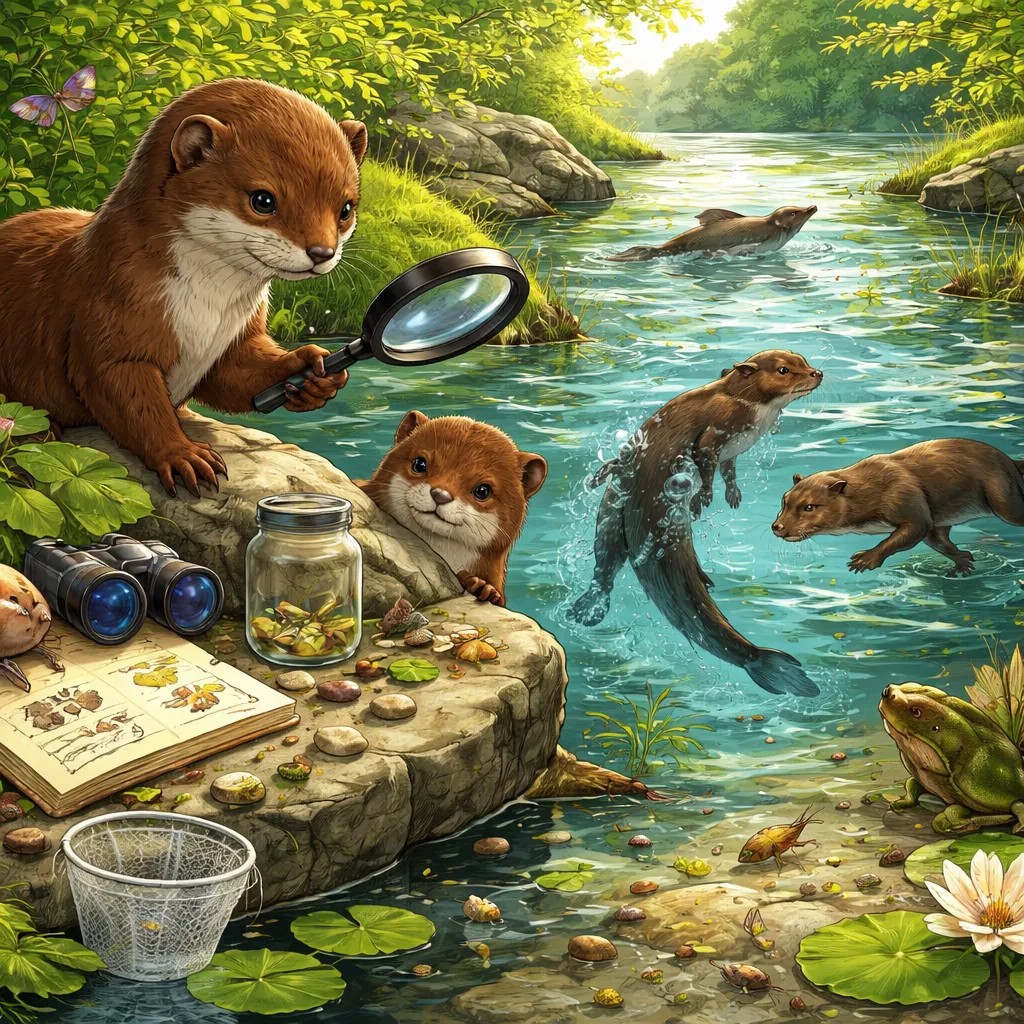
A mink is a small, sleek mammal with dark brown fur and a long body. It has short legs and a bushy tail. Its fur is thick and shiny. Mink are excellent swimmers. They spend much of their time near water. They belong to the weasel family.
Mink are related to otters, martens, and badgers. They have a long, slender body that helps them move through water and tunnels. Their feet have partial webbing. This helps them swim. They are found in North America and Europe.
These animals live near rivers, streams, lakes, and wetlands. They make dens in riverbanks, under tree roots, or in hollow logs. They are mostly active at night. They hunt along the water’s edge.
For children, mink are interesting animals. Their sleek bodies and swimming skills make them fun to watch. Learning about mink teaches children about animals that live near water, their hunting habits, and the importance of clean rivers and streams.
English Learning About This Animal
Let us learn the English word mink. We say it like this: /mɪŋk/. The m sounds like “m.” The ink sounds like “ink.” Say it together: mink. Say it three times. Mink. Mink. Mink.
Now let us learn words about a mink’s body. The fur is thick, dark, and waterproof. The webbed feet help it swim. The body is long and slender for moving through water. The tail is bushy. The kits are baby minks.
There is a thoughtful saying about mink. Naturalists say, “The mink moves through water like a shadow.” This describes how quietly they swim. Another saying is, “Where the water is clean, the mink will be found.” This connects mink to healthy rivers.
These English words help children understand mink anatomy. When they say webbed feet, they learn how mink swim. When they say kits, they know the babies. Parents can practice these words while looking at pictures. Point to the parts. Say the words together.
Animal Facts and Science Knowledge
Mink belong to the weasel family Mustelidae. There are two main species. The American mink lives in North America. The European mink lives in Europe and parts of Asia. American mink have been introduced to other parts of the world. They are excellent swimmers and hunters.
Mink live near water. They prefer rivers, streams, lakes, and marshes. They make dens in banks, under roots, or in abandoned burrows. Their dens have multiple entrances. One entrance is usually underwater. This gives them a safe escape.
Mink are carnivores. They eat fish, frogs, crayfish, birds, and small mammals. They hunt along the water’s edge. They are fast swimmers. They catch fish underwater. They also hunt on land. They eat muskrats, rabbits, and mice.
Mink have special abilities. Their fur is waterproof. It keeps them warm in cold water. Their bodies are long and flexible. They can fit into narrow spaces. They can swim underwater for long distances. They have sharp teeth and strong jaws.
Mink are mostly solitary. They live alone except during breeding season. Females raise the kits alone. Kits are born blind and helpless. They grow quickly. They learn to swim and hunt from their mother. They leave to find their own territory in autumn.
How to Interact With This Animal Safely
Mink are wild animals. They are not pets. They can bite if threatened. The best way to interact is to watch from a distance. If you see a mink near a stream, stay quiet. Watch it swim and hunt. Do not try to approach it.
Teach children to respect mink homes. If you see a den in a riverbank, stay away. Do not try to reach inside. Mink protect their young. They may attack if they feel threatened.
If you see a mink, do not try to feed it. Feeding wild animals makes them lose their fear of people. It can also make them sick. Wild mink need to hunt for themselves.
Mink are indicators of clean water. They need healthy rivers and streams to survive. Learning about them helps us understand why we need to protect waterways. Keeping rivers clean helps mink and many other animals.
In zoos and wildlife centers, mink are in secure enclosures. Follow all rules. Stay behind barriers. Watch them swim and explore. Learn about their habits from keepers.
What Can We Learn From This Animal
Mink teach us about adaptation. They are built for land and water. Children learn that adapting to different environments helps us thrive. Learning new skills, being flexible, and adjusting to change are all forms of adaptation.
Mink teach us about being stealthy. They move quietly in water. Children learn that sometimes being quiet is powerful. Listening, moving carefully, and observing before acting are valuable skills.
Mink teach us about independence. They live alone. They hunt for themselves. Children learn that independence is important. Doing things for ourselves, solving our own problems, and taking responsibility help us grow.
Mink teach us about clean water. They need healthy rivers. Children learn that taking care of nature helps animals. Not littering, saving water, and keeping rivers clean make a difference.
Fun Learning Activities
Let us make learning about mink fun. One activity is the mink swim game. Ask your child to move like a mink in water. Stretch the body long. Use arms like webbed feet. Swim across the floor or yard. Say “mink swims” and “mink dives for fish.”
Another activity is drawing a mink. Look at pictures of mink. Notice the sleek body, dark fur, and webbed feet. Draw a mink by a river. Add fish in the water. Label the parts. Say the words aloud.
Create a story about a mink family. Ask your child what the mother mink does. Does she teach kits to swim? Does she catch fish? Do the kits play in the water? Write a few sentences together. Let your child draw pictures. Read the story aloud.
Make a mink craft. Use dark brown paper or felt for the body. Add a long tail. Add webbed feet. Add small ears and eyes. Move the craft mink. Practice saying “mink swims” and “mink hunts near the river.”
Learn about river habitats. Talk about why mink live near water. Name other animals that live in rivers. Use words like “stream,” “wetland,” and “ecosystem.”
Learn about animal fur. Talk about why mink have waterproof fur. Compare to other animals with special fur like otters or beavers. Use words like “insulation,” “waterproof,” and “adaptation.”
These simple activities bring learning to life. Children build English vocabulary while playing. They learn science through understanding animal adaptations. They develop respect through learning about wild animals. Learning about mink becomes a journey to rivers and streams. Each moment spent together strengthens language, curiosity, and a growing appreciation for the sleek, dark swimmers that glide through clean waters, teaching us that a healthy river is a home for many.