
What Is This Animal?
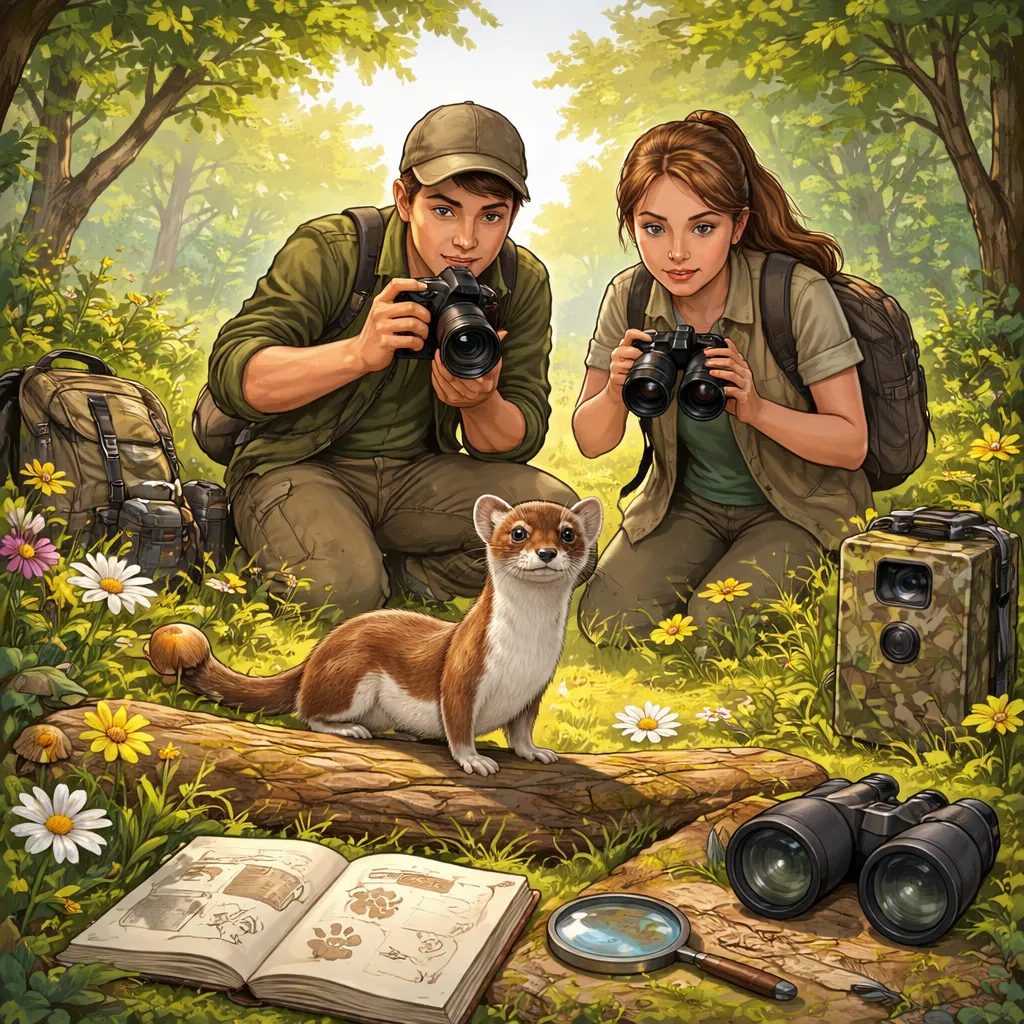
A weasel is a small, slender mammal with a long body and short legs. It has brown fur on its back and white or yellow fur on its belly. Its body is very flexible. It can squeeze into tiny spaces. Weasels are fast and fierce hunters.
Weasels belong to the same family as minks, otters, and badgers. They are the smallest members of this family. Their long, narrow bodies are built for hunting in burrows. They can chase prey into underground tunnels. They are found in North America, Europe, and Asia.
These animals live in many habitats. They live in grasslands, forests, and farmlands. They make dens in rock piles, under tree roots, or in abandoned burrows. They are active during the day and night. They hunt often because they have high metabolisms.
For children, weasels are fascinating. Their long, wiggly bodies and quick movements make them interesting to watch. Learning about weasels teaches children about small predators, animal adaptations, and the balance of nature.
English Learning About This Animal
Let us learn the English word weasel. We say it like this: /ˈwiːzəl/. The wea sounds like “wee.” The sel sounds like “zul.” Put them together: weasel. Say it three times. Weasel. Weasel. Weasel.
Now let us learn words about a weasel’s body. The body is long and slender. The fur is brown on top and white underneath. The legs are short. The claws are sharp for catching prey. The kits are baby weasels.
There is a famous saying about weasels. In English, people say, “Weasel words.” This means using vague or misleading language. It comes from the idea that weasels are tricky. Another saying is, “The weasel sleeps with one eye open.” This reflects their alert nature.
These English words help children understand weasel anatomy. When they say slender, they learn about the shape. When they say kits, they know the babies. Parents can practice these words while looking at pictures. Point to the parts. Say the words together.
Animal Facts and Science Knowledge
Weasels belong to the weasel family Mustelidae. There are several weasel species. The least weasel is the smallest carnivore in the world. The long-tailed weasel is common in North America. The stoat, or ermine, changes color in winter. It becomes white with a black tail tip.
Weasels live in many habitats. They live in fields, forests, and near water. They need cover for hiding. They use rock piles, stone walls, and burrows. They are found from the Arctic to South America. They adapt to many environments.
Weasels are carnivores. They eat mice, voles, rabbits, birds, and eggs. They hunt in burrows. Their long bodies let them follow prey underground. They kill prey with a bite to the neck. They eat frequently because they burn energy quickly.
Weasels have special abilities. Their bodies are so flexible they can turn around in narrow tunnels. They can climb trees. They can swim. They have excellent hearing and smell. They are very fast. They can catch prey much larger than themselves.
Weasels are mostly solitary. They live alone except during breeding. Females raise the kits alone. Kits are born blind and helpless. They grow quickly. They learn to hunt from their mother. They leave to find their own territory in summer.
How to Interact With This Animal Safely
Weasels are wild animals. They are not pets. They can bite if threatened. The best way to interact is to watch from a distance. If you see a weasel, stay quiet. Watch it hunt or move through grass. Do not try to approach it.
Teach children to respect weasels. They are small but fierce. They will defend themselves. If you see a weasel, give it space. It will usually run away if it feels safe.
If you find a weasel den, stay away. Do not try to look inside. The mother may be with kits. She will protect them. Leave the area quietly.
In zoos and wildlife centers, weasels may be in exhibits. Follow all rules. Stay behind barriers. Watch them move through tunnels and grass. Learn about their behavior from keepers.
Weasels are important for controlling rodent populations. They keep the balance in nature. Learning about them helps us understand why we need all animals, even small predators.
What Can We Learn From This Animal
Weasels teach us about agility. They move quickly and fit into small spaces. Children learn that being agile helps us in life. Moving carefully, thinking quickly, and adapting to situations are all forms of agility.
Weasels teach us about using our strengths. They are small but fierce hunters. Children learn that size does not matter. Using what we have, whether it is speed, intelligence, or kindness, helps us succeed.
Weasels teach us about persistence. They hunt until they catch prey. Children learn that not giving up helps us reach goals. Practicing, trying again, and working hard lead to success.
Weasels teach us about being alert. They are always watching. Children learn that paying attention keeps us safe. Listening to parents, watching where we go, and being aware of our surroundings are important habits.
Fun Learning Activities
Let us make learning about weasel fun. One activity is the weasel wiggle game. Ask your child to wiggle like a weasel. Move through tunnels made of blankets or boxes. Squeeze through narrow spaces. Say “weasel wiggles” and “weasel hunts in tunnels.”
Another activity is drawing a weasel. Look at pictures of weasels. Notice the long body, short legs, and brown and white fur. Draw a weasel hunting in grass. Add a mouse or vole nearby. Label the parts. Say the words aloud.
Create a story about a weasel family. Ask your child what the mother weasel does. Does she teach kits to hunt? Do they chase mice? Do they play in the grass? Write a few sentences together. Let your child draw pictures. Read the story aloud.
Make a weasel craft. Use brown and white paper for the fur. Add a long body and short legs. Add small ears and eyes. Move the craft weasel. Practice saying “weasel runs fast” and “weasel fits in small spaces.”
Learn about animal adaptations. Talk about why weasels have long bodies. Compare them to other animals that fit in small spaces like ferrets or snakes. Use words like “adaptation,” “flexible,” and “predator.”
Learn about food chains. Talk about how weasels eat mice. Talk about what eats weasels, like owls and foxes. Use words like “predator,” “prey,” and “balance.”
These simple activities bring learning to life. Children build English vocabulary while playing. They learn science through understanding animal adaptations. They develop respect through learning about wild animals. Learning about weasel becomes a journey into fields and forests. Each moment spent together strengthens language, curiosity, and a growing appreciation for the small, fierce hunters that slip through grass like shadows, teaching us that size does not measure strength and that persistence and agility help us succeed.