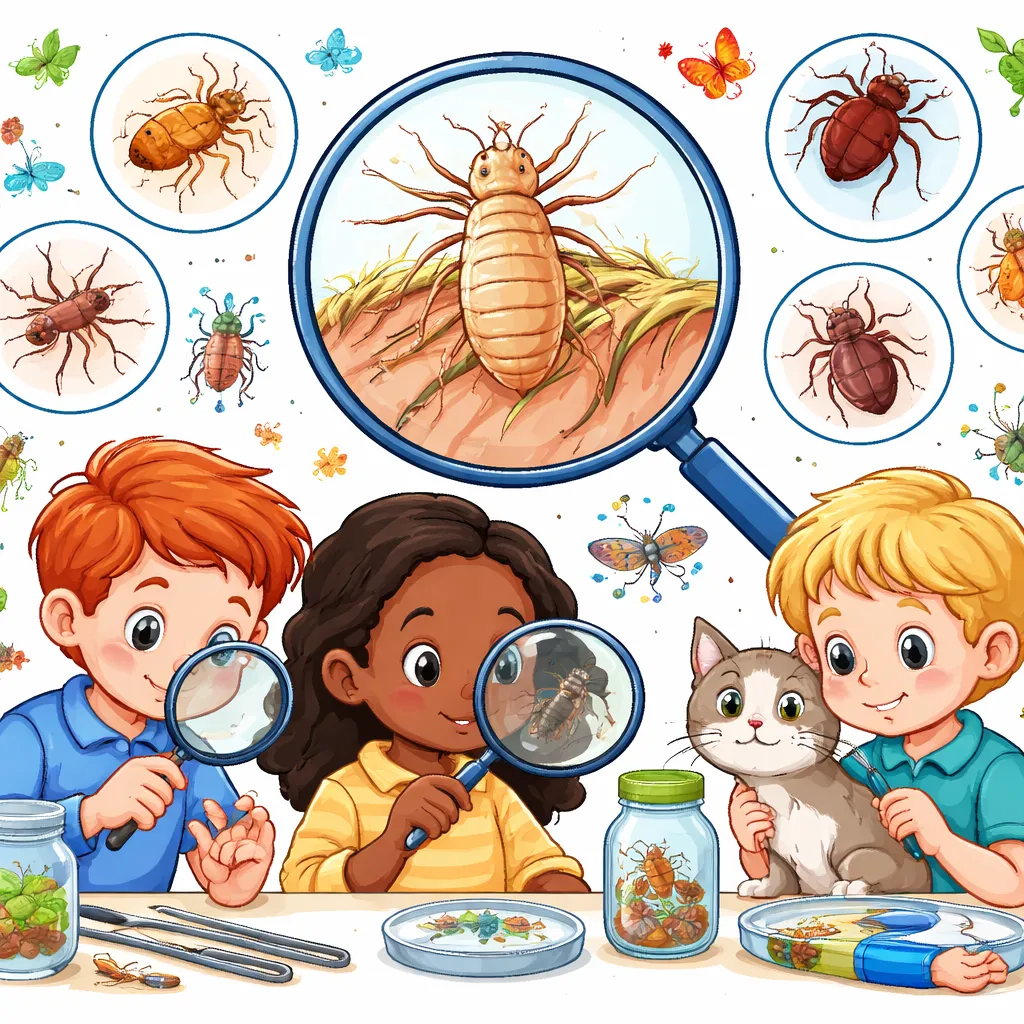

What Is This Animal?
A louse is a tiny insect without wings. It lives on the human scalp. It feeds on small amounts of blood from the skin. Lice are very small. They are hard to see without looking closely. They move quickly through hair.
Lice are parasites. This means they live on another living thing. Human head lice live only on humans. They do not live on pets. They do not jump or fly. They crawl from one person to another through close contact.
These insects have been with humans for thousands of years. They are found all over the world. Children get lice more often than adults. Lice prefer clean hair. They do not mean anyone is dirty or unhealthy.
For children, learning about lice helps them understand how to stay healthy. It removes fear and stigma. It teaches that lice are common and can be treated. Knowledge helps families handle lice calmly when they appear.
English Learning About This Animal
Let us learn the English word louse. One louse. We say it like this: /laʊs/. The lou sounds like “l-ow” in “cow.” The se is soft. Say it together: louse. For more than one, we say lice. Lice sounds like “lice.” Say both: louse and lice.
Now let us learn words about a louse’s body. The head holds the eyes and antennae. The thorax is the middle part where legs attach. The abdomen is the back part. The claws are on the legs. They grip hair strands. The eggs are called nits. Nits attach to hair near the scalp.
There is an old saying about lice. It goes, “A louse in the hair is a pest, but a secret shared is a burden halved.” This means that hiding a problem makes it worse. Sharing with trusted people helps. Another saying is, “Where there is one louse, there are many.” This reminds us to check thoroughly.
These English words help children understand louse anatomy. When they say claws, they learn how lice hold onto hair. When they say nits, they know the eggs. Parents can practice these words while looking at pictures. Point to the parts. Say the words together.
Animal Facts and Science Knowledge
Lice belong to the insect order Phthiraptera. They are wingless insects. There are three types that live on humans: head lice, body lice, and pubic lice. Head lice are the most common in children. Lice have been living with humans for millions of years.
Head lice live on the human scalp. They need human blood to survive. They cannot live away from a host for more than one day. They do not live on furniture or carpets. They spread through direct head-to-head contact.
Lice feed on blood. They use their mouthparts to pierce the scalp. They feed several times a day. Their saliva causes itching. Some people do not itch at first. It may take weeks to notice lice.
Lice have special abilities. Their claws are designed to grip hair shafts. They move quickly through hair. They avoid light. They lay eggs called nits. Nits are glued to hair close to the scalp. They hatch in about one week.
Lice go through simple metamorphosis. They start as eggs or nits. Nits hatch into nymphs. Nymphs look like small adults. They feed and grow. They shed their skin three times. After the third molt, they become adults. Adult females lay more eggs. This cycle repeats every few weeks.
How to Interact With This Animal Safely
Lice are not dangerous. They do not spread disease. But they are unwanted. The best way to interact is through prevention and treatment. Teach children not to share hats, brushes, or hair accessories. These items can pass lice from one person to another.
If a child gets lice, stay calm. It is common. It does not mean anyone did anything wrong. Tell the school or other parents if children have been in close contact. This helps prevent spreading.
Treat lice with products made for this purpose. Follow the instructions carefully. Comb wet hair with a fine-toothed lice comb. This removes lice and nits. Repeat treatment as directed. Wash bedding and clothing in hot water. Vacuum carpets and furniture.
Teach children not to scratch their scalps. Scratching can cause sores. Sores can get infected. If the scalp looks red or sore, see a doctor. Most lice cases clear up with proper treatment.
Check family members if one person has lice. Treat everyone who has lice at the same time. This prevents reinfestation. Lice are not a sign of poor hygiene. Anyone can get them. Handling them calmly and thoroughly is the best approach.
What Can We Learn From This Animal
Lice teach us about sharing information. When we know about lice, we can handle them. Children learn that talking about problems helps solve them. Keeping secrets about health issues makes things harder.
Lice teach us about thoroughness. Getting rid of lice takes careful work. Children learn that some tasks require attention to detail. Checking carefully, following steps, and repeating treatments all matter.
Lice teach us that common problems are nothing to fear. Many children get lice. It is normal. Children learn that having a problem does not mean being bad. Everyone faces challenges. Handling them with calmness shows strength.
Lice teach us about prevention. Simple habits like not sharing hair items reduce risk. Children learn that small daily choices affect health. Sharing toys is good. Sharing hairbrushes is not. Knowing the difference helps.
Fun Learning Activities
Let us make learning about louse fun. One activity is the louse life cycle game. Draw three circles. In the first, draw nits attached to hair. In the second, draw a nymph. In the third, draw an adult louse. Talk about each stage. Use words like “nits,” “nymph,” and “adult.”
Another activity is practicing prevention. Have your child choose their own hairbrush. Put their name on it. Talk about why we do not share brushes. Practice saying “my brush” and “I keep my brush clean.”
Draw a louse magnified. Look at pictures of lice under a microscope. Notice the claws, legs, and body shape. Draw what you see. Label the head, thorax, abdomen, and claws. Say the words aloud.
Create a story about a louse finding a home. Ask your child where the louse goes. Does it crawl onto hair? Does it lay nits? Does it get combed out? Write a few sentences together. Let your child draw pictures. Read the story aloud.
Make a louse craft. Use a small piece of clay or dough. Shape it into a tiny body. Add small claws from thread or thin wire. Talk about how lice grip hair with their claws.
Learn about healthy hair habits together. Make a chart for hair care. Include washing, brushing with your own brush, and not sharing hair items. Talk about why these habits help prevent lice. Use words like “prevention,” “grooming,” and “checking.”
These simple activities bring learning to life. Children build English vocabulary while playing. They learn science through understanding life cycles. They develop healthy habits through discussion. Learning about louse becomes a lesson in calmness, thoroughness, and the importance of sharing the right things. Each moment spent together strengthens language, curiosity, and a growing understanding that even tiny creatures teach us to care for ourselves and each other with patience and knowledge.