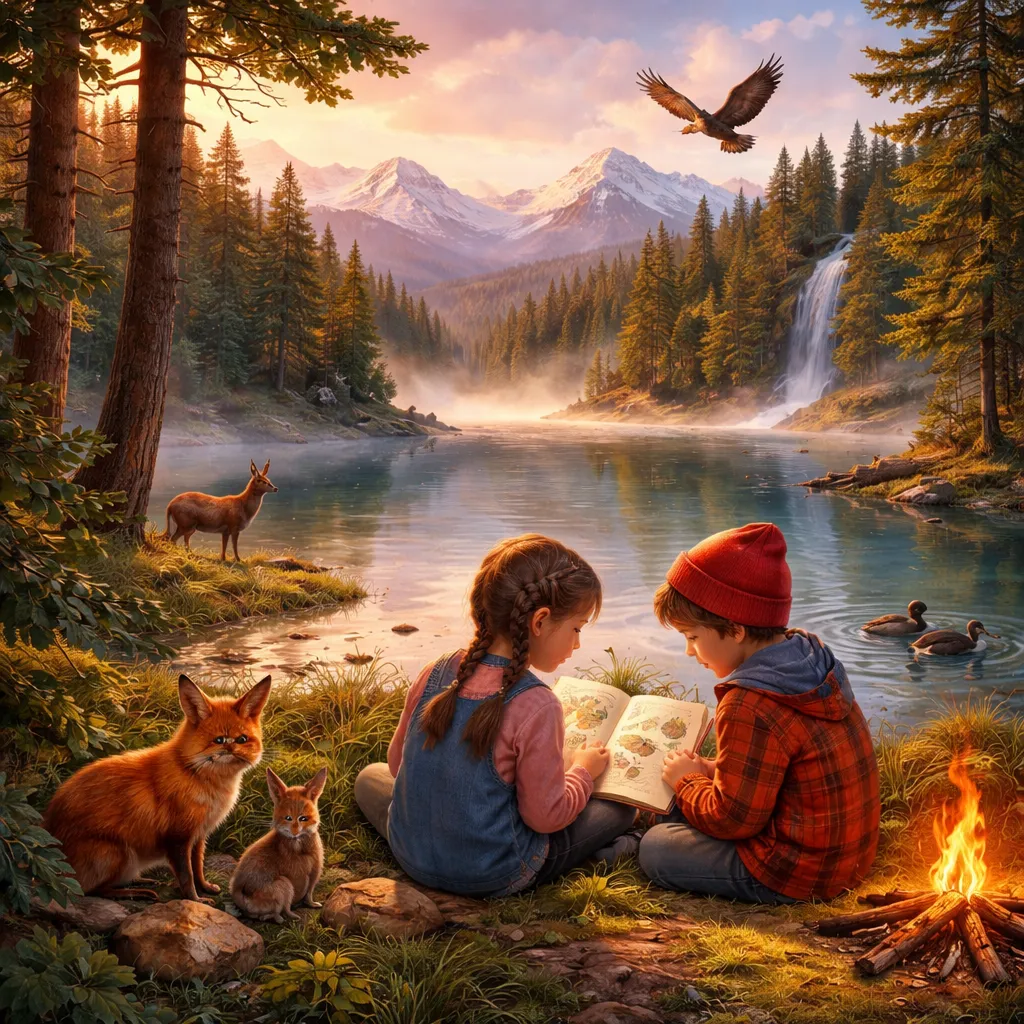

A Friendly Hello and First Impressions
Hello! This is the common, friendly greeting. Bonjour! (bohn-ZHOOR). This is "Hello" in French. Thank you! and Merci! (mehr-SEE) both mean "Thank you". Canada has two official languages. Learning reading about Canada starts with these bilingual words.
Canada is the second largest country in the world. Its shape looks like a giant, wide rectangle. The rectangle stretches from the Atlantic to the Pacific. It is in North America. The United States is its southern neighbor. Three oceans touch its shores. The Arctic, Atlantic, and Pacific oceans. The land is vast and beautiful.
People call it the "Great White North". Winters are long and snowy. Snow covers much of the land. Another nickname is the "Land of the Maple Leaf". The maple leaf is on the national flag. Maple trees grow everywhere. Their leaves turn bright red in autumn. Are you ready to explore this huge, friendly land?
Deep Dive into Culture and Stories
Echoes of History
The first people of Canada are Indigenous. They include First Nations, Inuit, and M谷tis. They have lived here for thousands of years. They have rich cultures and stories. Then European explorers arrived. They came from France and Britain. The two nations fought for control. Britain won. But French culture remained strong.
A key moment was Confederation. This happened in 1867. Four provinces united to form a country. Sir John A. Macdonald was the first Prime Minister. He helped build the railway. The railway connected the east and west. This helped create one nation. This history is a key part of learning reading about Canada.
A World of Helpful Inventions
Canada gave the world a life-saving discovery. Scientists discovered insulin in 1921. Frederick Banting and Charles Best were the main researchers. Insulin is a hormone. It helps people with diabetes. Before insulin, diabetes was often deadly. This discovery saved millions of lives. It is a huge gift to medicine.
Another great gift is the Canadarm. It is a robotic arm. It was built for the Space Shuttle. The arm can move astronauts and equipment in space. It is very strong and precise. It helped build the International Space Station. It shows Canadian skill in technology.
A Land of Incredible Variety
Canada's geography is amazing. The west has tall, rocky mountains. The Canadian Rockies are famous. The center has huge, flat prairies. These are perfect for growing wheat. The east has rolling hills and ancient rocks. The north is Arctic tundra. It is cold and treeless. The coastlines are long and rugged.
The climate varies a lot. Winters are cold almost everywhere. Summers are warm and pleasant. The north has very short, cool summers. The environment shapes life. In the north, houses are built to keep heat in. In the prairies, farms spread for miles. The main crops are wheat, canola, and oats. Forests provide wood for paper.
A special animal is the beaver. It is the national animal. It builds dams in rivers. It has a flat, paddle-shaped tail. The moose is also iconic. It is the largest member of the deer family. The maple tree is the national tree. Its leaf is on the flag. Its sap makes sweet maple syrup.
Landmarks of Water and Steel
Visit Niagara Falls. They are on the border with the USA. Huge amounts of water flow over the cliffs. The roar is very loud. A fine mist fills the air. You can see rainbows in the spray. A fun story is about a daredevil. A woman named Annie Edson Taylor went over in a barrel. She survived! The falls are a powerful natural wonder.
See the CN Tower in Toronto. It was the world's tallest tower for 32 years. It is 553 meters tall. It was built in 1976. It has a glass floor. You can look straight down! The view of the city and lake is amazing. A legend says a construction worker dropped his hammer. It fell for 10 seconds before hitting the ground.
Another wonder is the Rocky Mountains. Banff National Park is there. The mountains are tall and snow-capped. The lakes are a bright, turquoise blue. The color comes from glacial rock flour. You can see bears, elk, and bighorn sheep. The scenery is breathtaking. It feels like a grand, outdoor painting.
Festivals of Light and Winter
The biggest national holiday is Canada Day. It is on July 1st. It celebrates Confederation. People wear red and white. These are the national colors. There are parades and concerts. Fireworks light up the sky at night. People eat cake decorated like the flag. The day is full of pride and joy.
A unique winter festival is in Quebec City. It is the Carnaval de Qu谷bec. It happens in February. A jolly snowman is the mascot. His name is Bonhomme Carnaval. There are ice sculptures, parades, and canoe races. People play on giant ice slides. They drink hot maple syrup on snow. The festival celebrates winter fun.
Food and Flavors
The national dish is Poutine. It comes from Quebec. It is french fries topped with cheese curds. Then it is covered in hot brown gravy. The cheese gets soft and stringy. People eat it as a snack or meal. It is salty, savory, and delicious. It tastes like the perfect comfort food.
You must try Butter Tarts. They are a sweet pastry. The filling is buttery, sugary, and gooey. Sometimes it has raisins or nuts. The tart is baked until the filling is sticky. People eat them for dessert or a snack. A good butter tart is sweet, rich, and satisfying.
A Culture of Kindness and Space
Canadians are known for being polite. They often say "sorry" and "thank you". They value kindness and fairness. This is part of the national identity. The country welcomes people from all over the world. This makes it very multicultural. This spirit of welcome is a key part of learning reading about Canada.
Canada is a leader in space technology. The Canadarm is famous. Canadian astronauts have been to space. They help with science on the Space Station. The country also does important Arctic research. Scientists study climate change there. This work helps the whole planet.
Tips for Young Explorers
Cultural Manners Matter
Canadians are generally polite and friendly. Say "please" and "thank you" often. Smile and be respectful. Queuing is important. Always wait your turn in line. Do not push or cut in line. This is considered very rude.
Punctuality is valued. Try to be on time for meetings. If you are running late, call or send a message. This shows you respect other people's time. It is good manners.
Tipping is common. In restaurants, tip 15-20% of the bill. You tip taxi drivers and hairdressers too. This is how service workers get paid. It is an important custom.
A Note on Staying Safe
Canada is a very safe country. But always be aware. In cities, watch for traffic. Look both ways before crossing. Use crosswalks. Do not walk alone at night in quiet areas.
Wildlife is amazing but wild. Never feed or approach wild animals. Bears and moose can be dangerous. Keep a safe distance. Store your food properly when camping. This keeps animals away.
Winter weather can be extreme. Dress in warm layers. Wear a hat, gloves, and a good coat. Frostbite can happen quickly. Listen to weather warnings. Do not travel in bad storms.
A Tasty Stop
Look for a "BeaverTail" stand. It is a fried dough pastry. It is stretched to look like a beaver's tail. It is topped with sweet things. Cinnamon sugar, chocolate, or maple butter are popular. Eat it hot. The pastry is crispy, sweet, and delicious. It is the perfect winter treat.
Healthy and Happy Travels
Tap water is safe to drink everywhere. It is clean and fresh. Carry a refillable water bottle. This saves plastic. It keeps you hydrated while exploring.
The sun can be strong. Use sunscreen in summer. The snow reflects the sun in winter. You can get a sunburn on a sunny winter day. Wear sunglasses to protect your eyes.
Wear comfortable walking shoes. Canada has many beautiful trails. Good shoes make hiking more fun. You can explore cities and nature in comfort.
Your Invitation to Explore
Start your journey with a map. Find Canada, the huge country. See its long border with the USA. Look at pictures of the northern lights. Their colors dance in the sky. This is a wonderful start to learning reading about Canada.
Visit a local park in autumn. Look for maple trees. Collect different colored leaves. Press them in a book. You can also try maple syrup. Pour it on pancakes. Taste the sweet flavor of the Canadian forest.
The world is a big, open book. Each country is a different chapter. Canada's chapter is about forests, kindness, and snowy adventures. Open it with a smile. Read about its mountains, maple syrup, and multicultural cities. Your curiosity is your guide.
Canadian families skate on a frozen pond. Friends play hockey on a backyard rink. Children build snow forts in the winter. We all know these feelings. We love playing outside. We enjoy sharing food with friends. We help our neighbors. Learning about Canada shows us this. Our global family shares simple joys and kindness. Keep exploring, one page, one country, at a time. Your adventure has just begun.