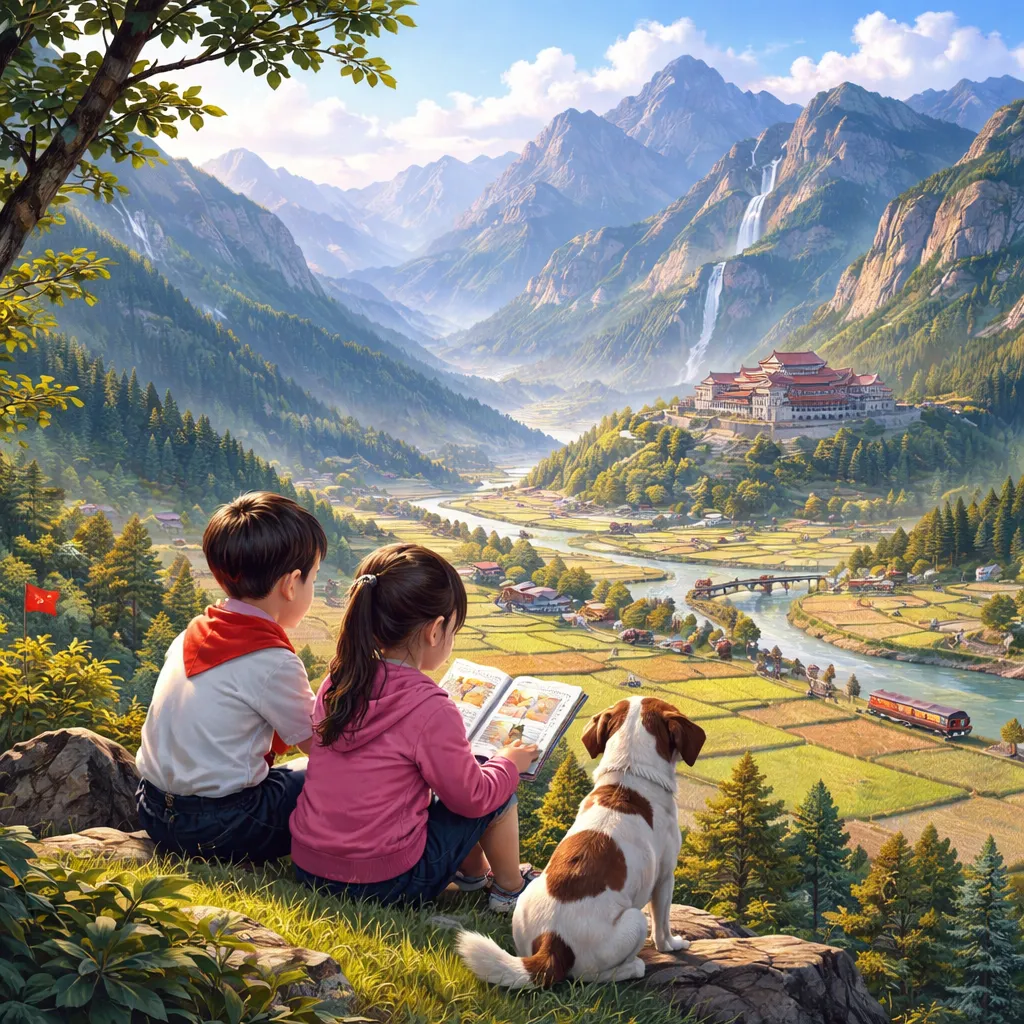

A Friendly Hello and First Impressions
Annyeonghaseyo! (ahn-nyeong-ha-seh-yo). This is a polite "Hello" in Korean. Gamsahamnida! (gahm-sah-hahm-nee-dah). This is a respectful "Thank you". People say it formally. Learning reading about North Korea starts with these shared Korean words.
North Korea is in East Asia. Its shape looks like a rabbit sitting up. The rabbit's ears point north. The country is on the Korean Peninsula. China and Russia are its neighbors. South Korea is to the south. The Sea of Japan is to the east. The land is mostly mountains and hills. It is a country that few people from outside ever visit.
People sometimes call it the "Hermit Kingdom". This is because it is very closed to the outside world. Another name is the DPRK. This means the Democratic People's Republic of Korea. Are you curious about a country that lives behind closed doors?
Deep Dive into Culture and Stories
Echoes of History
The founder of the modern state is very important. His name was Kim Il-sung. He is called the "Great Leader". He led the fight against Japan long ago. He became the first leader in 1948. His ideas guide the country today. His story is a central part of learning reading about North Korea. It is a story told everywhere.
The Korean War started in 1950. North Korea fought against South Korea. Many other countries joined the fight. The war was very destructive. It ended in 1953, but not in peace. The peninsula is still divided today. This history shapes everything.
A World of Gymnastics and Determination
North Korea shows the world discipline in sports. Its gymnasts are often excellent. The country also performs the "Mass Games". This is a huge show with thousands of performers. They create amazing pictures with cards. This display of group precision is known worldwide. It is a part of learning reading about North Korea.
A Land of Mountains and Plains
North Korea's geography is rugged. The north has high mountains. The south has lower hills and plains. The east has a rocky coast. The west has a flatter coast with farmland. The landscape is green in summer and snowy in winter.
The climate has four seasons. Winters are long and cold. Summers are hot and rainy. The environment shapes life. People grow rice, corn, and potatoes. They also mine coal and minerals. Houses in cities are often in large, concrete apartment blocks. The main exports are minerals, textiles, and fish.
A special tree is the Korean pine. It is a national symbol. The national animal is the chollima. This is a mythical flying horse. It means "thousand-mile horse". The national flower is the magnolia. It is beautiful. The national dog is the Pungsan dog. It is a hunting dog.
Landmarks of Ideals and Height
Visit the Mansu Hill Grand Monument. It is in the capital, Pyongyang. It has giant bronze statues of former leaders. People visit to show respect. They bow and leave flowers. A local story says the statues are always watched over. The site is a place of great importance.
See the Ryugyong Hotel. It is a very tall pyramid-shaped building. It is 105 stories high. It took many years to build. It is now a hotel. A fun story says it is the "Hotel of Doom". The building dominates the Pyongyang skyline.
Another wonder is the Kumsusan Palace of the Sun. It is a mausoleum. The bodies of former leaders lie there. It is a solemn, grand building. People must be very quiet and respectful inside.
Festivals of Birth and Loyalty
The most important holiday is the Day of the Sun. It is on April 15th. It celebrates the birth of Kim Il-sung. There are massive parades and performances. Soldiers march in perfect lines. People dance in the streets.
Children give flowers to statues. The whole city is decorated. The day is about loyalty and celebrating the founder. It is the biggest day of the year.
Another important day is Foundation Day. It is on September 9th. It marks the founding of the DPRK in 1948. There are concerts and fireworks. The national flag is everywhere. The colors are blue, red, and white. A red star is inside a white circle.
Food and Flavors
A national dish is Naengmyeon. These are cold buckwheat noodles. The noodles are in a cold, tangy broth. They have slices of meat and a boiled egg. People eat it in summer. It is chewy, refreshing, and delicious. It is a popular meal.
You must try Korean barbecue. Thin slices of meat are grilled at the table. People wrap the meat in lettuce leaves with sauce. Families and friends share the meal. The meat is savory, smoky, and fun to eat.
A Culture of Music and Self-Reliance
Music and dance are used for praise. The song "Arirang" is a famous folk song. Mass dances involve many people moving together. This organized culture is a part of learning reading about North Korea.
The national idea is "Juche". It means self-reliance. The country tries to do everything by itself. This idea is taught in schools and seen everywhere. It is the guiding philosophy.
Tips for Young Explorers
Cultural Manners Matter
Respect for leaders is absolute. Never say anything bad about the leaders. Do not damage any image of the leaders. This includes newspapers, money, or statues. This is the most important rule.
Always be polite and quiet. Do not joke loudly or act silly in public. Follow instructions from your guides exactly. Do not wander off on your own. Ever.
Dress neatly and modestly. Do not wear ripped jeans or revealing clothes. This shows respect. In formal places, dress more formally.
A Note on Staying Safe
North Korea is one of the most controlled places. You cannot travel freely. You must have guides with you always. They watch you. Never take photos without permission. Do not take photos of soldiers, poor areas, or construction. This is very serious.
Do not bring any books or media from outside. This includes guidebooks about South Korea. Your bags will be checked. This is a strict rule.
Always be aware. Your actions can have big consequences. Not just for you, but for your guides too. Think before you act or speak.
A Tasty Stop
Look for "Bindaetteok" at a market. It is a savory pancake. It is made from ground mung beans. It has vegetables and meat inside. It is fried until crispy. Eat it hot. The pancake is crispy, savory, and filling. It is a common street food.
Healthy and Happy Travels
Drink only bottled water. Do not drink tap water. Your hotel will provide bottled water. Use it for brushing your teeth too. This keeps you healthy.
The weather can be extreme. In winter, bring very warm clothes. In summer, it can be hot and humid. Dress in layers. Good walking shoes are a must.
Be careful with food. Eat at places your guide approves. The food is generally safe where tourists go. But do not eat from unknown street vendors. Stick to the plan.
Your Invitation to Explore
Start your journey with a map. Look at the Korean Peninsula. See how it is divided. Imagine a line splitting a country. Or, listen to the folk song "Arirang". Hear the melody. This is a careful way of learning reading about North Korea.
Look at pictures of the Mass Games online. See the incredible human mosaics. Think about the practice it takes. You can also try a Korean dish like cold noodles at a restaurant. Taste the unique flavors. Imagine a different way of life.
The world is a big, complex book. Each country is a different chapter. North Korea's chapter is about mountains, strict order, and a deep separation. Open it with caution. Read about its history, its isolation, and its people's lives. Your curiosity must be careful and kind.
All families in the world share meals. All children go to school. All people celebrate holidays. Learning about North Korea reminds us of this. Our global family has the same basic needs. But it lives in very different ways. Keep exploring, one page, one country, at a time. Your adventure teaches understanding.