
A Friendly Hello and First Impressions
As-salamu alaykum! (ah-sah-LAH-moo ah-LAY-koom). This is the traditional Arabic greeting. It means "Peace be upon you". Shukran! (SHOOK-rahn). This is a warm "Thank you". People say it with kindness. Learning reading about Iraq starts with this ancient wish for peace.
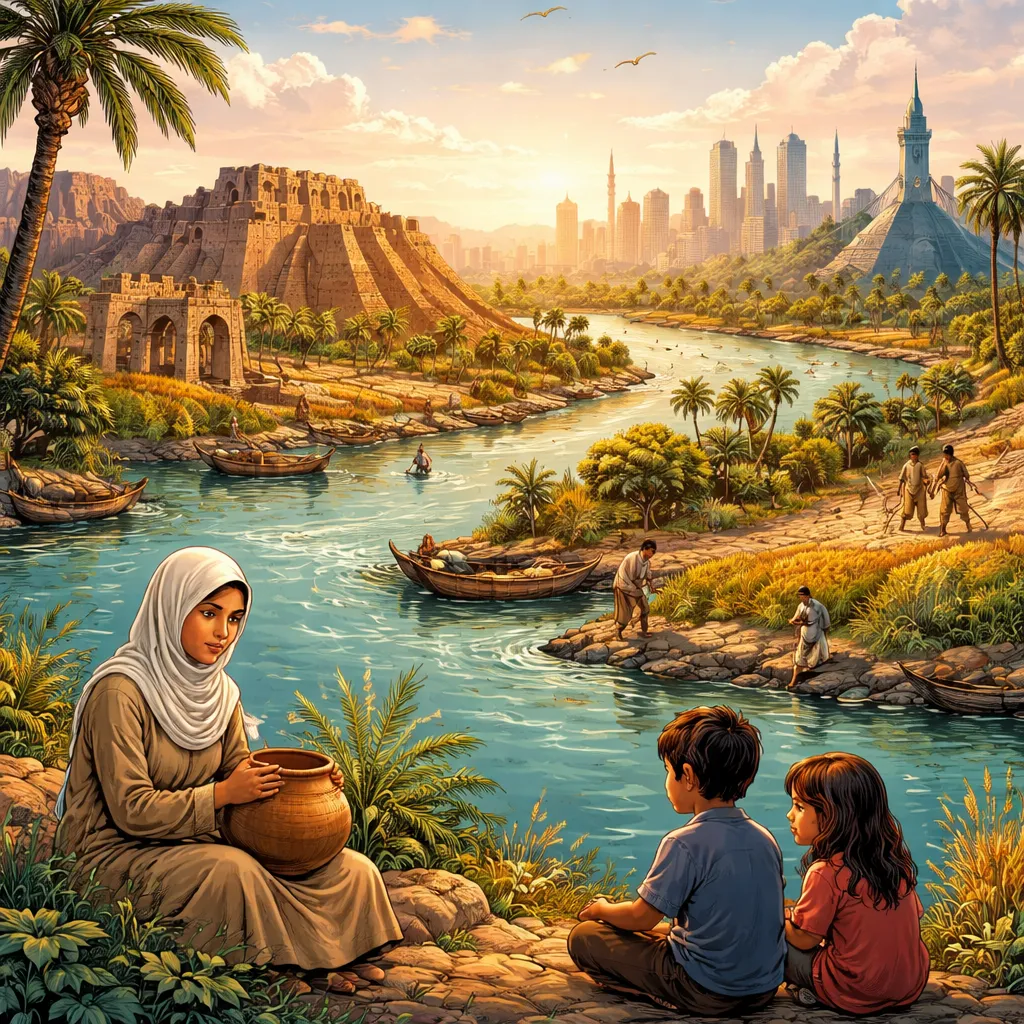
Iraq is in Western Asia. Its shape looks like a slightly tilted leaf. The stem of the leaf is in the north. The country is in the Middle East. Turkey, Iran, and Saudi Arabia are its neighbors. A tiny coast touches the Persian Gulf. The land is defined by two great rivers. They are the Tigris and the Euphrates. The area between them is called Mesopotamia. This means "Land Between the Rivers".
People call it the "Cradle of Civilization". The world's first cities grew here. Writing, laws, and wheels were invented here. Are you ready to travel back to the very beginning of history?
Deep Dive into Culture and Stories
Echoes of History
A powerful king made the first known laws. His name was Hammurabi. He was king of Babylon around 1750 BCE. He created a famous stone pillar. The pillar had 282 laws carved on it. The laws said "an eye for an eye". This seems harsh today. But it was the first written legal code. His story is a key part of learning reading about Iraq. It is a story of order and justice.
Another important era was the Islamic Golden Age. Baghdad was its capital. The city was a center of learning. Scholars studied science, math, and philosophy. The "House of Wisdom" was a famous library. This period shows Iraq's long history of knowledge.
A Gift of Foundations
Iraq gave the world the first foundations. People here invented the wheel. This changed transport forever. They also invented writing. They used a reed stylus on clay tablets. This writing is called cuneiform. These inventions built the base for modern life. This history is a key part of learning reading about Iraq.
A Land of Two Rivers
Iraq's geography is mostly flat plains. The Tigris and Euphrates rivers flow south. The land between them is very fertile. The west and south are vast deserts. The north has some mountains. The landscape changes from green riverbanks to yellow sand.
The climate is mostly desert. Summers are extremely hot. Winters are cool. The environment shapes life. People grow wheat, barley, and dates near the rivers. In the desert, people herd sheep and goats. Traditional houses in the south are made of mud brick. They stay cool. The main export is oil. Dates and leather are also important.
A special plant is the date palm. It is the national tree. It provides food, shade, and materials. The national animal is the goat. The national bird is the chukar partridge. The national flower is the rose. The Euphrates poplar tree grows along the riverbanks.
Landmarks of Bricks and Faith
Visit the ancient city of Babylon. Its ruins are south of Baghdad. You can see the remains of the Ishtar Gate. The gate was covered in blue tiles. It had pictures of lions and dragons. A fun legend says the Hanging Gardens were here. They were a Wonder of the Ancient World. The site reminds us of a mighty empire.
See the Al-Shaheed Monument in Baghdad. It is a modern landmark. It is shaped like a giant turquoise dome. The dome is split in two. It honors the Iraqi soldiers who died in the Iran-Iraq War. The monument is beautiful and sad. It is a place for quiet thought.
Another wonder is the Great Mosque of Samarra. It has a unique spiral minaret. It is called the Malwiya. You can walk up the outside ramp to the top. The minaret looks like a giant snail shell. It was built in the 9th century. It is a symbol of Islamic architecture.
Festivals of Community and Faith
The most important religious festival is Eid al-Fitr. It marks the end of Ramadan. Ramadan is a month of fasting. On Eid, everyone wears new clothes. Families visit the mosque for prayer. Then they visit relatives and friends.
Children receive gifts of money. People give sweets to each other. Special foods are prepared. The air is full of joy and community. The festival is about gratitude, forgiveness, and togetherness.
Another important day is Iraqi Independence Day. It is on October 3rd. It marks independence from Britain in 1932. There are official ceremonies. The national flag is displayed. The colors are red, white, and black. The Arabic words "Allahu Akbar" are in the center. The day is about national sovereignty.
Food and Flavors
The national dish is Masgouf. It is a famous Iraqi fish dish. A whole carp is split open. It is marinated with olive oil, salt, and tamarind. It is grilled slowly next to an open fire. Families eat it by the Tigris River. The fish is smoky, tender, and flavorful. It is a social meal.
You must try Tepsi Baytinijan. It is a baked casserole. It has layers of eggplant, potatoes, and meatballs. It is topped with a tomato sauce. Families eat it for a big Sunday lunch. The dish is savory, hearty, and comforting. It tastes like a family gathering.
A Culture of Poetry and Resilience
Poetry is very important in Iraq. Poets are highly respected. The classic form is the "qasida". Poetry expresses love, loss, and pride. This love for words is a beautiful part of learning reading about Iraq.
Iraqi people are known for resilience. The country has faced many wars and difficulties. But the culture remains strong. People are rebuilding. They are proud of their long history. This spirit of perseverance is a lesson for everyone.
Tips for Young Explorers
Cultural Manners Matter
Iraqis are known for incredible hospitality. Guests are a blessing. If invited for tea, always accept. This is a sign of friendship. Drink at least one cup. Compliment the host. Always use your right hand for eating and drinking. The left hand is considered unclean.
Greetings are warm but polite. A handshake is common. Say "As-salamu alaykum". The reply is "Wa alaykum as-salam". Men who are friends may kiss on the cheek. Always greet the oldest person first. This shows great respect.
Dress modestly. This is important. Women should cover their shoulders and knees. Loose-fitting clothing is best. This shows respect for local customs.
A Note on Staying Safe
Iraq has areas of significant danger. Security is unstable. Travel can be very risky. It is essential to check government travel advice. Only travel with professional security guidance. Avoid public gatherings. Do not travel at night. Always stay aware of your surroundings. Your safety is the most important thing.
The summer heat is extreme. It can be over 50~C (122~F). Stay indoors during the midday heat. Drink lots and lots of bottled water. Protect yourself from the sun. Heatstroke is a real danger.
A Tasty Stop
Look for "Kleicha" in a bakery. It is a traditional date-filled cookie. The dough is flavored with cardamom. The cookies are shaped like half-moons. Eat them with tea. The kleicha is sweet, spiced, and delicious. It is a special treat, often for Eid.
Healthy and Happy Travels
Drink only bottled water. Do not drink tap water. Avoid ice in drinks. Brush your teeth with bottled water. This simple rule keeps you healthy.
Wash your hands often. Carry hand sanitizer. This helps prevent illness. Be careful with street food. Eat at clean, reputable places.
Be patient and respectful. Life can be hard for many Iraqis. Show kindness. Listen to people's stories. This builds bridges of understanding.
Your Invitation to Explore
Start your journey with a map. Find the Tigris and Euphrates rivers. Trace their path through Iraq. Imagine the first farmers there. Or, read the "Epic of Gilgamesh". It is the oldest written story from Iraq. This is a wonderful way of learning reading about Iraq.
Visit a museum with Mesopotamian artifacts. Look for a cuneiform tablet. See the wedge-shaped marks. Imagine a scribe writing 5,000 years ago. You can also try writing your name in simple symbols. Feel the start of written communication.
The world is a big, ancient book. Each country is a different chapter. Iraq's chapter is about first cities, great rivers, and enduring spirit. Open it with respect. Read about its inventions, poetry, and people's strength. Your curiosity is your guide.
Iraqi families share a large masgouf by the river. Friends recite poetry together. Children fly kites from rooftops. We all know these scenes. We love sharing meals. We enjoy stories and art. We play simple games. Learning about Iraq shows us this. Our global family shares the same joys, despite different challenges. Keep exploring, one page, one country, at a time. Your adventure has just begun.