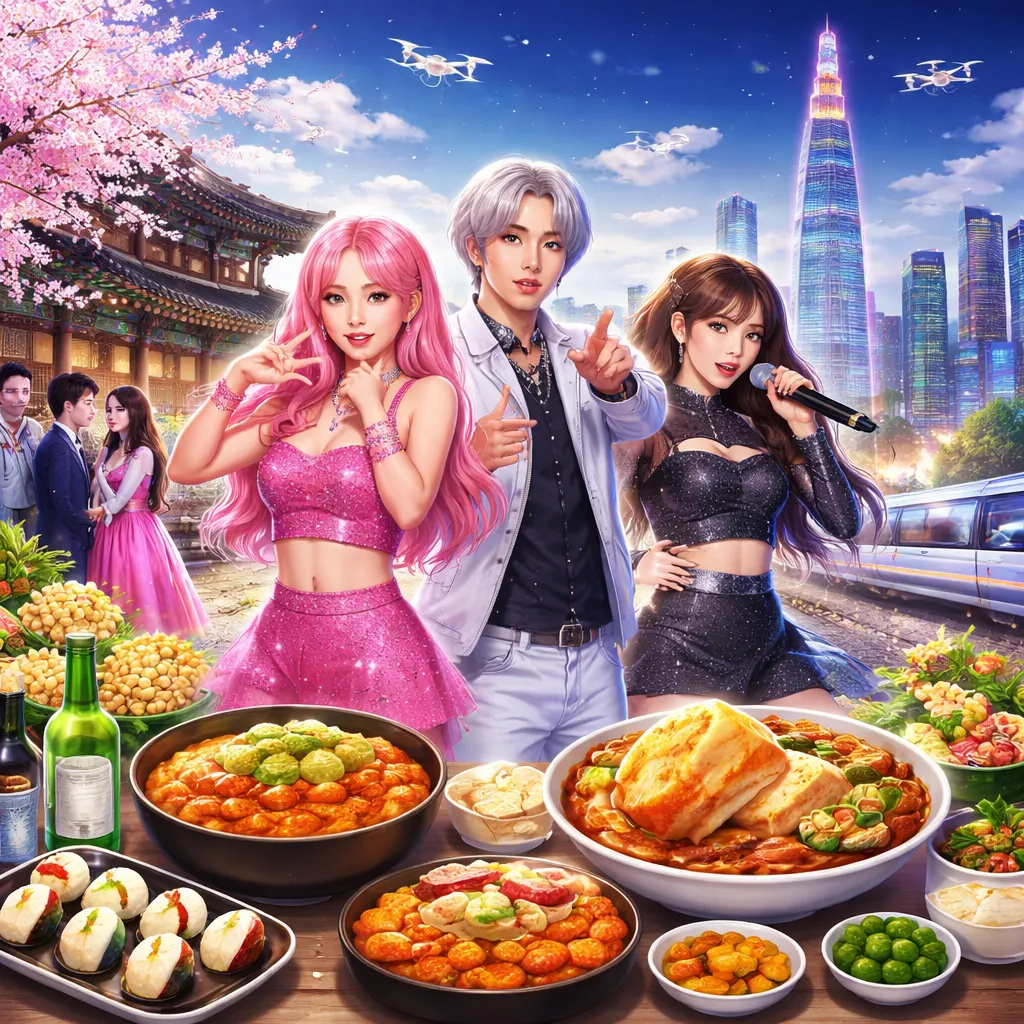

A Friendly Hello and First Impressions
Annyeonghaseyo! (ahn-nyeong-ha-seh-yo). This is a polite "Hello" in Korean. Gamsahamnida! (gahm-sah-hahm-nee-dah). This is a respectful "Thank you". People say it with a smile. Learning reading about South Korea starts with these warm, musical words.
South Korea is in East Asia. Its shape looks like a rabbit sitting on its hind legs. The rabbit faces the sea. The country is on the Korean Peninsula. North Korea is to the north. Japan is to the east. The Yellow Sea and the Sea of Japan surround it. The land is very mountainous with green forests. It is a country of fast cities and calm temples.
People call it the "Land of the Morning Calm". This is a translation of an old name. Another nickname is the "Miracle on the Han River". It rebuilt itself amazingly fast from war. Are you ready to explore a land of ancient palaces and neon lights?
Deep Dive into Culture and Stories
Echoes of History
A great and wise king ruled long ago. His name was King Sejong the Great. He ruled in the 1400s. He cared about his people. He wanted everyone to read and write. The old writing system was very hard. So, he created a new alphabet. It is called Hangeul. It is simple and scientific. His story is a key part of learning reading about South Korea. It is a story of wisdom and care.
Another important time was after the Korean War. The country was very poor. But the people worked incredibly hard. They built a rich, modern nation in just decades. This is called the "economic miracle".
A Gift of Language and Rhythm
South Korea gives the world a beautiful alphabet. Hangeul is easy to learn. It is one of the most logical writing systems. South Korea also gives the world K-Pop music. Groups like BTS are loved globally. This mix of smart design and cool culture is a key part of learning reading about South Korea. It shows creativity and global connection.
A Land of Mountains and Coast
South Korea's geography is rugged. About 70% of the land is mountains. The east has a steep, rocky coast. The west has flat plains and tidal flats. Many small islands dot the coast. The landscape is green and dynamic.
The climate has four clear seasons. Summers are hot and humid. Winters are cold and dry. The environment shapes life. People grow rice, cabbage, and ginseng. They also fish in the rich seas. Traditional "hanok" houses have curved roofs. Modern apartments are tall and sleek. The main exports are cars, phones, and ships.
A special animal is the Siberian tiger. It is a national symbol of strength. The national animal is the tiger. The national bird is the Korean magpie. The national flower is the mugunghwa. This is the rose of Sharon. The national tree is the ginkgo tree. It is ancient and hardy.
Landmarks of Tradition and Future
Visit Gyeongbokgung Palace. It is in Seoul. It was the main palace of the Joseon kings. It has grand gates and beautiful pavilions. You can see the changing of the guard. A fun legend says a secret tunnel is underneath. The tunnel leads to a mountain. The palace is a window to royal life.
See the N Seoul Tower. It stands on a hill in Seoul. It is a communication and observation tower. At night, it lights up with colors. Lovers put locks on the fences. A fun story says if you go there with someone you like, you will stay together. The view of the city is amazing.
Another wonder is Jeju Island. It is a volcanic island. It has a huge crater called Hallasan Mountain. You can see strange lava rocks and waterfalls. A local legend says the island was created by a giant goddess. The island is peaceful and beautiful.
Festivals of Harvest and Family
The most important holiday is Chuseok. It is the Korean Thanksgiving. It happens in autumn. Families travel to their hometowns. They honor their ancestors. They visit graves and clean them. They make special food like "songpyeon".
Songpyeon are half-moon rice cakes. They are filled with sweet things. Families have a big feast and play games. The festival is about gratitude, family, and harvest. The feeling is warm and thankful.
Another important day is National Liberation Day. It is on August 15th. It marks freedom from Japan in 1945. The Korean flag is everywhere. The flag is called the "Taegukgi". It has a red and blue circle. People have ceremonies and concerts. The day is about freedom and pride.
Food and Flavors
The national dish is Kimchi. It is fermented vegetables. The most common is spicy napa cabbage. It is sour, spicy, and crunchy. People eat it with every meal. It is very healthy. Kimchi tastes like the essential flavor of Korea.
You must try Bibimbap. It means "mixed rice". It is a bowl of warm rice. It has many colorful vegetables on top. It has a fried egg and meat. You mix it all with a spicy sauce. People eat it for lunch. A good bibimbap is colorful, healthy, and delicious. It is a meal in a bowl.
A Culture of Speed and Harmony
South Korea is a world leader in technology. Companies like Samsung and Hyundai are famous. The internet speed is the fastest in the world. This love for innovation is a fun part of learning reading about South Korea. It shows a drive for the future.
The national sport is Taekwondo. It is a martial art. It focuses on kicks and discipline. Children often learn it in school. It teaches respect and self-control. This mix of speed and harmony is special.
Tips for Young Explorers
Cultural Manners Matter
Koreans value respect and politeness. Bowing is a common greeting. A slight bow of the head is fine. Say "Annyeonghaseyo". Use two hands when giving or receiving something. This is polite, especially with money or gifts. Wait for adults to invite you to use first names.
Remove your shoes indoors. This is a must in homes and some restaurants. You will see shoes at the entrance. Slippers are often provided. Never wear shoes on the heated floor ("ondol").
Be quiet on public transport. Do not talk loudly on the subway or bus. Do not eat smelly food. Offering your seat to elders is a good gesture. This shows good manners.
A Note on Staying Safe
South Korea is a very safe country. But be careful in big cities. Watch for traffic when crossing streets. Use pedestrian crossings. The subway is safe, but mind the closing doors.
The air quality can be bad sometimes. Check the air pollution index. On bad days, wear a mask outside. This protects your lungs. Your hotel or an app can tell you the level.
A Tasty Stop
Look for a "tteokbokki" stand. It is a popular street food. It is chewy rice cakes in a sweet and spicy red sauce. It is often sold with fish cakes. Eat it hot with a toothpick. The tteokbokki is chewy, spicy, and delicious. It is a favorite snack.
Healthy and Happy Travels
Tap water is safe to drink in most cities. But many people drink bottled or filtered water. It is widely available. Carry a water bottle. This helps you stay hydrated.
Walk a lot. Korean cities are great for walking. Wear comfortable shoes. You will explore palaces, markets, and cool neighborhoods. Your feet will thank you.
Carry hand sanitizer and use it. You eat with metal chopsticks and a spoon. Washing hands before eating is always good. Many restaurants have hand sanitizer at the door.
Your Invitation to Explore
Start your journey with a song. Listen to a K-Pop song. Feel the energy. Try to learn a dance move. Or, try to write your name in Hangeul. The letters are logical and fun. This is a wonderful way of learning reading about South Korea.
Visit a Korean market or supermarket. Look for kimchi or seaweed snacks. Taste the unique flavors. Imagine a Korean family meal. You can also try making a simple bibimbap at home. Use lots of colorful vegetables. Mix it all together.
The world is a big, open book. Each country is a different chapter. South Korea's chapter is about harmony, high-speed life, and spicy kimchi. Open it with curiosity. Read about its palaces, pop stars, and peaceful mountains. Your curiosity is your guide.
Korean families gather for a big Chuseok meal. Friends go hiking in the mountains on weekends. Children study hard but also play online games. We all know these scenes. We love family holidays. We enjoy nature with friends. We balance work and play. Learning about South Korea shows us this. Our global family shares the same joys and challenges. Keep exploring, one page, one country, at a time. Your adventure has just begun.