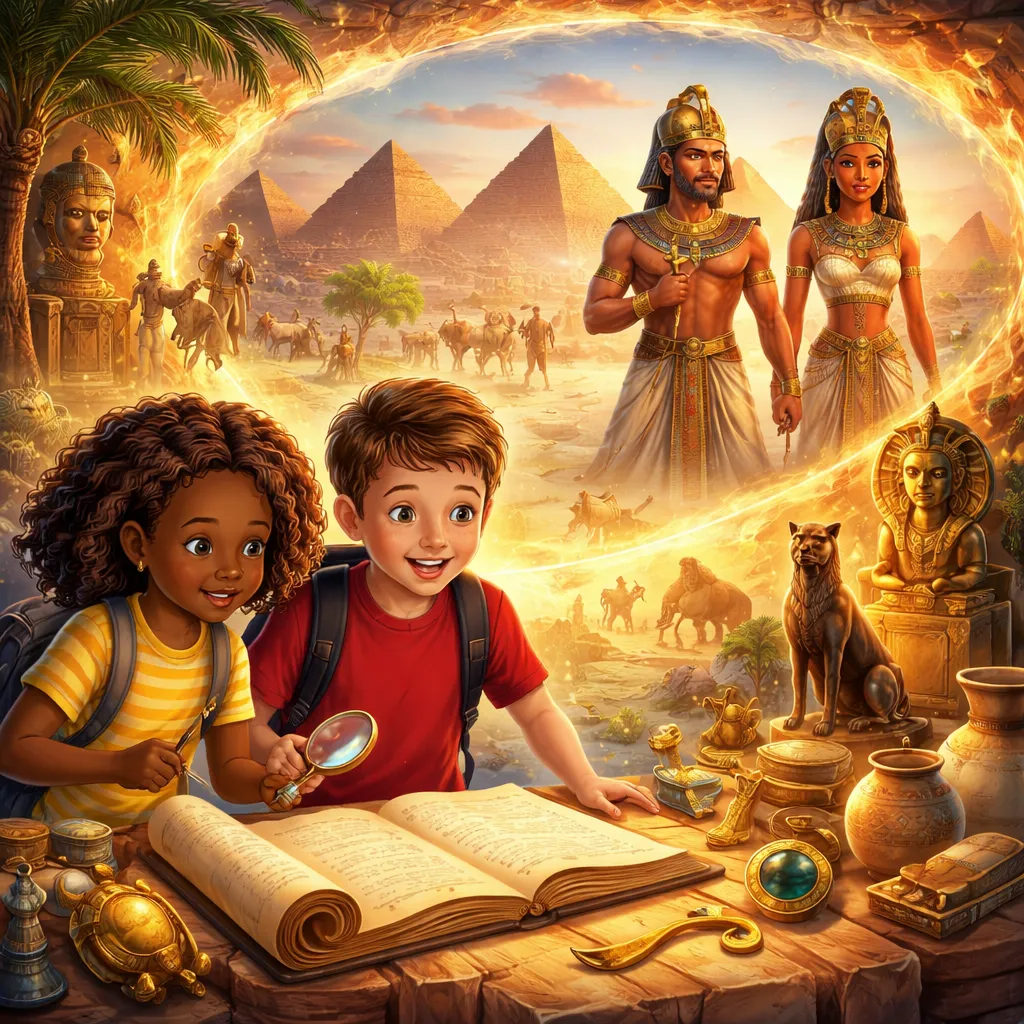

A Friendly Hello and First Impressions
As-salamu alaykum! (ah-sah-LAH-moo ah-LAY-koom). This is the traditional Arabic greeting. It means "Peace be upon you". Shukran! (SHOOK-rahn). This is a warm "Thank you". People say it with a smile. Learning reading about Egypt starts with these ancient, kind words.
Egypt sits in the northeast corner of Africa. Its shape looks like a long, green stem. The stem has a large flower at the top. The stem is the Nile River Valley. The flower is the Nile Delta. The Mediterranean Sea is to the north. The Red Sea is to the east. Libya and Sudan are its neighbors. The land is mostly a vast, sandy desert.
People call it the "Gift of the Nile". The Nile River is the lifeblood of Egypt. Without the Nile, Egypt would be all desert. Another name is the "Land of the Pharaohs". The pharaohs were the ancient kings. They built incredible monuments. Are you ready to sail down the river of time?
Deep Dive into Culture and Stories
Echoes of History
A famous young pharaoh ruled long ago. His name was Tutankhamun. People call him King Tut. He became pharaoh at age nine. He ruled for only ten years. He died very young. His tomb was discovered in 1922. It was full of incredible treasures. His golden mask is world famous. His story is a key part of learning reading about Egypt. It is a story of mystery and discovery.
Another important ruler was Cleopatra VII. She was the last pharaoh of Egypt. She was very intelligent and spoke many languages. Her life was full of drama and alliances with Rome. She is one of the most famous women in history. Her story shows the power of Egypt long ago.
A Gift of Words and Paper
Egypt gave the world two great gifts. The first is writing. The ancient Egyptians invented hieroglyphs. These are picture symbols. They wrote on temple walls and tombs. The second gift is paper. They made papyrus from a reed plant. They wrote on scrolls of papyrus. This was the first paper. These inventions helped record history. They are gifts of knowledge.
A Land of River and Desert
Egypt's geography is simple but extreme. Over 90% of the land is desert. The Sahara Desert is vast and dry. The Nile River runs through the middle. It creates a narrow, green valley. The valley opens into a delta near the sea. The land is flat near the river. The east has some mountains.
The climate is very hot and dry. Rain is very rare. The environment shapes everything. People live only near the Nile or the coast. They grow wheat, cotton, and dates. The river provides water and fertile soil. Houses are often made of mud brick. This keeps them cool. The main export is oil. Tourism is also very important.
A special animal is the Nile crocodile. It lives in the river. It is huge and powerful. The ancient Egyptians worshipped it as a god. The national bird is the steppe eagle. It is on the flag. The lotus flower is a national symbol. It is white and pure. The papyrus plant is iconic. It grows along the river.
Landmarks of Stone and Mystery
Visit the Great Pyramid of Giza. It is the oldest of the Seven Wonders. It is also the only one still standing. It was built for Pharaoh Khufu. It is made of over 2 million stone blocks. The blocks are huge. How did they build it? A fun story says giants built the pyramids. Or maybe magic helped. The pyramid is a marvel of engineering.
See the Great Sphinx. It is a giant statue with a lion's body. It has a human head. The head might be Pharaoh Khafre. The Sphinx guards the pyramids. A legend says the Sphinx has a secret chamber. The chamber holds ancient knowledge. The Sphinx is mysterious and grand.
Another wonder is the Valley of the Kings. It is on the west bank of the Nile. Many pharaohs were buried here. Their tombs are underground. The walls are covered in colorful paintings. The paintings tell stories of the afterlife. It is a silent city of the dead.
Festivals of Light and Spring
The most important religious festival is Eid al-Fitr. It marks the end of Ramadan. Ramadan is a month of fasting. People do not eat from sunrise to sunset. The festival is a time of joy. Everyone wears new clothes. They visit family and friends. Children receive money and gifts. Special cookies are eaten. The festival is about community and gratitude.
A unique ancient festival is Sham el-Nessim. It means "smelling the breeze". It is a spring festival. It is thousands of years old. It happens the day after Easter. Families go for picnics in parks. They eat special foods. They eat salted fish, onions, and colored eggs. The festival celebrates spring and new life.
Food and Flavors
The national dish is Koshari. It is a mix of rice, pasta, and lentils. It is topped with tomato sauce and fried onions. It is cheap, tasty, and filling. People eat it any time of day. It is a popular street food. It tastes like a hearty, savory party in a bowl.
You must try Ful Medames. It is a dish of cooked fava beans. The beans are mashed with oil and spices. People eat it for breakfast. It is served with bread and eggs. A good ful is creamy, garlicky, and delicious. It is the ultimate Egyptian breakfast.
A Culture of Stories and Canals
Egypt is a land of stories. Ancient myths are about gods and magic. Modern Egyptians love storytelling too. They sit in cafes and talk for hours. This love for stories is a key part of learning reading about Egypt. It connects the past and present.
Egypt is a leader in engineering. The ancient pyramids are proof. A modern wonder is the Suez Canal. It connects the Mediterranean and Red Seas. It is a vital shortcut for ships. It shows Egyptian skill in connecting the world.
Tips for Young Explorers
Cultural Manners Matter
Egypt is a Muslim country. Dress modestly. Women should cover their shoulders and knees. Men should avoid very short shorts. This shows respect. Swimwear is for the beach or pool only.
Use your right hand for everything. Give gifts, eat food, and shake hands with your right hand. The left hand is considered unclean. This rule is very important.
Greetings are warm but polite. A handshake is common. You can say "As-salamu alaykum". The reply is "Wa alaykum as-salam". Always greet the oldest person first. This is respectful.
A Note on Staying Safe
Egypt is generally safe for tourists. But be careful in big cities. Watch for pickpockets in crowds. Keep your bag close. Do not walk alone at night in quiet areas. Use common sense.
The sun is extremely strong. Wear a hat and use sunscreen. The desert heat is dangerous. Drink lots of water. Dehydration happens fast. Wear light, loose clothing.
A Tasty Stop
Look for a "kushari" cart or restaurant. Order a plate of kushari. Watch the layers go into the bowl. Eat it hot. The mix of textures and flavors is amazing. It is the perfect Egyptian comfort food.
Healthy and Happy Travels
Drink only bottled water. This is the most important rule. Do not drink tap water. Avoid ice in drinks. Brush your teeth with bottled water. This keeps your stomach happy.
Use insect repellent. Mosquitoes can be annoying, especially near the Nile. It helps prevent itchy bites. Wear long sleeves in the evening.
Wear comfortable walking shoes. The archaeological sites are large and sandy. The streets in old Cairo are uneven. Good shoes make exploring more fun.
Your Invitation to Explore
Start your journey with symbols. Try to write your name in hieroglyphs. Look up the alphabet online. Each symbol is a picture. Or, read a children's book about ancient Egypt. Learn about the gods and goddesses. This is a wonderful way of learning reading about Egypt.
Visit a museum with Egyptian artifacts. Look for a scarab or a canopic jar. Imagine the stories behind them. You can also try making a simple papyrus. Use strips of brown paper and glue. Weave them together. Feel the texture.
The world is a big, ancient book. Each country is a different chapter. Egypt's chapter is about pharaohs, pyramids, and the precious Nile. Open it with curiosity. Read about its scribes, sphinxes, and spices. Your curiosity is your guide.
Egyptian families share a bowl of ful for breakfast. Friends drink tea and talk for hours. Children play soccer by the Nile. We all know these scenes. We love sharing meals. We enjoy time with friends. We play games. Learning about Egypt shows us this. Our global family shares the same simple joys. Keep exploring, one page, one country, at a time. Your adventure has just begun.