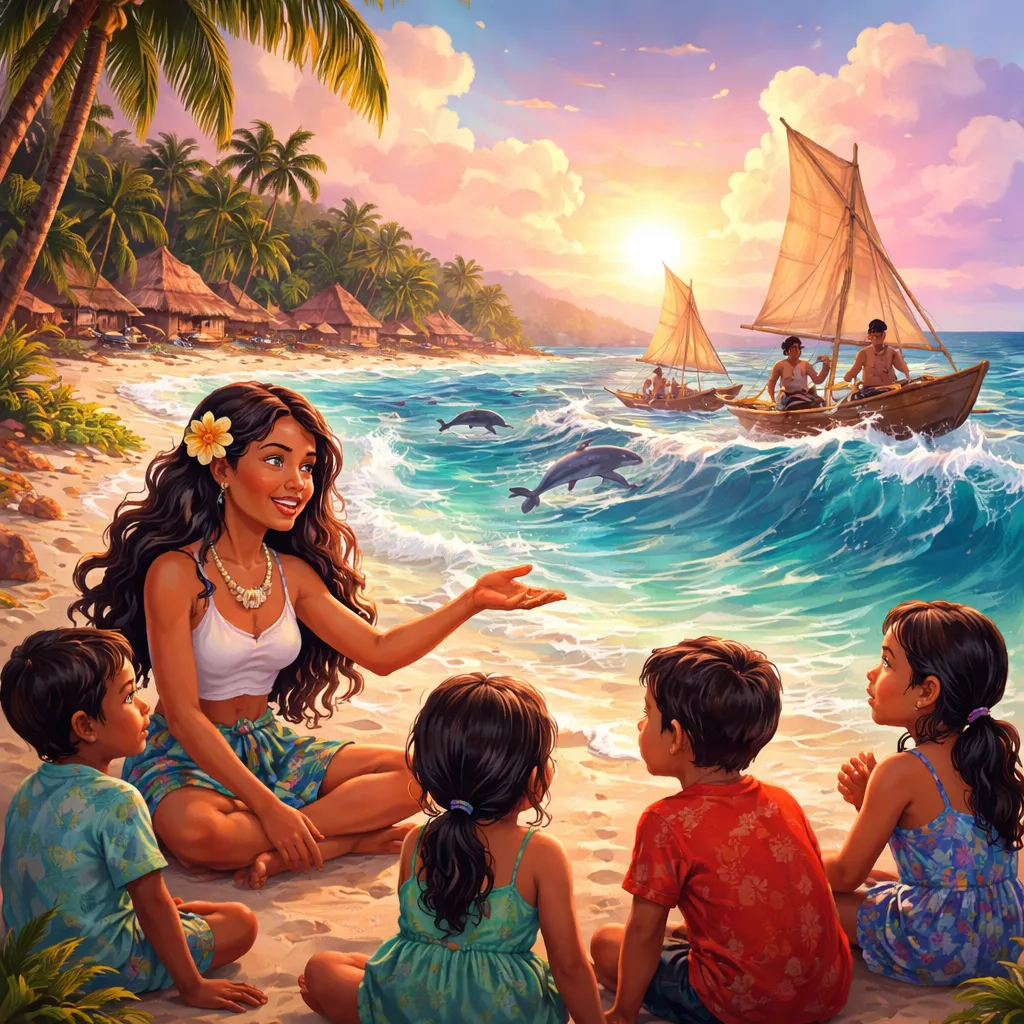

A Friendly Hello and First Impressions
Mauri! (MAH-oo-ree). This is a warm "Hello" in the Gilbertese language. Ko rabwa! (koh RAHB-wah). This is a sincere "Thank you". People say it with kindness. Learning reading about Kiribati starts with these gentle, island words.
Kiribati is a country in the central Pacific Ocean. It is made of 33 islands. Its shape looks like stars scattered across a huge blue sky. The stars are the islands. The blue sky is the ocean. The country is in Oceania. Fiji and Tuvalu are its neighbors. The Pacific Ocean surrounds every island. The land is flat, green, and shaped like rings. These rings are called atolls. It is a nation of water and sky.
People call it the "Land of the Rising Sun". It is the first country to see the new day. Another nickname is the "Land of the Fishermen". The ocean provides life. Are you ready to visit the first place on Earth to greet tomorrow?
Deep Dive into Culture and Stories
Echoes of History
Traditional leaders were very important. They were the "unimane". These are the old, wise men. They made decisions for the community. They knew the old ways of the sea and stars. They guided the people. Their wisdom is a key part of learning reading about Kiribati. It is a story of community and respect for elders.
A modern leader is Anote Tong. He was president. He told the world about climate change. The sea is rising. It is a big danger for Kiribati. He asked the world for help. His voice is important for all island nations.
A Voice for the Ocean
Kiribati gives the world a powerful message. It is about protecting our planet. The country created a huge marine park. It is the Phoenix Islands Protected Area. It is one of the largest in the world. This protects fish and coral. Kiribati also speaks for all low-lying islands. It reminds us to care for the Earth. This is a key part of learning reading about Kiribati.
A Land of Water and Sand
Kiribati's geography is unique. The islands are coral atolls. An atoll is a ring of coral around a lagoon. The land is very low. The highest point is only a few meters tall. The landscape is sand, coconut trees, and blue water.
The climate is tropical. It is warm all year. There is a wet and a dry season. The environment is everything. People fish in the lagoon and ocean. They grow coconuts and breadfruit. Houses are often made of wood and palm leaves. They have raised floors for air. The main exports are fish (especially tuna) and coconuts.
A special animal is the frigatebird. It is the national bird. It has a red throat pouch. It cannot land on water. The national animal is the sea turtle. The national flower is the Tahitian gardenia. It is white and smells sweet. The coconut tree is the "tree of life". It gives food, drink, and shelter.
Landmarks of Conservation and Memory
Visit the Phoenix Islands Protected Area. It is a marine wilderness. You can see healthy coral reefs. You can see many sharks and fish. It is mostly underwater. A local belief says the islands are sacred. They are the home of spirits. The area is a UNESCO World Heritage site. It is a gift to the ocean.
See World War II relics on some islands. Kiribati was a battleground. You can see old guns and shipwrecks. They are covered in rust and coral. A fun story says ghosts of soldiers walk there. The relics are a memory of a global war.
Another wonder is the lagoon inside an atoll. The water is calm and clear. It is like a giant swimming pool. The colors are amazing blues and greens. It is the heart of island life.
Festivals of Culture and Freedom
The biggest national holiday is Independence Day. It is on July 12th. It marks freedom from Britain in 1979. There is a big celebration in South Tarawa. People wear grass skirts and shell jewelry. They perform traditional dances.
There are canoe races and sports games. The national flag is everywhere. The colors are red, blue, white, and gold. A frigatebird flies over a rising sun. The day is about culture, freedom, and community joy.
Another important day is National Youth Day. It is in August. Schools compete in dancing, singing, and sports. The energy is happy and full of laughter. It celebrates the future of the islands.
Food and Flavors
The national dish is fish with coconut. Fresh fish is cooked in coconut cream. It is simple and delicious. Families eat it with rice or breadfruit. It tastes of the sea and the island. It is the taste of daily life.
You must try Babai. It is a giant swamp taro. It grows in special pits. It can take years to grow. People eat it at important feasts. It is starchy and bland. But it is a symbol of patience and community work.
A Culture of Dance and Navigation
Dance is a way of telling stories. Dancers use their hands and feet. They tell stories of fishing and voyages. The music uses shells and drums. This love for dance is a joyful part of learning reading about Kiribati.
The people were master navigators. They sailed huge canoes across the ocean. They used the stars, waves, and birds to find their way. This ancient knowledge is incredible. It shows a deep connection to the sea.
Tips for Young Explorers
Cultural Manners Matter
I-Kiribati people are friendly and communal. Greetings are warm. A smile and "Mauri" are enough. People are not very formal. Shaking hands is fine. Always be respectful to elders. They are called "unimane" or "unaine" (older women). Listen to them.
Dress modestly. Women often wear long, colorful dresses. Men wear shirts and pants or wraps. Swimwear is for the beach only. Cover up in the village. This shows respect.
Sharing is very important. If you have something, share it. Food is often shared from a common bowl. Do not be greedy. Take only what you need. This is the island way.
A Note on Staying Safe
Kiribati is a very safe and peaceful country. But the ocean can be dangerous. Only swim in safe, calm lagoons. The open sea has strong currents. Always ask a local. Never swim alone.
The sun is extremely strong. There is little shade. Use the strongest sunscreen. Wear a hat and a long-sleeve shirt. Drink lots of water. Dehydration happens fast.
Be aware of climate change. King tides and storms are getting worse. Listen to local advice about weather. This is a real part of life in Kiribati.
A Tasty Stop
Look for "te bua" or fresh coconut. Someone will climb a tree. They will get a green coconut. You drink the sweet, cool water inside. It is the best drink on a hot day. It is natural and refreshing.
Healthy and Happy Travels
Drink only bottled or boiled water. Rainwater is often collected and safe. But always check. Do not drink from unknown sources. Brush your teeth with safe water. This keeps you healthy.
Protect the coral. Do not stand on it. It is alive and fragile. Use reef-safe sunscreen. This helps keep the ocean healthy. Take all your trash with you.
Walk gently on the land. The islands are fragile. Respect the plants and animals. You are a guest in a special, vulnerable home.
Your Invitation to Explore
Start your journey with a map. Find Kiribati in the vast Pacific Ocean. See how the islands are just dots. Then, watch a video of I-Kiribati dancing. See the graceful hand movements. This is a wonderful way of learning reading about Kiribati.
Think about the ocean. Look at a globe. See how much is water. Imagine sailing across it with only stars to guide you. You can also try drawing an atoll. Draw a circle of sand with a blue lagoon inside. Add a coconut tree.
The world is a big, open book. Each country is a different chapter. Kiribati's chapter is about a brave fight against the rising sea, incredible navigation, and simple community joy. Open it with respect. Read about its challenges, culture, and quiet courage. Your curiosity is your guide.
Families in Kiribati share a fish from the lagoon. Children learn traditional dances from their grandparents. Everyone works together to prepare for a feast. We all know these feelings. We love sharing what we have. We learn from our family. We help our community. Learning about Kiribati shows us this. Our global family shares the same values. It also shows we must protect our shared home. Keep exploring, one page, one country, at a time. Your adventure has just begun.