
What Is This Animal?
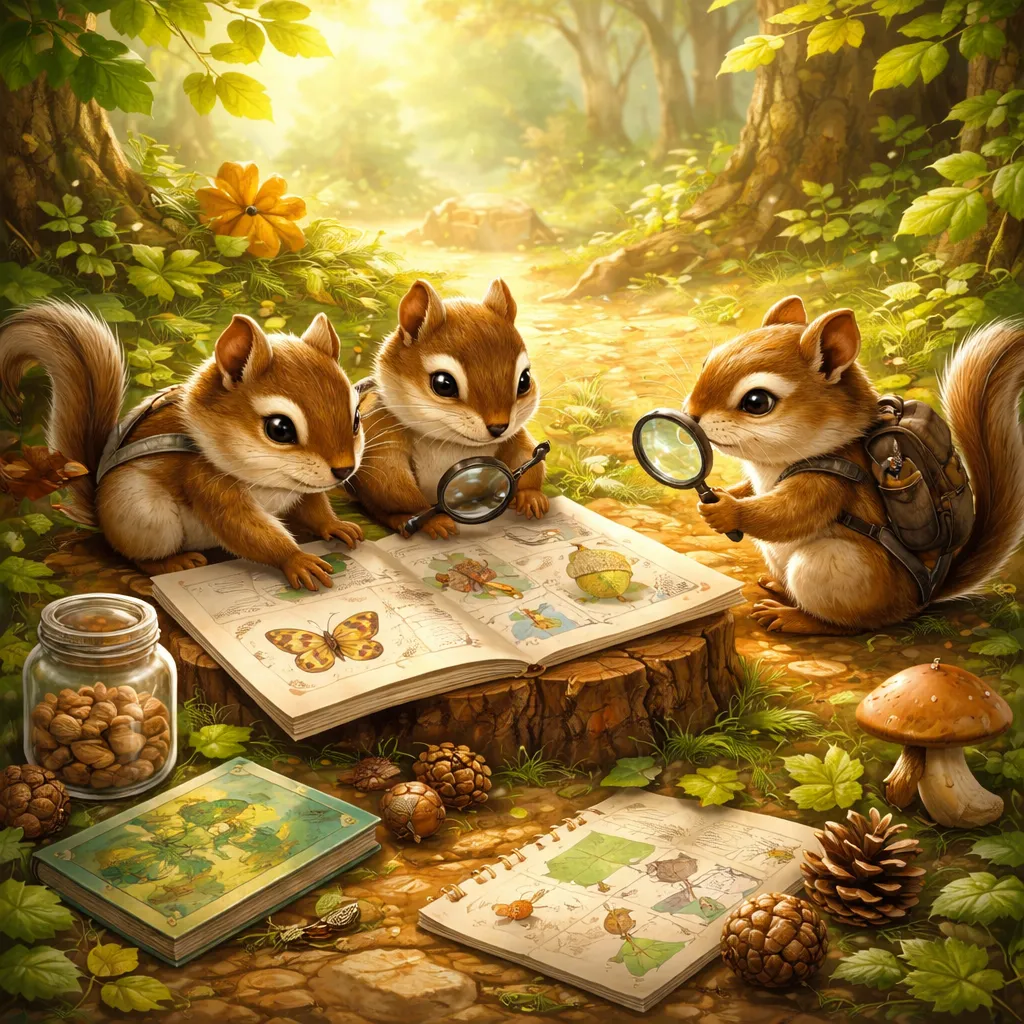
A chipmunk is a small rodent with brown fur and dark stripes on its back. It has white stripes above and below the eyes. Its body is small and quick. It has a bushy tail that it holds straight up when running. Chipmunks are related to squirrels.
Chipmunks live in forests, woodlands, and gardens. They dig burrows underground. Their burrows have tunnels, sleeping chambers, and food storage rooms. They are active during the day. They scurry across the ground looking for food. They climb trees but spend most of their time on the ground.
These animals are found in North America and parts of Asia. There are many chipmunk species. The eastern chipmunk is common in the United States. The least chipmunk lives in western mountains. They are known for stuffing their cheeks with food.
For children, chipmunks are delightful. Their stripes and quick movements make them fun to watch. Learning about chipmunks teaches children about forest animals, burrowing habits, and the importance of preparing for winter.
English Learning About This Animal
Let us learn the English word chipmunk. We say it like this: /ˈtʃɪpmʌŋk/. The chip sounds like “chip.” The munk sounds like “munk.” Put them together: chipmunk. Say it three times. Chipmunk. Chipmunk. Chipmunk.
Now let us learn words about a chipmunk’s body. The stripes run down the back. The cheek pouches hold food. The tail is bushy. The claws are sharp for digging. The pups are baby chipmunks.
There is a cheerful saying about chipmunks. Naturalists say, “The chipmunk scolds from the stone wall.” This describes their chattering calls. Another saying is, “A chipmunk’s cheeks hold a winter’s worth of nuts.” This celebrates their storage skill.
These English words help children understand chipmunk anatomy. When they say cheek pouches, they learn how chipmunks carry food. When they say pups, they know the babies. Parents can practice these words while watching chipmunks outside. Point to the parts. Say the words together.
Animal Facts and Science Knowledge
Chipmunks belong to the squirrel family Sciuridae. There are about twenty-five chipmunk species. The eastern chipmunk is the largest. Western species are smaller. Chipmunks are found throughout North America. One species lives in Asia. They are not found in Europe or South America.
Chipmunks live in forests, woodlands, and gardens. They prefer areas with rocks, logs, and stone walls. These provide cover from predators. They dig burrows with multiple entrances. Their burrows can be up to thirty feet long. They have special tunnels for storing food.
Chipmunks are omnivores. They eat nuts, seeds, berries, fruits, insects, and small animals. They stuff food into their cheek pouches. They carry it to their burrow. They store large amounts of food for winter. They do not truly hibernate. They sleep for long periods but wake to eat.
Chipmunks have special abilities. Their cheek pouches can stretch to hold as many nuts as their head. They are fast runners. They can climb trees quickly. They make chirping and chattering sounds. They use these sounds to warn others of danger.
Chipmunks are mostly solitary. They live alone except during breeding. Each chipmunk has its own burrow. They are territorial. They chase other chipmunks away. Mothers raise the pups alone. Pups leave the burrow after about six weeks.
How to Interact With This Animal Safely
Chipmunks are wild animals. They are not pets. The best way to interact is to watch from a distance. If you see a chipmunk in the yard, sit quietly. Watch it run and stuff its cheeks. Do not try to chase or catch it.
Teach children not to feed chipmunks. Human food is not healthy for them. Feeding makes them lose their fear of people. They may come too close. They may bite if they feel trapped.
If you want to attract chipmunks to your yard, plant native trees and shrubs. Provide rock piles or logs for cover. Chipmunks will come naturally. Watch them from a window. This is a safe way to enjoy them.
Chipmunks can sometimes dig in gardens. They may eat bulbs or seeds. If this happens, use gentle deterrents. Do not use poisons. Poisons can harm other animals and pets. There are safe ways to protect gardens.
Chipmunks are important for forests. They spread seeds. Their burrows aerate the soil. They provide food for hawks, foxes, and snakes. They are part of the natural balance.
What Can We Learn From This Animal
Chipmunks teach us about preparation. They gather food all summer. They store it for winter. Children learn that preparing helps us. Saving for needs, planning ahead, and being ready for hard times are important habits.
Chipmunks teach us about using what we have. Their cheek pouches carry much food. Children learn that we all have tools to help us. Using our strengths, talents, and resources helps us succeed.
Chipmunks teach us about being active. They are always moving. They run, climb, and dig. Children learn that staying active is good for us. Playing outside, moving our bodies, and exploring keep us healthy.
Chipmunks teach us about home. They build cozy burrows. Children learn that home is where we feel safe. Making our home comfortable, keeping it clean, and feeling safe matter.
Fun Learning Activities
Let us make learning about chipmunk fun. One activity is the chipmunk stuff game. Ask your child to pretend to stuff cheeks with nuts. Carry them to a “burrow.” Store them for winter. Say “chipmunk stuffs cheeks” and “chipmunk stores food.”
Another activity is drawing a chipmunk. Look at pictures of chipmunks. Notice the stripes on the back and face. Draw a chipmunk with full cheeks. Add a burrow entrance. Label the parts. Say the words aloud.
Create a story about a chipmunk’s summer. Ask your child what the chipmunk does. Does it gather acorns? Does it dig a burrow? Does it chase other chipmunks? Write a few sentences together. Let your child draw pictures. Read the story aloud.
Make a chipmunk craft. Use brown paper for the fur. Add dark stripes on the back. Add cheek pouches with cotton balls. Add a bushy tail. Move the craft chipmunk. Practice saying “chipmunk scurries” and “chipmunk chatters.”
Learn about animal preparation. Talk about why chipmunks store food. Compare to other animals that prepare for winter like squirrels or bears. Use words like “store,” “hibernate,” and “prepare.”
Learn about backyard wildlife. Watch for chipmunks in your yard or park. Count how many you see. Notice their behavior. Draw what you see. Use words like “stripes,” “cheek pouches,” and “burrow.”
These simple activities bring learning to life. Children build English vocabulary while playing. They learn science through understanding animal behavior. They develop appreciation through watching wildlife. Learning about chipmunk becomes a journey into forests and backyards. Each moment spent together strengthens language, curiosity, and a growing appreciation for the striped, cheek-stuffing creatures that scurry across our paths, teaching us that preparation, using our gifts, and staying active help us thrive in every season.