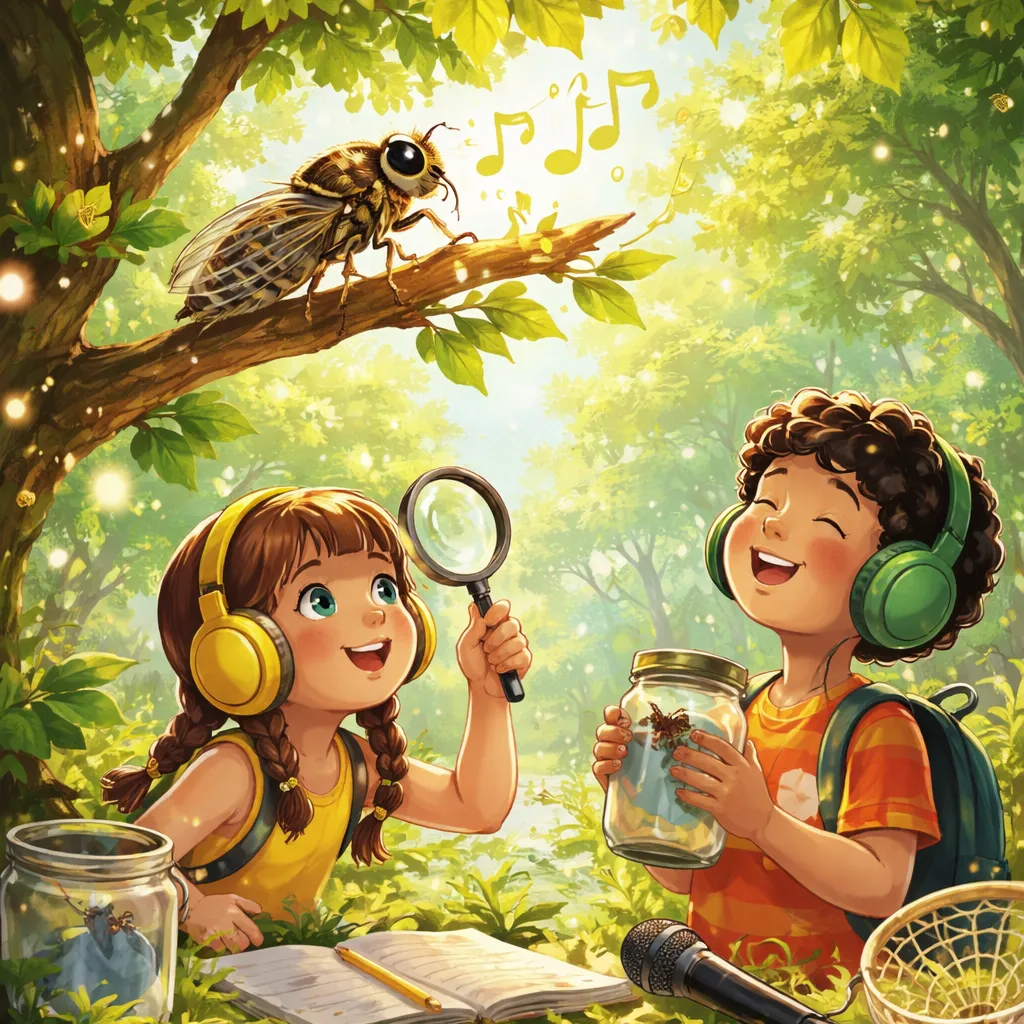

What Is This Animal?
A cicada is a large insect with wide, clear wings and big eyes. Its body is stout and colorful. Some cicadas are green. Others are black or brown. They are known for their loud, buzzing songs. Male cicadas sing to attract females.
Cicadas spend most of their lives underground. They live as nymphs for years. Some species live underground for thirteen years. Others live for seventeen years. When they finally emerge, they climb trees. They shed their skin and become winged adults.
These insects live in forests and woodlands. You hear them on hot summer days. Their songs fill the air. Some people find the sound soothing. Others find it loud. But it is a sure sign of summer.
For children, cicadas are fascinating. Their long life cycles seem like magic. Their loud songs surprise. Their empty skins left on trees make great discoveries. Learning about cicadas teaches children about patience, timing, and the rhythms of nature.
English Learning About This Animal
Let us learn the English word cicada. We say it like this: /sɪˈkɑːdə/ or /sɪˈkeɪdə/. The word has three parts. Ci sounds like “sih.” Ca sounds like “kah” or “kay.” Da sounds like “duh.” Put them together: cicada. Say it three times. Cicada. Cicada. Cicada.
Now let us learn words about a cicada’s body. The head holds the large compound eyes. The eyes are wide apart. The thorax is the strong middle part. The wings are clear with dark veins. The abdomen is hollow. This hollow space makes the sound louder. The tymbals are the sound-producing organs on the abdomen.
There is a beautiful Greek legend about cicadas. The poet Homer wrote that cicadas once were humans. They sang so sweetly that they forgot to eat. The Muses turned them into insects so they could sing forever. Another saying is, “The cicada sings without knowing summer will end.” This reminds us to enjoy the moment.
These English words help children understand cicada anatomy. When they say tymbals, they learn the sound organs. When they say nymph, they know the underground stage. Parents can practice these words while finding cicada skins. Point to the parts. Say the words together.
Animal Facts and Science Knowledge
Cicadas belong to the insect order Hemiptera. They are related to aphids and leafhoppers. There are over three thousand cicada species. Most appear every year. These are called annual cicadas. Some appear only every thirteen or seventeen years. These are called periodical cicadas.
Cicadas live in trees and forests. Nymphs live underground. They feed on tree roots. They dig tunnels and wait. When the soil temperature is right, they emerge. They climb tree trunks. They shed their nymph skin. Adult cicadas live for only a few weeks.
Nymphs drink sap from tree roots. Adults drink sap from tree branches. They use their mouthparts to pierce bark. They do not eat solid food. They live on sap. They do not harm trees significantly.
Cicadas have special abilities. Male cicadas produce sounds up to one hundred decibels. That is as loud as a lawnmower. They make sound by vibrating membranes called tymbals. The hollow abdomen amplifies the sound. Different species have different songs. Females respond with wing flicks.
Periodical cicadas emerge in massive numbers. Millions appear at once. This is called predator satiation. So many cicadas appear that predators cannot eat them all. Some survive to mate. This strategy ensures the species continues.
How to Interact With This Animal Safely
Cicadas are harmless to people. They do not bite or sting. They are safe to hold and observe. If you find a cicada, let your child watch it. Notice the clear wings and red eyes. Listen to its song. Then let it go.
When cicadas emerge, you find their empty skins on trees. These are called exuviae. Children love collecting them. They are safe to touch. Look at the split down the back where the adult emerged. Compare the skin to the living insect.
If your child wants to hold a cicada, show them how. Let it crawl onto a hand. Feel its legs grip. Watch its wings. Then place it back on a tree. Cicadas are clumsy fliers. They may bump into things. They are not hurt by gentle handling.
Teach children not to harm cicadas. They are part of summer. Their songs tell us the season. Their emergence is a natural wonder. Watching them, listening to them, and learning about them is a gift.
If your family has trees, cicadas may lay eggs in small branches. This can cause minor damage. But the trees recover. The cicadas are part of the forest cycle. They enrich the soil when they die.
What Can We Learn From This Animal
Cicadas teach us about patience. They wait underground for years. They do not rush. Children learn that waiting is part of life. Waiting for a birthday, waiting for a trip, or waiting to grow up all take patience. Good things come in their own time.
Cicadas teach us about timing. They know when to emerge. Children learn that timing matters. Doing things at the right time helps us succeed. Knowing when to speak, when to listen, and when to act are all skills.
Cicadas teach us about being heard. They sing loudly. They do not hide their voices. Children learn that their voices matter. Speaking up, sharing ideas, and expressing feelings are ways to be heard.
Cicadas teach us about cycles. They appear, sing, mate, and die. Their young return years later. Children learn that life has cycles. Seasons come and go. Years pass. New life continues. We are part of something bigger.
Fun Learning Activities
Let us make learning about cicada fun. One activity is the cicada song game. Ask your child to make a buzzing sound. Make it loud. Make it soft. Make it long. Make it short. Talk about how male cicadas sing to attract mates. Say “cicada sings” and “cicada calls.”
Another activity is finding cicada skins. In summer, look on tree trunks and fences. Collect empty skins. Count how many you find. Look at the split down the back. Notice the legs and eyes. Use words like “exuviae,” “nymph,” and “emergence.”
Draw a cicada and label its parts. Draw the head, eyes, thorax, wings, abdomen, and tymbals. Write the words next to each part. Say them aloud. For younger children, draw the cicada first. Let them point to the parts as you say the words.
Create a story about a cicada’s long wait. Ask your child what the nymph does underground. Does it drink from roots? Does it dig tunnels? Does it wait for the right year? Write a few sentences together. Let your child draw pictures. Read the story aloud.
Make a cicada craft. Use a large paper for wings. Draw veins on them. Use a small paper roll for the body. Add big paper eyes. Attach the wings. Move the craft cicada. Practice saying “cicada climbs” and “cicada sings.”
Learn about periodical cicadas. Look at a map of where they appear. Talk about the 13-year and 17-year cycles. Use words like “periodical,” “emergence,” and “brood.” This connects the insect to math and geography.
These simple activities bring learning to life. Children build English vocabulary while playing. They learn science through understanding life cycles. They develop patience through stories of waiting. Learning about cicada becomes a lesson in timing, voice, and the summer songs that mark the hottest days. Each moment spent together strengthens language, curiosity, and a lasting appreciation for the insects that count the years underground, emerging to fill the air with music before passing the silent watch to the next generation.