
Who Is This Celebrity?
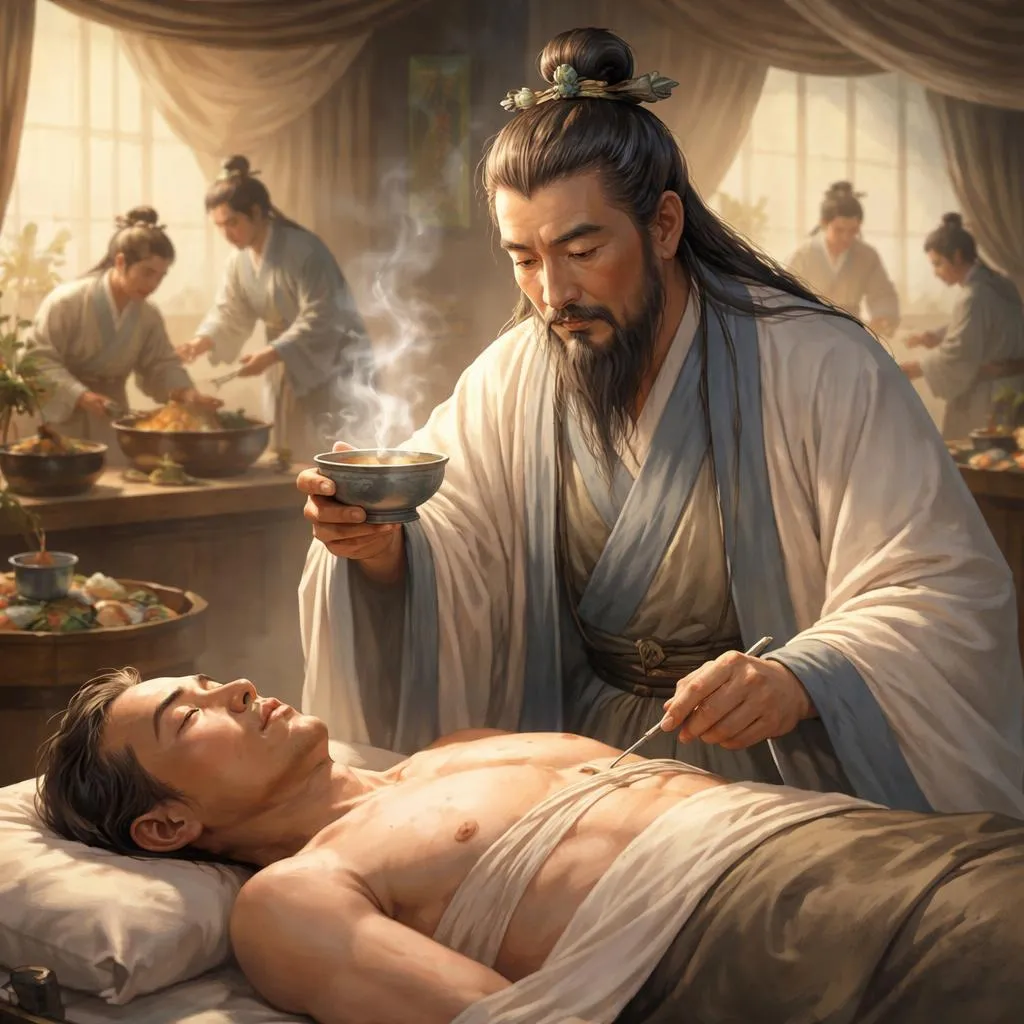
Hua Tuo was the greatest surgeon in ancient Chinese history. He lived about 1,800 years ago during the late Han Dynasty. He invented the first anesthetic, a powder that made patients feel no pain. He performed complex surgeries like removing infected organs. He also created a set of exercises called the Five Animal Frolics. He treated the famous general Guan Yu, who had been shot by a poisoned arrow. His story shows that ancient doctors could perform miracles without modern tools.
Early Life and Childhood
Hua Tuo was born around 140 CE in Qiao County, Pei Province, China. His family were poor farmers and craftsmen. Young Hua watched his grandmother suffer from a painful illness. No doctor could help her. She died in agony. Young Hua promised himself to become a doctor so others would not suffer like his grandmother. He loved watching how animals moved and healed themselves. He noticed that injured animals would rest and eat certain plants. He also enjoyed taking apart old tools to see how they worked. He dreamed of fixing human bodies like he fixed broken tools.
Education and Learning Journey
Hua Tuo studied with the best scholars he could find. He traveled to different provinces to learn from different masters. He read every medical text available, including the Yellow Emperor's Inner Canon. He also studied pharmacology, learning the properties of hundreds of herbs. But Hua Tuo wanted to know more than herbs could offer. He studied anatomy by observing slaughtered animals. He learned how muscles, bones, and organs connected. He practiced surgical techniques on animal carcasses. He also learned acupuncture from master healers. He combined all this knowledge into a unique approach. He never stopped learning. Even as a famous doctor, he continued studying new techniques.
How Did They Become Successful?
Hua Tuo became successful by curing patients that no one else could help. His reputation spread across China. Government officials and generals sought his help. The most famous story involves General Guan Yu. An arrow had poisoned the general's arm. The poison was spreading toward his heart. Hua Tuo offered to cut open the arm and scrape the bone clean. He had no anesthetic for this procedure. The general calmly played chess while Hua Tuo cut into his arm. The sound of the scalpel scraping bone made others faint. The general did not flinch. After the surgery, the general's arm healed completely. This story made Hua Tuo famous throughout Chinese history.
Big Ideas and Achievements
Hua Tuo's biggest achievement was inventing surgical anesthesia. He created a powder called "mafeisan," which means "cannabis boiling powder." Patients drank this powder mixed with wine. Within minutes, they fell unconscious and felt no pain. Hua Tuo could then perform major surgeries. He removed infected organs, repaired wounds, and even performed abdominal operations. He also invented exercises called the Five Animal Frolics. These exercises imitated the movements of the tiger, deer, bear, monkey, and crane. He taught these exercises to his patients for preventive medicine. People who practiced them stayed healthy and lived longer. Some versions of these exercises are still practiced today.
Challenges and Difficult Times
Hua Tuo faced the ultimate challenge from a powerful warlord. The warlord Cao Cao ruled northern China. He suffered from terrible headaches that no doctor could cure. He summoned Hua Tuo to treat him. Hua Tuo used acupuncture to stop the pain temporarily. But Cao Cao wanted a permanent cure. Hua Tuo said the only cure required opening the warlord's skull and removing a growth. Cao Cao became furious. He accused Hua Tuo of planning to murder him. He threw Hua Tuo in prison and sentenced him to death. Friends begged Hua Tuo to apologize and change his diagnosis. Hua Tuo refused to lie. He died in prison around 208 CE. His medical books burned with him.
Fun Facts About the Celebrity
Hua Tuo loved eating fresh pears that he grew in his garden. He believed they cooled the body. He also enjoyed drinking tea made from chrysanthemum flowers. He never drank alcohol before performing surgery. He said it made his hands shake. He kept a small turtle as a pet in his study. He believed the turtle's long life taught lessons about patience. He also loved playing a stringed instrument called the qin. He would play soft music to calm nervous patients. He never wore fancy robes, even when treating rich clients. He preferred simple cotton clothes. He also wrote poetry about nature and healing. Most of his poems were lost after his death.
Why Is This Celebrity Important Today?
Hua Tuo is considered the father of Chinese surgery. His anesthetic formula, though lost, inspired later medical research. His Five Animal Frolics influenced modern qigong and tai chi. His story appears in every Chinese medical textbook. He represents the ideal of the courageous doctor who tells the truth. He also represents the tragic conflict between medicine and power. A warlord killed him because he did not like his diagnosis. This story reminds us that doctors must sometimes give bad news. Modern historians debate whether Hua Tuo really performed the surgeries described. But his legend has inspired surgeons in China for 1,800 years. Statues of him stand in hospitals across Asia.
What Can Kids Learn from This Story?
You can learn that ancient people were not primitive. Hua Tuo performed surgery 1,600 years before Western doctors used anesthesia. You can also learn to observe nature for answers. He created exercises by watching animals. You can learn to tell the truth even when it is dangerous. He refused to lie to a warlord who could kill him. You can learn to combine different skills. He used herbs, acupuncture, surgery, and exercise. You can also learn that helping others can cost you everything. He healed thousands but died in prison.
Quick Quiz or Practice Time
Let's see what you remember about Hua Tuo.
Question 1: What was the name of Hua Tuo's anesthetic powder?
Answer: Mafeisan (cannabis boiling powder).
Question 2: What famous general did Hua Tuo treat for a poisoned arrow?
Answer: General Guan Yu.
Question 3: What were the five animals in Hua Tuo's exercise system?
Answer: Tiger, deer, bear, monkey, and crane.
Question 4: What powerful warlord executed Hua Tuo?
Answer: Cao Cao.
Question 5: What pet did Hua Tuo keep in his study?
Answer: A small turtle.
Activity: Try one of Hua Tuo's Five Animal Frolics. Stand like a tiger with your arms out wide. Stretch like a deer reaching for leaves. Walk like a bear on all fours. Jump like a monkey. Stand tall like a crane on one leg. Notice how each movement makes your body feel. You are practicing ancient preventive medicine.
Hua Tuo lived a short life of service. He died in his 60s, executed by a paranoid warlord. He could have saved himself. He could have apologized. He could have offered a different diagnosis. He could have flattered Cao Cao and lived. Instead, he told the truth. The warlord needed skull surgery. Nothing else would cure him. Cao Cao did not want to hear that. He killed the messenger. But the messenger's message survived. Surgeons for 1,800 years have remembered Hua Tuo. They have tried to match his skill. They have tried to invent better anesthetics. They have tried to perform the operations he described. They have honored his courage. His story teaches us that truth matters more than safety. That a good death matters more than a long life. That healing requires honesty, not flattery. Hua Tuo knew this. He lived it. He died for it. Now you know his story. Tell the truth, even when it is hard. Help people, even when it costs you. Observe nature, practice kindness, and never stop learning. That is the way of Hua Tuo. That is your way too.