
What Is This Animal?
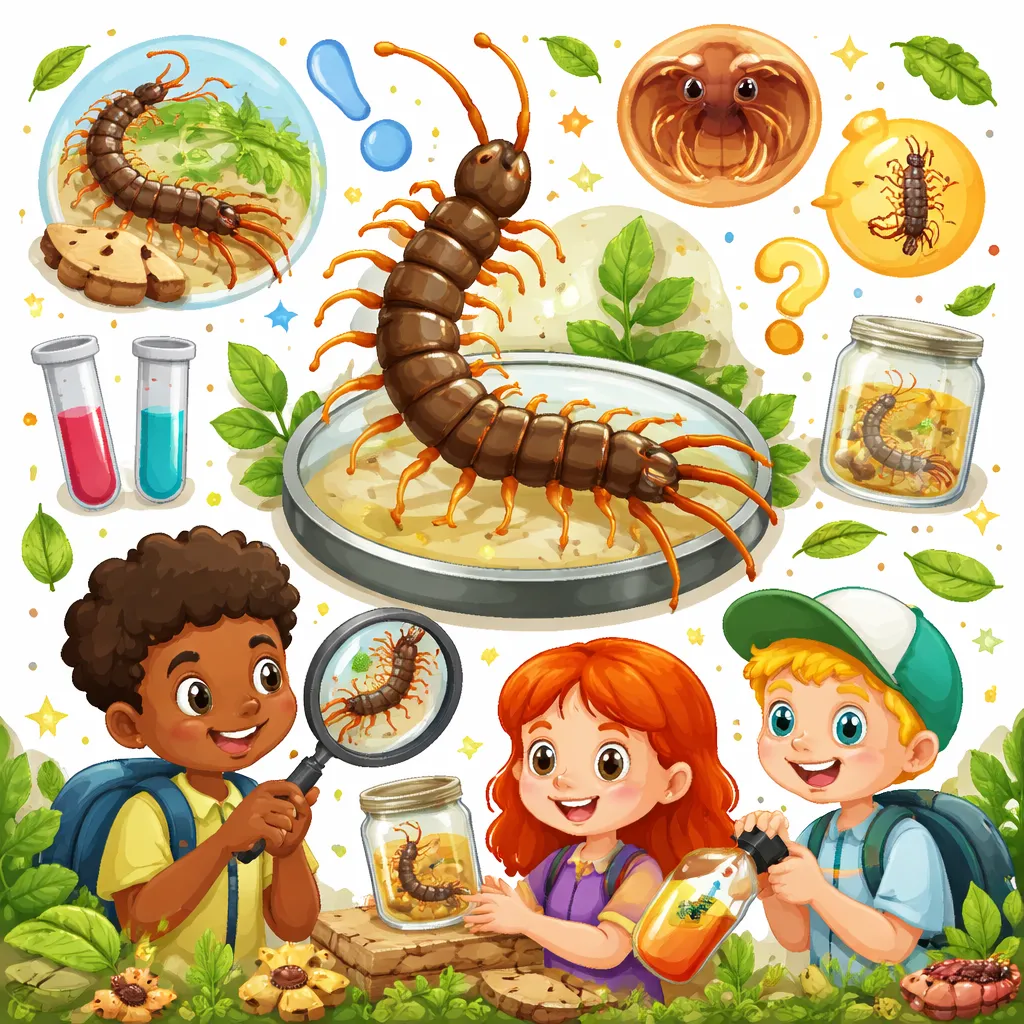
A centipede is a long, flat creature with many legs. Its body is divided into many segments. Each segment has one pair of legs. Centipedes move quickly. Their legs ripple in waves as they run. They use their speed to catch food and escape danger.
Centipedes are not insects. Insects have six legs. Centipedes have many more. They belong to a group called myriapods. This name means “many legs.” Some centipedes have thirty legs. Others have over three hundred. No centipede has exactly one hundred legs, despite the name.
These creatures live in damp places. You find them under rocks, logs, and leaves. They like soil that stays moist. They hide during the day. At night, they come out to hunt. Centipedes are fast and active.
For children, centipedes are interesting to watch. Their many legs move in a wave. Their long bodies curl and stretch. They show us that small creatures can have surprising features. Centipedes are wild animals best observed from a safe distance.
English Learning About This Animal
Let us learn the English word centipede. We say it like this: /ˈsentɪpiːd/. The word has three parts. Cen sounds like “sen.” Ti sounds like “tih.” Pede sounds like “peed.” Put them together: centipede. Say it three times. Centipede. Centipede. Centipede.
Now let us learn words about a centipede’s body. The head holds the antennae and eyes. The antennae are long and thin. They help the centipede sense the world. The segments are the sections of the body. Each segment has one pair of legs. The forcipules are the modified front legs. They contain venom for catching prey.
There is a wise saying about centipedes. An old riddle asks, “How many legs does a centipede have?” The answer is always “enough to get where it needs to go.” This reminds us that we each have what we need. Another simple saying is, “The centipede moves with all its legs working together.” This highlights the beauty of coordination.
These English words help children understand centipede anatomy. When they say segments, they see how the body is divided. When they say forcipules, they learn the special name for the venom claws. Parents can practice these words while looking at pictures. Point to the parts. Say the words together.
Animal Facts and Science Knowledge
Centipedes belong to the class Chilopoda. This group has over three thousand species. Centipedes are arthropods. They have an exoskeleton, a hard outer shell. They live on every continent except Antarctica. They prefer warm, moist environments.
Centipedes live under rocks, in soil, and inside rotting logs. They need damp places to survive. Their bodies lose water easily. During dry weather, they burrow deep into the ground. Some centipedes live in deserts. They stay underground during the day.
Centipedes are carnivores. They eat insects, spiders, worms, and small creatures. They use their forcipules to grab prey. The forcipules inject venom. The venom paralyzes the prey. Then the centipede eats. Centipedes do not chew. They tear food with their mouthparts.
Centipedes have special abilities. They are very fast. Some species run up to one foot per second. They can climb walls and ceilings. Their legs grip surfaces well. Centipedes also have good senses. Their antennae detect vibrations and smells. This helps them find food in the dark.
Centipedes go through simple metamorphosis. They hatch from eggs as small versions of adults. Young centipedes have fewer legs. They gain more legs as they grow. They shed their skin several times. Each molt adds new segments and legs.
How to Interact With This Animal Safely
Centipedes are wild creatures. They are fast and can bite if threatened. Most centipedes are not dangerous to humans. Their bite may sting like a bee sting. But it is best to avoid being bitten. The best way to interact is to watch from a distance.
Teach children to look without touching. If you see a centipede outdoors, point it out. Notice how it moves. Watch its legs ripple. Then let it go on its way. Do not try to pick it up. Do not poke it with sticks.
If a centipede comes inside the house, stay calm. It is looking for food or moisture. Use a cup and a piece of paper to move it outside. Place the cup over the centipede. Slide the paper underneath. Carry it gently to a garden area. Release it near rocks or leaves.
Teach children to respect centipedes. They help gardens by eating pests. They eat insects that harm plants. When we leave centipedes alone, they help our gardens stay healthy. Centipedes are not pests. They are part of a balanced environment.
Keep outdoor areas tidy. Remove piles of wood and leaves near the house. This gives centipedes a home away from where children play. Check shoes and gloves left outside before wearing them. These simple habits keep everyone safe.
What Can We Learn From This Animal
Centipedes teach us about coordination. All their legs work together in a wave. Each leg knows its place. Children learn that working together makes movement smooth. In games, family chores, and group projects, coordination helps everyone succeed.
Centipedes teach us about speed. They move quickly when they need to. Children learn that sometimes we need to act fast. Responding to a call, helping someone in need, or finishing a task requires good speed. Moving with purpose is valuable.
Centipedes teach us about adaptation. They live in dark, damp places. They have adapted to their environment. Children learn that they can adapt too. New situations, new places, and new challenges are chances to grow and find what works.
Centipedes teach us that appearances can be surprising. Many people feel unsure about centipedes at first. But they are helpful creatures. Children learn to look beyond first impressions. A creature that looks different may have important things to offer. The same is true for people.
Fun Learning Activities
Let us make learning about centipede fun. One activity is the centipede walk game. Ask several children or family members to line up. Each person holds the waist of the person in front. Walk together in a line. Move legs in rhythm. Say “centipede walks” and “centipede moves together.”
Another activity is counting legs. Look at pictures of different centipedes. Count how many legs you see. Notice that each body segment has two legs. Talk about how centipedes get more legs as they grow. Use words like “segments” and “pairs.”
Draw a centipede and label its parts. Draw the head, antennae, segments, legs, and forcipules. Write the words next to each part. Say them aloud. For younger children, draw the centipede first. Let them point to the parts as you say the words.
Create a story about a centipede’s night hunt. Ask your child where the centipede goes. Does it crawl under a log? Does it find a cricket? Does it hide from a bird? Write a few sentences together. Let your child draw pictures. Read the story aloud.
Make a centipede from craft materials. Use a long strip of paper for the body. Fold it accordion style. Add pipe cleaner legs to each fold. Draw eyes on the head. Move the craft centipede. Watch its body ripple. Practice saying “centipede crawls fast.”
These simple activities bring learning to life. Children build English vocabulary while playing. They learn science through observation. They connect with nature in gentle ways. Learning about centipede becomes a journey of discovery. Each moment spent together strengthens language, curiosity, and a growing appreciation for the many-legged movers that keep the soil healthy and the garden balanced.