
What Is This Animal?
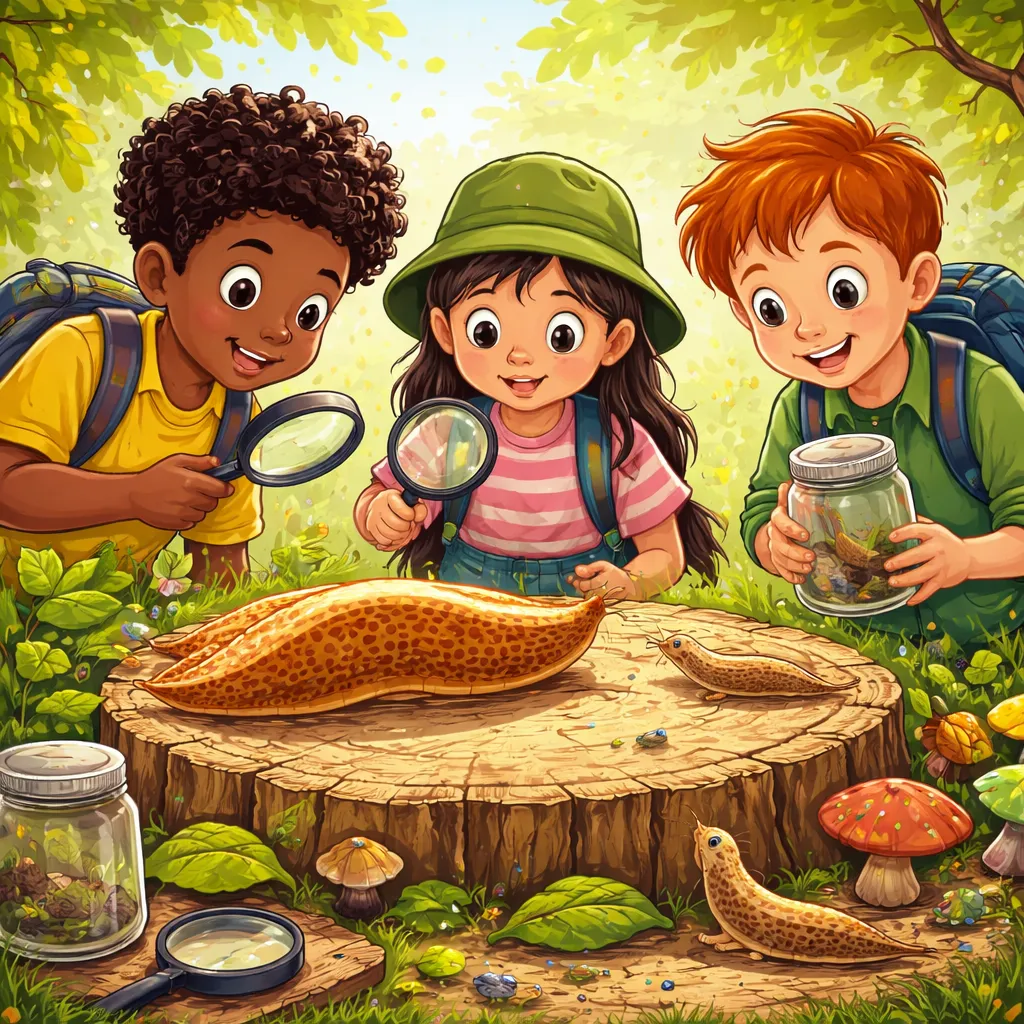
A slug is a soft-bodied creature that looks like a snail without a shell. Its body is long and moist. It moves by gliding on a muscular foot. Slugs leave a trail of shiny slime behind them. This slime helps them move and protects their delicate skin.
Slugs belong to the group called mollusks. They are close relatives of snails. Unlike snails, slugs do not have an external shell. Some slugs have a small internal shell hidden inside their body. Their soft body can stretch and contract. They can squeeze into tiny spaces.
These creatures live in damp places. You find them under rocks, logs, and leaves. They like gardens, forests, and wet soil. Slugs come out at night or after rain. They hide during hot, dry days to keep their skin moist.
For children, slugs are interesting to watch. Their slow movement lets children observe closely. Their slime trails spark curiosity. They show us that creatures without shells can still thrive in nature.
English Learning About This Animal
Let us learn the English word slug. We say it like this: /slʌɡ/. The sl sound starts with the tongue on the roof of the mouth. The u makes a short sound, like in “cup.” The g is hard. Say it together: slug. Say it three times. Slug. Slug. Slug.
Now let us learn words about a slug’s body. The foot is the muscular underside that moves the slug. The mantle is the hump on the back. It holds the internal organs. The tentacles are two pairs of feelers on the head. The long upper tentacles hold the eyes. The short lower tentacles sense smell and touch. The slime is the mucus that covers the body.
There is a thoughtful saying about slugs. In gardening, people say, “The slug works without praise, yet the garden thanks it.” This reminds us that many helpful creatures work quietly. Another gentle proverb is, “The slug leaves a silver path wherever it goes.” This encourages us to notice the traces we leave behind.
These English words help children understand slug anatomy. When they say tentacles, they learn about the special feelers. When they say mantle, they know the hump on the back. Parents can practice these words while watching a slug in the garden. Point to the parts. Say the words together.
Animal Facts and Science Knowledge
Slugs belong to the class Gastropoda, like snails. They are mollusks without external shells. There are thousands of slug species around the world. Some live on land. Some live in the ocean. Land slugs are most common in gardens and forests.
Slugs live in damp environments. They need moisture to survive. Their bodies lose water quickly. During dry weather, they hide under soil, rocks, or leaves. Some slugs burrow deep into the ground. In cold winters, many slugs hibernate until spring.
Slugs eat decaying plants, fungi, and fresh leaves. They use a radula to eat. The radula has many tiny teeth. It scrapes food into small pieces. Most slugs are decomposers. They help break down dead plants. This returns nutrients to the soil. Some slugs eat garden plants. Others eat only decaying matter.
Slugs have special abilities. They produce slime from their foot. The slime has many uses. It helps them glide over sharp surfaces. It protects their soft skin. It can also trap predators. Some slugs produce extra-sticky slime when threatened. Slugs can stretch their bodies to many times their resting length. This helps them squeeze through narrow gaps.
Slugs are hermaphrodites. Each slug has both male and female parts. Two slugs mate. Both can lay eggs. Slugs lay eggs in damp soil or under logs. The eggs are small, round, and jelly-like. Baby slugs hatch looking like tiny adults. They grow quickly.
How to Interact With This Animal Safely
Slugs are gentle wild creatures. They do not bite or sting. They are safe to observe and hold gently. If you find a slug outside, let your child watch it. Notice how it moves. Look at the tentacles. Watch the slime trail form. Then leave the slug where you found it.
If your child wants to hold a slug, show them how. Wet your hands first. Dry hands can stick to the slug’s soft body. Let the slug crawl onto your palm. Feel the cool, gentle movement. Then place it back on damp soil or a leaf.
Teach children to be gentle. Slugs have soft bodies. Their skin is delicate. Do not squeeze them. Do not poke them with sticks. Let them move at their own pace. Wash hands after touching slugs. Their slime is harmless but may leave a residue.
Never take a slug far from where you found it. Slugs need their home environment. They need the right moisture and food. If your family wants to observe a slug for a short time, place it in a small container with damp soil and a leaf. Add air holes. Watch it for a few hours. Then release it where you found it.
Teach children to respect slug homes. Leave damp leaves and logs in the garden. Slugs are part of the decomposition cycle. They help turn dead plants into soil. When we care for their homes, we help the whole garden stay healthy.
What Can We Learn From This Animal
Slugs teach us about resilience. They have no shell for protection. Yet they survive. Children learn that we can be strong even without armor. Kindness, courage, and resourcefulness protect us just as a shell protects a snail.
Slugs teach us to leave a positive trail. Their slime trail shows where they have been. Children learn that their actions leave marks too. Helping others, being honest, and showing kindness leave good traces in the world.
Slugs teach us about quiet work. They work at night when no one watches. They break down dead plants and enrich the soil. Children learn that not all work needs praise. Doing small helpful things without reward is valuable.
Slugs teach us to adapt. They stretch and squeeze to fit into tight spaces. Children learn that flexibility helps us face challenges. Adapting to new situations, trying different approaches, and staying open to change are all ways to grow.
Fun Learning Activities
Let us make learning about slug fun. One activity is the slug glide game. Ask your child to lie on the floor on their stomach. Move forward slowly by wiggling the body. Pretend to leave a slime trail with a piece of ribbon or yarn. Say “slug glides slowly” and “slug leaves a trail.”
Another activity is slime exploration. Look at a slug’s slime trail on a leaf or stone. Notice how it shines. Touch it gently. Feel how it stretches. Talk about how slime helps slugs move and stay safe. Use words like “mucus” and “trail.”
Draw a slug and label its parts. Draw the foot, mantle, upper tentacles, lower tentacles, and slime. Write the words next to each part. Say them aloud. For younger children, draw the slug first. Let them point to the parts as you say the words.
Create a story about a slug’s night. Ask your child where the slug goes. Does it crawl under a log? Does it eat a fallen leaf? Does it meet another slug? Write a few sentences together. Let your child draw pictures. Read the story aloud.
Make a slug from craft materials. Use a long sock or fabric tube. Stuff it lightly. Add two pairs of pipe cleaner tentacles on one end. Glue on small paper eyes. Move the craft slug slowly across the floor. Practice saying “slug stretches” and “slug hides.”
Observe a real slug after rain. Go outside with a flashlight at dusk. Look for slugs on leaves or paths. Watch one for a few minutes. Notice how the tentacles move. Draw what you see in a nature journal. Use words like “foot,” “mantle,” and “tentacles.”
These simple activities bring learning to life. Children build English vocabulary while playing. They learn science through observation. They connect with nature in gentle ways. Learning about slug becomes a lesson in quiet strength. Each moment spent together strengthens language, curiosity, and a lasting appreciation for the soft, shell-less travelers that work beneath our feet, turning fallen leaves into rich soil while leaving silver trails of wonder.