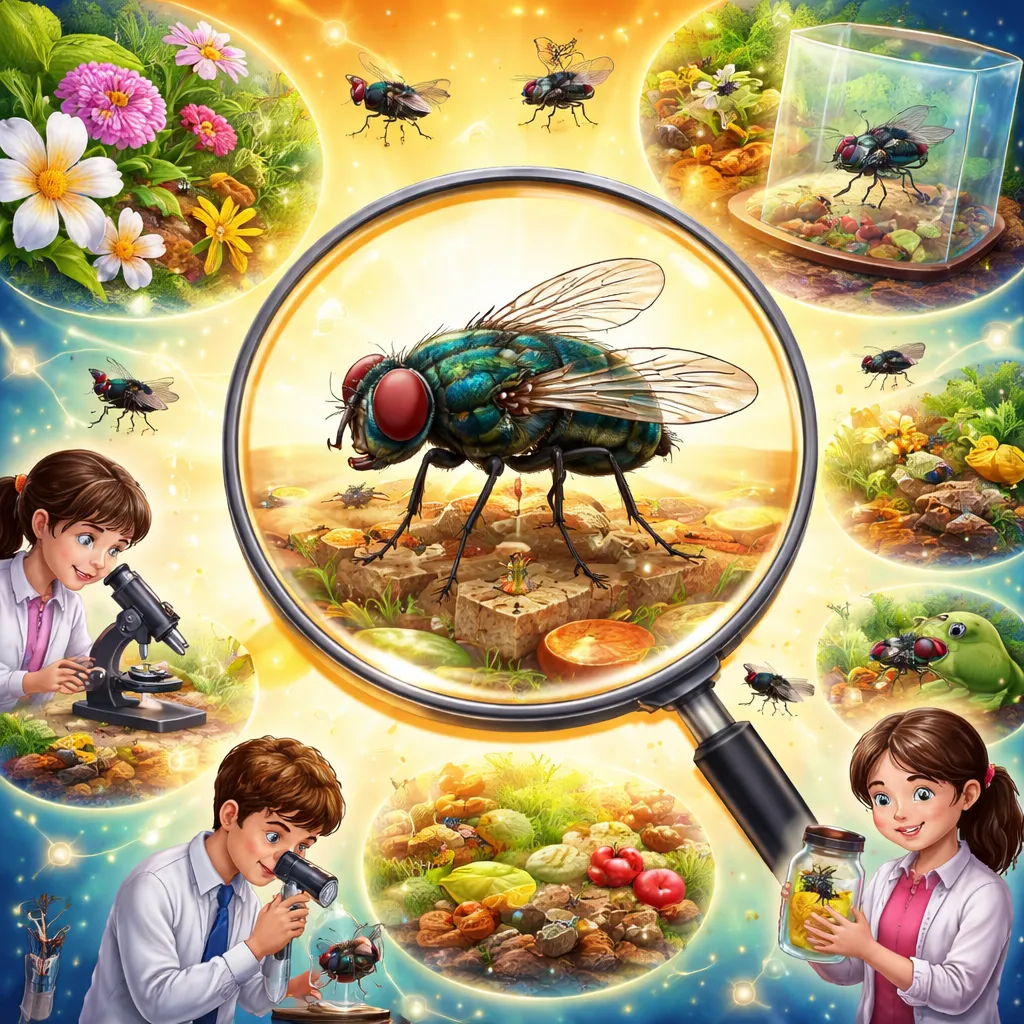

What Is This Animal?
A fly is a small insect with one pair of wings. Most insects have two pairs. Flies have two wings for flying. The second pair became small balancing organs. Flies have large eyes that cover most of their head. They see in many directions at once.
Flies come in many types. House flies are common near people. Fruit flies are tiny and gather near ripe fruit. Hoverflies look like bees but cannot sting. Each type has its own habits and home. Flies are found almost everywhere on Earth.
These insects live in many places. You find them in gardens, homes, forests, and fields. They are active during the day. Flies fly quickly. They land on many surfaces. Their feet taste what they touch.
For children, flies are familiar insects. They buzz and dart around. Learning about flies teaches children that even common insects have interesting lives and important jobs in nature.
English Learning About This Animal
Let us learn the English word fly. We say it like this: /flaɪ/. The fl sound starts with the lips. The y sounds like “eye.” Say it together: fly. Say it three times. Fly. Fly. Fly.
Now let us learn words about a fly’s body. The head holds the large compound eyes. The compound eyes have thousands of tiny lenses. The antennae are short and help with smell. The thorax is the middle part where wings and legs attach. The wings are one pair of clear wings. The legs have sticky pads for walking on smooth surfaces.
There is a famous saying about flies. It comes from an old proverb: “A fly in the ointment.” This means a small problem that spoils something good. Another thoughtful saying is, “Time flies like an arrow. Fruit flies like a banana.” This playful sentence shows how words can have double meanings.
These English words help children understand fly anatomy. When they say compound eyes, they learn about the special vision. When they say thorax, they know where the wings attach. Parents can practice these words while watching a fly on a window. Point to the parts in pictures. Say the words together.
Animal Facts and Science Knowledge
Flies belong to the insect order Diptera. The name means “two wings.” Flies have one pair of flying wings. The second pair became halteres. Halteres are small knobs that help with balance. This makes flies excellent fliers. There are over 150,000 fly species.
Flies live in nearly every habitat. They live in deserts, forests, mountains, and cities. Some flies live near water. Others live in soil. Flies are active in warm weather. In cold weather, many flies slow down or hibernate.
Flies eat many things. House flies eat liquid food. They cannot chew. They spit digestive juices onto food. The liquid softens. Then the fly drinks it. Fruit flies eat yeast and rotting fruit. Hoverflies drink nectar from flowers. Some flies eat other insects.
Flies have special abilities. They can fly in any direction. They can hover, fly backward, and land on ceilings. Their wings beat two hundred times per second. Their compound eyes see movement very well. Flies taste with their feet. When they land, they know if the surface has food.
Flies go through complete metamorphosis. They start as eggs. The eggs hatch into larvae called maggots. Maggots eat and grow. They form a pupa. Inside the pupa, they transform into adult flies. This process can take as little as one week for some species.
How to Interact With This Animal Safely
Flies are wild insects. They do not bite or sting most people. Some flies can bite. Most common flies are harmless. They are safe to watch from a distance. If a fly lands on your child, it is usually looking for food or moisture.
Teach children to stay calm if a fly lands on them. Gently wave it away. Wash hands after touching surfaces where flies land. Flies can carry germs because they land on many things. Good hygiene keeps everyone healthy.
If your family wants to observe flies, watch them from a window. Notice how they fly. Watch them land and clean their legs. Observe their movements. You can learn much by watching without interfering.
Keep food covered. This keeps flies away from meals. Teach children to put away food after eating. Clean up spills. These habits reduce flies indoors and keep food safe.
Teach children that flies have important roles. They help break down dead plants and animals. They feed many birds and spiders. Even though we may not want them in our food, they are part of nature’s cleaning crew.
What Can We Learn From This Animal
Flies teach us about adaptation. They live almost everywhere. They find food in many places. Children learn that adapting to new situations helps us thrive. Being flexible and open to change are useful skills.
Flies teach us about speed and agility. They move quickly and change direction fast. Children learn that being quick in mind and body helps in games, learning, and daily life. Quick thinking and fast action have their place.
Flies teach us about decomposition. They help break down dead matter. This returns nutrients to the earth. Children learn that endings lead to new beginnings. Leaves fall, become soil, and help new plants grow. Things that seem small or unpleasant can serve important purposes.
Flies teach us to look closer. Many people ignore flies. But they have fascinating eyes, wings, and behaviors. Children learn that looking closely at ordinary things reveals wonder. A common fly becomes amazing when we really see it.
Fun Learning Activities
Let us make learning about fly fun. One activity is the fly flight game. Ask your child to move like a fly. Buzz around the room. Change direction quickly. Land on different surfaces. Say “fly buzzes” and “fly lands on the window.”
Another activity is watching flies safely. Sit by a window on a sunny day. Watch flies on the glass. Notice how they clean their legs. Watch them take off and land. Count how many flies you see. Draw what you observe.
Draw a fly and label its parts. Draw the head, compound eyes, thorax, wings, and legs. Write the words next to each part. Say them aloud. For younger children, draw the fly first. Let them point to the parts as you say the words.
Create a story about a fly’s day. Ask your child where the fly goes. Does it land on a leaf? Does it taste some sugar? Does it escape a bird? Write a few sentences together. Let your child draw pictures. Read the story aloud.
Make a fly from craft materials. Use a small pom-pom for the body. Add clear plastic wings. Glue on large paper eyes. Attach pipe cleaner legs. Hang the fly from a string. Practice saying “fly buzzes” and “fly flies fast.”
Learn about fly relatives. Compare flies to bees and wasps. Notice the wing differences. Talk about how flies help gardens by pollinating flowers. Use words like “pollinator,” “maggot,” and “metamorphosis.”
These simple activities bring learning to life. Children build English vocabulary while playing. They learn science through observation. They connect with nature in thoughtful ways. Learning about fly becomes a journey into the small and speedy world of common insects. Each moment spent together strengthens language, curiosity, and a growing appreciation for the buzzing fliers that zoom past us every day, reminding us that even the most familiar creatures have hidden wonders when we take the time to look.