
A Friendly Hello and First Impressions
G'day! (guh-DAY). This is the famous Australian "Hello". It means "Good day". Ta! (TAH). This is a casual "Thank you". Friends use it every day. Learning reading about Australia starts with these easy, friendly words.
Australia is both a country and a continent. Its shape looks like a giant, dry plate. The plate floats alone in the southern hemisphere. Vast oceans surround it completely. The Indian and Pacific Oceans meet here. Its big island neighbor is Papua New Guinea.
People call it the "Land Down Under". Look at a world map. Australia is way down south. It is "under" many other countries. Another nickname is "Oz". It is a fun, short way to say Australia. The sun shines brightly here. Are you ready to hear its first story?
Deep Dive into Culture and Stories
Echoes of History
Australia's first people are the Aboriginal peoples. They have lived here for over 65,000 years. This is the oldest living culture on Earth. They are not one group, but many. Each group has its own language and land. Their connection to the land is deep and spiritual. This history is the true foundation for learning reading about Australia.
British ships arrived in 1788. They started a colony at Sydney Cove. This changed everything for Aboriginal peoples. The colonial period was difficult. Today, Australia is a modern, multicultural nation. People from all over the world live here. They celebrate this diversity. Australia Day is on January 26th. It marks the arrival of the First Fleet. For many, it is a complex day of reflection.
Australia gave the world a wonderful invention. In 1992, scientists at CSIRO invented Wi-Fi. Dr. John O'Sullivan and his team created it. They were studying black holes. They found a way to make wireless networks fast. Now, billions of people use Wi-Fi every day. It connects our computers and phones. It is a huge Australian contribution to technology.
A Land of Extremes and Beauty
Australia is the world's largest island. It is also the smallest continent. The land is mostly flat and dry. A huge desert covers the center. People call it the "Outback". The east coast has green mountains. These are the Great Dividing Range. Beautiful beaches line almost the entire coast. The Great Barrier Reef is in the northeast. It is the world's largest coral reef system.
The climate is generally sunny and warm. But it varies a lot. The north is tropical with a wet season. The south has four clear seasons. The interior is very hot and dry. Bushfires can happen in hot, dry summers. The environment shapes life here. Many houses have wide verandas. They provide shade from the strong sun.
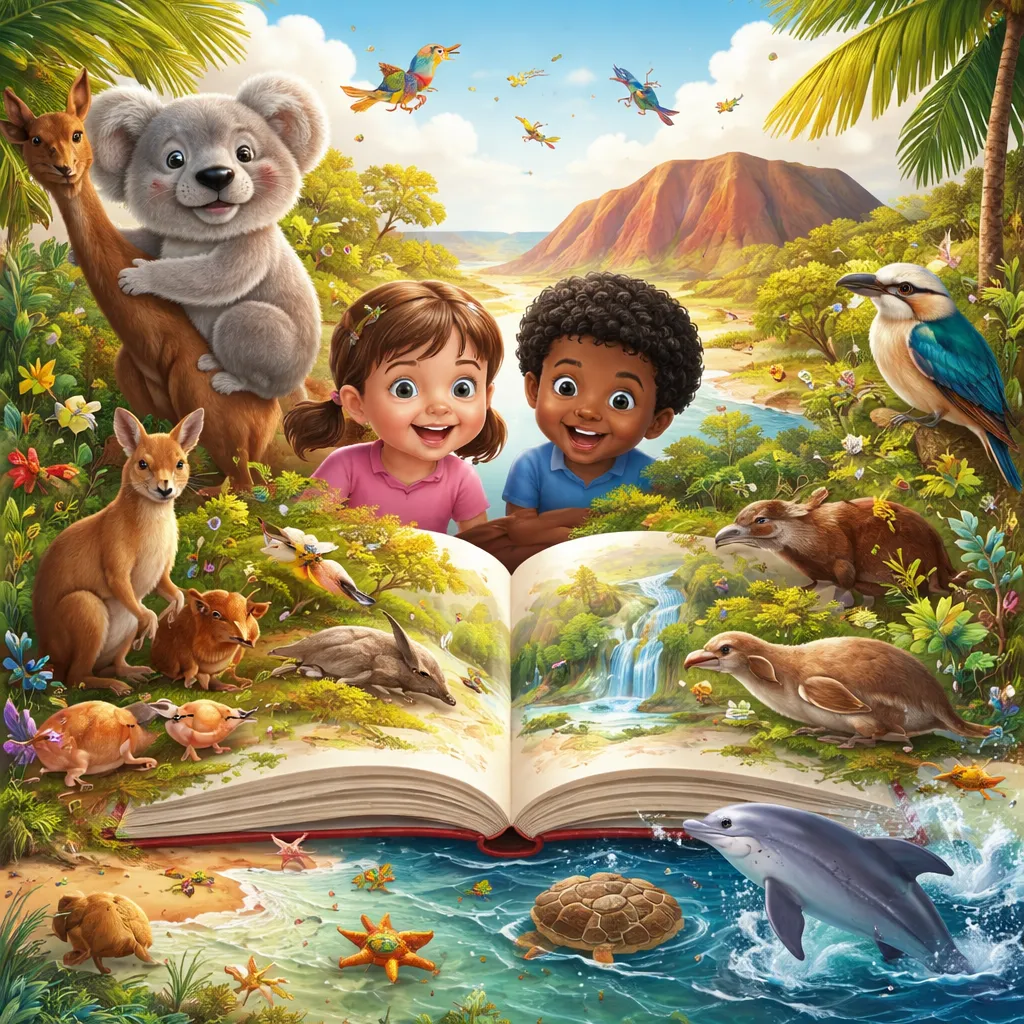
Australian animals are unique. The kangaroo is a national symbol. It hops on its strong back legs. Mothers carry babies in a pouch. The koala is not a bear. It is a marsupial too. It sleeps 20 hours a day. It eats only eucalyptus leaves. The kookaburra is a famous bird. Its call sounds like loud, laughing music.
Landmarks of City and Desert
Visit the Sydney Opera House. It is on Sydney Harbour. The roof looks like giant white sails. It also looks like orange segments or shells. A Danish architect designed it. The building took 14 years to finish. The roof tiles are special. They clean themselves when it rains. Inside, you can see operas, plays, and concerts. It is a masterpiece of design.
Travel to the red heart of Australia. See Uluru, also called Ayers Rock. It is a massive sandstone monolith. It rises 348 meters from the flat desert. The rock changes color with the light. At sunrise and sunset, it glows bright red. For the Anangu people, it is a sacred site. They believe their ancestors formed it. A fun story says the marks on its side are from a battle between snake beings.
Another wonder is the Great Ocean Road. It is a long coastal drive. The most famous sight is the Twelve Apostles. These are huge limestone stacks. They rise from the Southern Ocean. Waves and wind carved them from cliffs. There are only seven apostles left now. The sea slowly eats them away. The view is powerful and beautiful.
Celebrations and Sports
A very special day is Anzac Day. It is on April 25th. It remembers all Australians who served in wars. "ANZAC" means Australian and New Zealand Army Corps. People have dawn services. They play a song called "The Last Post". Later, they play a game of "two-up". It is a traditional gambling game. People eat Anzac biscuits. These are sweet oat cookies. The day is about remembrance and mateship.
Sport is a national passion. Cricket is popular in summer. Australian Rules Football is huge. People call it "Aussie Rules" or "footy". The ball is oval-shaped. Players kick and handball it. They score goals between four posts. The games are fast and high-scoring. Children play it at school. The grand final is a national event.
Food and Flavors
Try Vegemite. It is a dark brown paste. It is made from leftover brewers' yeast. Australians spread it thinly on buttered toast. The taste is very salty and savory. Children grow up eating it. It is full of B vitamins. A first taste might surprise you. It is an acquired taste. It tastes like concentrated, salty goodness.
You must eat a meat pie. It is a hand-sized pie. It has a flaky pastry crust. The filling is minced beef in gravy. People often add tomato sauce on top. They eat it at sporting events. It is the perfect takeaway food. A hot meat pie is juicy and delicious. It tastes like a warm, savory hug in your hand.
A Culture of Mateship and Innovation
Australians value "mateship". This means loyalty and friendship. It is about helping your mates. It came from the tough early days. People had to rely on each other. This spirit is still strong today. People are often casual and friendly. They like to have a "fair go". This means everyone deserves a chance.
Australia is a leader in renewable energy. The country gets lots of sunshine. It is perfect for solar power. Many homes have solar panels on the roof. Huge solar farms are in the desert. They are like giant mirrors. They catch the sun's power. This creates clean electricity. It is like using a super-powered calculator. The sun does all the work.
Tips for Young Explorers
Cultural Manners Matter
Australians are generally casual. They often use first names quickly. Titles like "Mr." or "Mrs." are less common. "G'day, mate" is a fine greeting. "No worries" means "You're welcome" or "It's okay". The attitude is relaxed and easy-going.
Always be on time. Punctuality is important. Being late is considered rude. Call if you are running late. This shows respect for other people's time. It is good manners.
"S'later" means "See you later". "Arvo" means "afternoon". "Brekkie" means "breakfast". Australians love to shorten words. It is part of the fun slang. Do not be confused. Just ask if you do not understand.
A Note on Staying Safe
Australia is very safe. But the natural environment needs respect. The sun is extremely strong. You can burn in just 15 minutes. Always wear strong sunscreen. Wear a hat and sunglasses. Seek shade in the middle of the day.
Many animals are unique but wild. Never touch or feed wild animals. Kangaroos can be strong. Snakes and spiders can be dangerous. Do not put your hands under rocks. Watch your step on bushwalks. Swim only at patrolled beaches. Lifeguards watch for sharks and strong currents.
A Tasty Stop
Find a Lamington in any bakery. It is a classic Australian cake. It is a square of sponge cake. First, it gets a coating of chocolate icing. Then it gets a roll in shredded coconut. Sometimes it has a layer of jam and cream inside. It is soft, sweet, and a little messy. Eat it with a glass of cold milk. It is the perfect afternoon treat.
Healthy and Happy Travels
"Slip, Slop, Slap, Seek, Slide". Remember this slogan. Slip on a sun-shirt. Slop on sunscreen. Slap on a hat. Seek shade. Slide on sunglasses. This is the golden rule for Australian sun safety.
Drink lots of water. The dry air can dehydrate you quickly. Carry a water bottle everywhere. This is very important in the Outback. It keeps you healthy and energetic.
If you go to the beach, swim between the red and yellow flags. These flags mark the safest area. Lifeguards patrol this zone. It is away from dangerous rips and currents. Never swim alone.
Your Invitation to Explore
Start your adventure with sport. Watch a cricket match or an Aussie Rules game on TV. Feel the excitement of the crowd. Notice the green uniforms of the cricketers. Or, look up Aboriginal "Dreamtime" stories online. These are ancient stories about creation. They often feature animals. Listen to "The Rainbow Serpent". This is a magical way of learning reading about Australia.
Try a simple recipe. Make Anzac biscuits at home. You need oats, coconut, flour, and golden syrup. They are easy and delicious. While they bake, imagine the diggers long ago. Their families sent these cookies to them.
The world is a big, exciting book. Each country is a new chapter. Australia's chapter is full of sunshine, strange animals, and surf. Turn to it with a smile. Read about its deserts and dreamtime stories.
Families in Sydney have a barbecue at the beach. Friends call each other "mate". Kids build sandcastles on the shore. We all understand these simple joys. We love sunny days. We value good friends. We enjoy playing outside. Learning about Australia shows us this. Our global family shares so much. Your curiosity is your compass. Use it to explore every page. Your journey is just beginning.