
What Is This Animal?
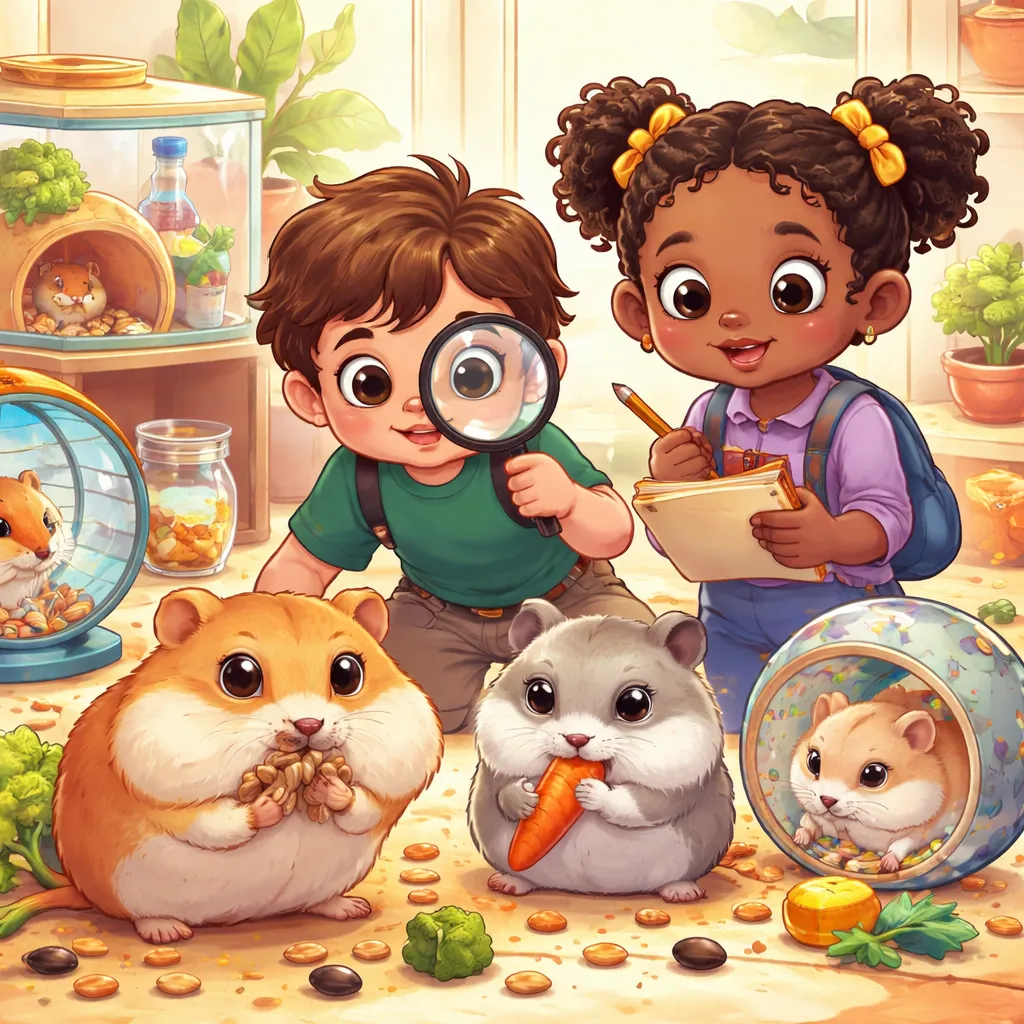
A hamster is a small rodent with a round body, short legs, and a tiny tail. It has soft fur in colors like golden, brown, gray, or white. Hamsters have large cheek pouches. They use these pouches to carry food. They stuff their cheeks and run back to their nest.
Hamsters are popular pets. They are small and easy to care for. They are most active at night. They sleep during the day. They love to run on wheels and explore tunnels. They are curious and fun to watch.
These animals originally came from deserts in Syria, Greece, and China. Wild hamsters live in burrows underground. They dig tunnels with multiple rooms. They store food in their burrows. They are solitary animals. They prefer to live alone.
For children, hamsters are wonderful first pets. Their small size and gentle nature make them easy to handle. Learning about hamsters teaches children about pet care, responsibility, and animal behavior.
English Learning About This Animal
Let us learn the English word hamster. We say it like this: /ˈhæmstər/. The ham sounds like “ham.” The ster sounds like “stir.” Put them together: hamster. Say it three times. Hamster. Hamster. Hamster.
Now let us learn words about a hamster’s body. The cheek pouches are pockets inside the cheeks for carrying food. The fur is soft and can be many colors. The body is small and round. The claws are small for digging. The pups are baby hamsters.
There is a sweet saying about hamsters. Pet owners say, “A hamster’s cheeks hold more than you think.” This reflects their amazing storage ability. Another saying is, “The hamster runs all night on its wheel.” This describes their energy.
These English words help children understand hamster anatomy. When they say cheek pouches, they learn how hamsters carry food. When they say pups, they know the babies. Parents can practice these words while watching a pet hamster. Point to the parts. Say the words together.
Animal Facts and Science Knowledge
Hamsters belong to the rodent family Cricetidae. There are about twenty hamster species. The Syrian hamster is the most common pet. It is also called the golden hamster. Dwarf hamsters are smaller. They include Roborovski, Campbell’s, and winter white hamsters.
Wild hamsters live in deserts and grasslands. They dig burrows up to three feet deep. Their burrows have food storage rooms, sleeping rooms, and bathroom areas. They live in dry, warm climates. They are solitary. They only meet to mate.
Hamsters are omnivores. In the wild, they eat seeds, grains, insects, and vegetables. Pet hamsters eat special hamster food. They also enjoy fresh vegetables and small treats. They store food in their cheek pouches. They carry it to their nest to eat later.
Hamsters have special abilities. Their cheek pouches can stretch to hold as much food as their whole body. They have poor eyesight. They use smell and hearing to navigate. Their teeth grow all their lives. They need things to chew to keep teeth short.
Hamsters are nocturnal. They sleep during the day. They wake in the evening. They are most active at night. They run on wheels, explore, and build nests. They do not like being woken during the day. A sleeping hamster may nip if disturbed.
How to Interact With This Animal Safely
Hamsters make wonderful pets. But they need proper care. If your family is getting a hamster, learn about its needs first. Hamsters need a safe cage with bedding, a wheel, and hiding places. They need fresh water and food every day.
Teach children to handle hamsters gently. Hamsters are small and delicate. Sit down when holding them. Let the hamster walk on your hands. Do not squeeze. Do not drop them. A fall can hurt a hamster. Supervise young children with hamsters.
Hamsters are nocturnal. Do not wake them during the day. Let them sleep. Handle them in the evening when they are awake. A tired or startled hamster may bite. Gentle handling builds trust.
Clean the cage regularly. Remove soiled bedding. Wash the water bottle. Provide fresh food. Hamsters are clean animals. They need a clean home. Involve children in cleaning. Teach them responsibility.
Hamsters need exercise. They need a wheel that is the right size. They need tunnels and toys. Let them explore a safe play area. Supervise them outside the cage. Hamsters are fast and can hide in small spaces.
What Can We Learn From This Animal
Hamsters teach us about preparation. They store food for later. Children learn that preparing helps us. Saving for what we need, planning ahead, and being ready are important habits.
Hamsters teach us about home. They build cozy nests. Children learn that home is where we feel safe. Keeping our space clean and comfortable matters.
Hamsters teach us about activity. They run all night. Children learn that exercise is important. Moving our bodies, playing, and staying active keep us healthy.
Hamsters teach us about responsibility. They depend on us for food and care. Children learn that taking care of others is a big job. Feeding, cleaning, and being gentle show we care.
Fun Learning Activities
Let us make learning about hamster fun. One activity is the hamster cheek game. Ask your child to pretend to stuff cheeks with food. Carry “food” to a nest. Store it for later. Say “hamster stuffs cheeks” and “hamster stores food.”
Another activity is drawing a hamster. Look at pictures of hamsters. Notice the round body, small ears, and cheek pouches. Draw a hamster running on a wheel or stuffing its cheeks. Label the parts. Say the words aloud.
Create a story about a hamster’s night. Ask your child what the hamster does. Does it run on its wheel? Does it stuff its cheeks? Does it build a nest? Write a few sentences together. Let your child draw pictures. Read the story aloud.
Make a hamster craft. Use brown or golden paper for the fur. Add a round body and small ears. Add cheek pouches with cotton balls. Add a tiny tail. Move the craft hamster. Practice saying “hamster runs” and “hamster stores food.”
Learn about pet care. If you have a hamster, involve children in daily care. Make a chart of tasks. Talk about why each task is important. Use words like “responsibility,” “grooming,” and “nutrition.”
Learn about hamster habitats. Compare wild hamsters to pet hamsters. Talk about how wild hamsters live in burrows. Use words like “burrow,” “nocturnal,” and “solitary.”
These simple activities bring learning to life. Children build English vocabulary while playing. They learn science through understanding animal behavior. They develop responsibility through learning about pet care. Learning about hamster becomes a journey into the world of tiny, cheek-stuffing companions. Each moment spent together strengthens language, curiosity, and a growing appreciation for the small, busy creatures that teach us that even the smallest home can be a cozy castle and that preparation, activity, and gentle care make us good stewards of the little lives we hold in our hands.