
What Is This Animal?
A badger is a sturdy mammal with a gray body, black legs, and a distinctive white stripe on its face. Its body is flattened and wide. Its legs are short and strong. Its claws are long and curved for digging. Badgers are built for life underground.
Badgers belong to the weasel family. They are related to otters, martens, and wolverines. They are found in North America, Europe, and Asia. European badgers live in social groups called clans. American badgers are more solitary.
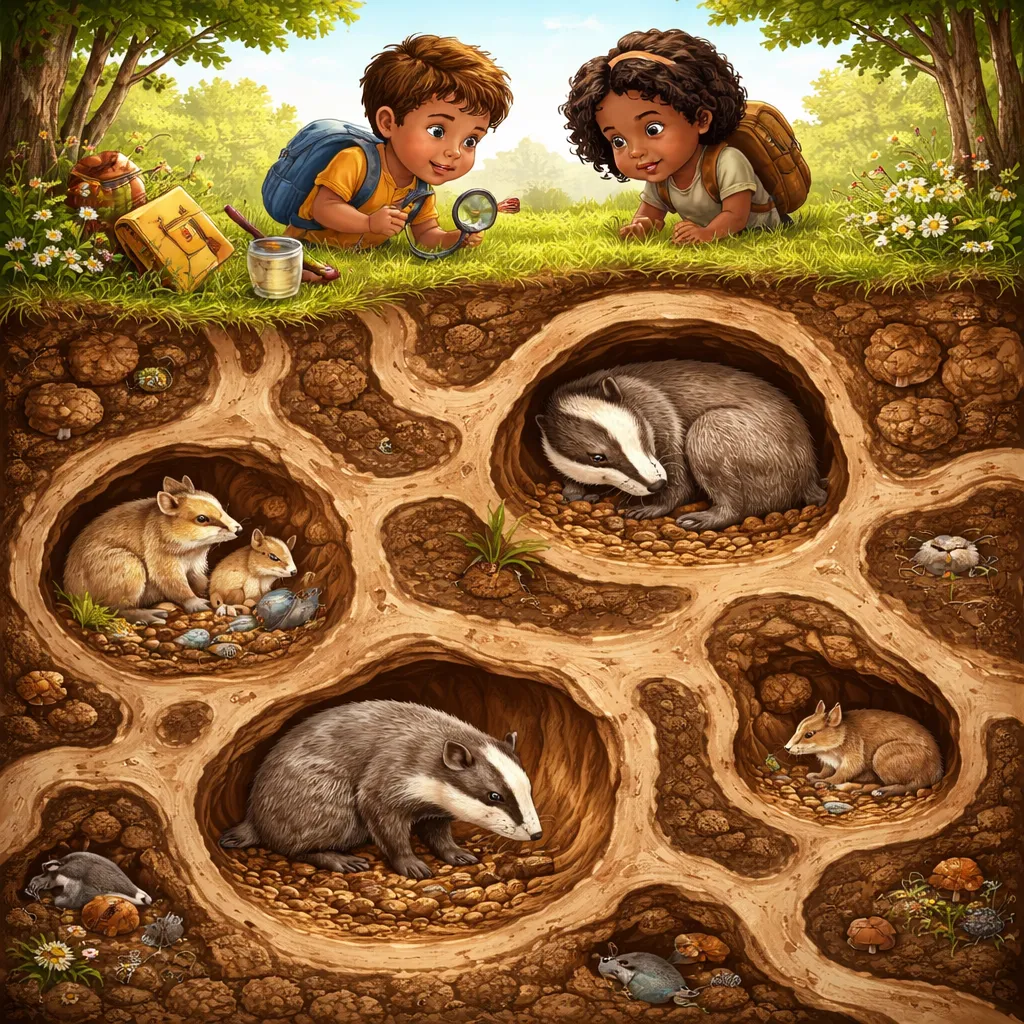
These animals live in grasslands, forests, and open areas. They dig extensive burrows called setts. A sett can have many tunnels and chambers. Badgers spend much of their time underground. They come out at night to hunt.
For children, badgers are fascinating builders. Their striped faces and digging skills make them memorable. Learning about badgers teaches children about underground homes, nocturnal life, and the importance of respecting wild animals.
English Learning About This Animal
Let us learn the English word badger. We say it like this: /ˈbædʒər/. The ba sounds like “bad.” The dger sounds like “jer.” Put them together: badger. Say it three times. Badger. Badger. Badger.
Now let us learn words about a badger’s body. The claws are long and strong for digging. The stripe is the white marking on the face. The fur is gray and coarse. The setts are the underground burrows. The cubs are baby badgers.
There is a wise saying about badgers. An old proverb says, “The badger digs deep and makes a safe home.” This reminds us that preparation brings safety. Another saying is, “As patient as a badger waiting for its prey.” This speaks to the badger’s persistence.
These English words help children understand badger anatomy. When they say claws, they learn how badgers dig. When they say setts, they know the underground homes. Parents can practice these words while looking at pictures. Point to the parts. Say the words together.
Animal Facts and Science Knowledge
Badgers belong to the weasel family Mustelidae. There are several badger species. The European badger is the most social. The American badger is more solitary. The honey badger lives in Africa and Asia. Each species has its own habits.
Badgers live in grasslands, forests, and open areas. European badgers live in setts. These are complex burrow systems. Setts can be centuries old. They have sleeping chambers, tunnels, and multiple entrances. American badgers dig simpler burrows.
Badgers are omnivores. They eat earthworms, insects, small mammals, roots, and fruits. European badgers eat many earthworms. American badgers hunt ground squirrels and rodents. They use their strong claws to dig out prey.
Badgers have special abilities. They can dig faster than a person with a shovel. Their claws are made for excavating. Their bodies are flat to fit through tunnels. They have thick skin that protects them from bites. They are strong for their size.
European badgers are social. They live in clans of up to fifteen members. They share the sett. They groom each other. They forage together at night. American badgers are usually solitary. They only come together to mate.
How to Interact With This Animal Safely
Badgers are wild animals. They are not pets. They can be aggressive if threatened. Their claws and teeth are powerful. The best way to interact is to watch from a distance. Do not approach badgers or their setts.
Teach children to respect badger homes. If you see a badger sett, stay away. Do not try to enter it. Badgers are protective of their homes. They may attack if they feel their young are threatened.
If you see a badger at night, stay still. Back away slowly. Do not shine bright lights directly at it. Badgers usually avoid people. They will move away if given space.
In zoos and wildlife centers, badgers are in secure enclosures. Follow all rules. Stay behind barriers. Watch them dig and explore. Learn about their behavior from keepers.
Badgers are protected in many areas. They are important for the ecosystem. Their digging aerates the soil. Their old setts become homes for other animals. Respecting them helps keep nature in balance.
What Can We Learn From This Animal
Badgers teach us about hard work. They dig deep homes. They do not give up. Children learn that hard work pays off. Building something, practicing a skill, and finishing tasks all take effort.
Badgers teach us about home. They create safe places underground. Children learn that home is where we feel safe. Caring for our home, keeping it clean, and making it cozy are important.
Badgers teach us about patience. They wait for prey. They dig slowly and steadily. Children learn that patience helps us succeed. Waiting for our turn, listening carefully, and taking our time are all forms of patience.
Badgers teach us about family. European badgers live in clans. They share their home. Children learn that families work together. Helping family, sharing space, and caring for each other make a strong home.
Fun Learning Activities
Let us make learning about badger fun. One activity is the badger dig game. Ask your child to pretend to dig with strong claws. Scoop and push like a badger. Make a tunnel with blankets or pillows. Say “badger digs” and “badger makes a sett.”
Another activity is drawing a badger. Look at pictures of badgers. Notice the striped face, stocky body, and strong claws. Draw a badger outside its sett. Add the stripes and claws. Label the parts. Say the words aloud.
Create a story about a badger family. Ask your child what the badgers do. Do they dig tunnels? Do they find worms? Do they sleep in the sett? Write a few sentences together. Let your child draw pictures. Read the story aloud.
Make a badger craft. Use gray and black paper for the fur. Add a white stripe on the face. Add strong claws from paper or craft sticks. Add small ears and a short tail. Move the craft badger. Practice saying “badger digs” and “badger sleeps in its sett.”
Learn about underground homes. Talk about how badgers build setts. Compare to other animals that live underground like rabbits or groundhogs. Use words like “burrow,” “tunnel,” and “chamber.”
Learn about nocturnal animals. Talk about how badgers are active at night. Compare to other animals that come out after dark. Use words like “nocturnal,” “dawn,” and “dusk.”
These simple activities bring learning to life. Children build English vocabulary while playing. They learn science through understanding animal homes. They develop respect through learning about wild animals. Learning about badger becomes a journey underground. Each moment spent together strengthens language, curiosity, and a growing appreciation for the striped-faced diggers that build cities beneath our feet, teaching us that hard work, patience, and family make a safe and happy home.