
What Is This Animal?
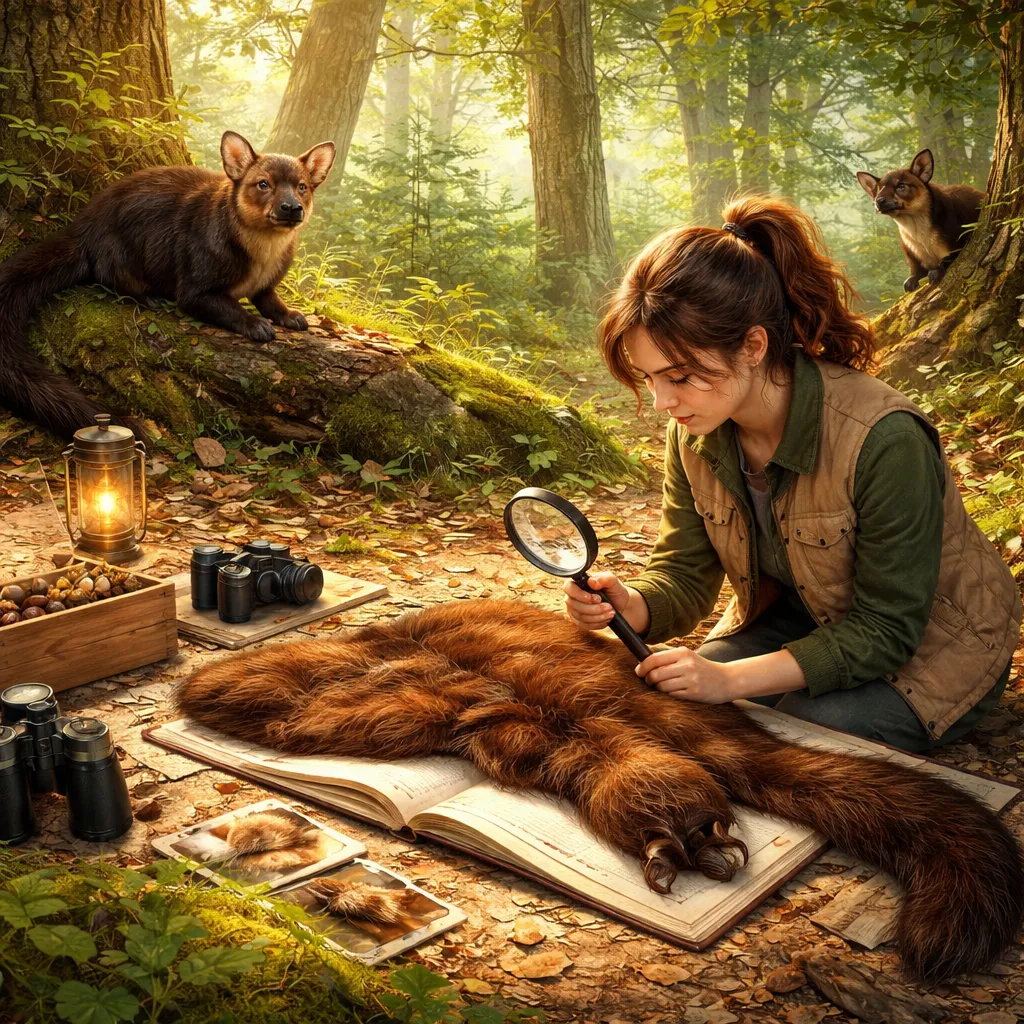
A sable is a small mammal with soft, dark brown fur. It has a long body, short legs, and a bushy tail. Its fur is highly valued for its beauty and warmth. Sables belong to the weasel family. They are close relatives of martens.
Sables live in the forests of Russia, Mongolia, and northern China. They are found in Siberia and surrounding regions. Their thick fur protects them from the cold. They are agile climbers. They spend time in trees and on the ground.
These animals live in coniferous and mixed forests. They make dens in tree hollows, under roots, or in rock crevices. They are active year-round. They are most active at dawn and dusk. They are shy and hard to see in the wild.
For children, sables are interesting animals. Their soft fur and forest home make them special. Learning about sables teaches children about animals that live in cold climates, the history of the fur trade, and the importance of protecting wildlife.
English Learning About This Animal
Let us learn the English word sable. We say it like this: /ˈseɪbəl/. The sa sounds like “say.” The ble sounds like “bul.” Put them together: sable. Say it three times. Sable. Sable. Sable.
Now let us learn words about a sable’s body. The fur is soft, dense, and dark brown. The tail is long and bushy. The claws are sharp for climbing. The body is long and slender. The kits are baby sables.
There is a famous saying about sables. In Russia, people say, “The sable’s fur is worth its weight in gold.” This reflects how valuable sable fur has been. Another saying is, “The sable knows the forest better than any hunter.” This speaks to the animal’s skill in its home.
These English words help children understand sable anatomy. When they say fur, they learn about the dense coat. When they say kits, they know the babies. Parents can practice these words while looking at pictures. Point to the parts. Say the words together.
Animal Facts and Science Knowledge
Sables belong to the weasel family Mustelidae. They are a type of marten. Their scientific name means “pine marten.” Sables are found in Russia, Mongolia, China, and North Korea. They live in the taiga, the vast northern forests of Siberia.
Sables live in coniferous forests. They prefer old-growth forests with large trees. They need forests with plenty of cover. They make dens in tree hollows, under roots, or in rock piles. They also use abandoned burrows of other animals.
Sables are omnivores. They eat small mammals like voles and squirrels. They also eat birds, eggs, insects, pine nuts, and berries. They are agile hunters. They chase prey through trees. They also hunt on the ground. They store food for winter.
Sables have special abilities. Their fur is among the densest of any animal. It keeps them warm in temperatures as low as minus fifty degrees. They are excellent climbers. Their sharp claws grip bark. They can leap from tree to tree. They have excellent hearing and smell.
Sables are mostly solitary. They live alone except during breeding season. Females raise the kits alone. Kits are born in spring. They stay with their mother through summer. They learn to climb and hunt. They leave to find their own territory in autumn.
How to Interact With This Animal Safely
Sables are wild animals. They are not pets. They are shy and avoid people. The best way to interact is to learn about them from a distance. If you ever visit sable habitat, stay on trails. Watch for tracks in snow. Do not approach wild animals.
Teach children to respect wild animals. Sables are not dangerous to people. But they will defend themselves if threatened. Give them space. Observe quietly.
Sables have been hunted for their fur for centuries. Today, many sables are raised on farms. Wild sables are protected in many areas. Conservation efforts help keep their populations healthy. Learning about them helps us understand why protection matters.
In zoos and wildlife centers, sables may be in exhibits. Follow all rules. Stay behind barriers. Watch them climb and explore. Learn about their behavior from keepers.
Sables are part of the forest ecosystem. They help control rodent populations. They need healthy forests to survive. Protecting their habitat helps many other forest animals.
What Can We Learn From This Animal
Sables teach us about adaptation to cold. Their fur keeps them warm in freezing temperatures. Children learn that adapting to our environment helps us survive. Dressing for weather, preparing for seasons, and learning to handle challenges are all forms of adaptation.
Sables teach us about value. Their fur has been valued for centuries. Children learn that things can be valuable in different ways. Kindness, knowledge, and skills are valuable too.
Sables teach us about resourcefulness. They find food in harsh winters. They store food for later. Children learn that being resourceful helps us. Saving for needs, finding solutions, and using what we have are important skills.
Sables teach us about balance. They were hunted too much in the past. Now they are protected. Children learn that balance is important in nature. Taking too much harms animals. Protecting them helps nature stay healthy.
Fun Learning Activities
Let us make learning about sable fun. One activity is the sable climb game. Ask your child to climb on soft furniture or playground equipment. Move like a sable through trees. Leap from one spot to another. Balance on branches. Say “sable climbs” and “sable leaps.”
Another activity is drawing a sable. Look at pictures of sables. Notice the dark brown fur, bushy tail, and pointed face. Draw a sable in a pine tree. Add snow on the branches. Label the parts. Say the words aloud.
Create a story about a sable family. Ask your child what the mother sable does. Does she teach kits to climb? Do they hunt for berries? Do they find a warm den? Write a few sentences together. Let your child draw pictures. Read the story aloud.
Make a sable craft. Use dark brown paper or felt for the fur. Add a long bushy tail. Add sharp claws from paper. Add small ears and eyes. Move the craft sable. Practice saying “sable climbs” and “sable hunts.”
Learn about the taiga forest. Talk about where sables live. Name other animals that live in the same forest. Use words like “taiga,” “coniferous,” and “ecosystem.”
Learn about animal fur. Talk about why sable fur is so warm. Compare to other animals with thick fur like arctic foxes or snow leopards. Use words like “insulation,” “dense,” and “adaptation.”
These simple activities bring learning to life. Children build English vocabulary while playing. They learn science through understanding cold-weather adaptations. They develop awareness through learning about wildlife protection. Learning about sable becomes a journey into the Siberian forest. Each moment spent together strengthens language, curiosity, and a growing appreciation for the dark-furred climbers that thrive in the coldest places, teaching us that warmth, resourcefulness, and balance are gifts to be treasured.