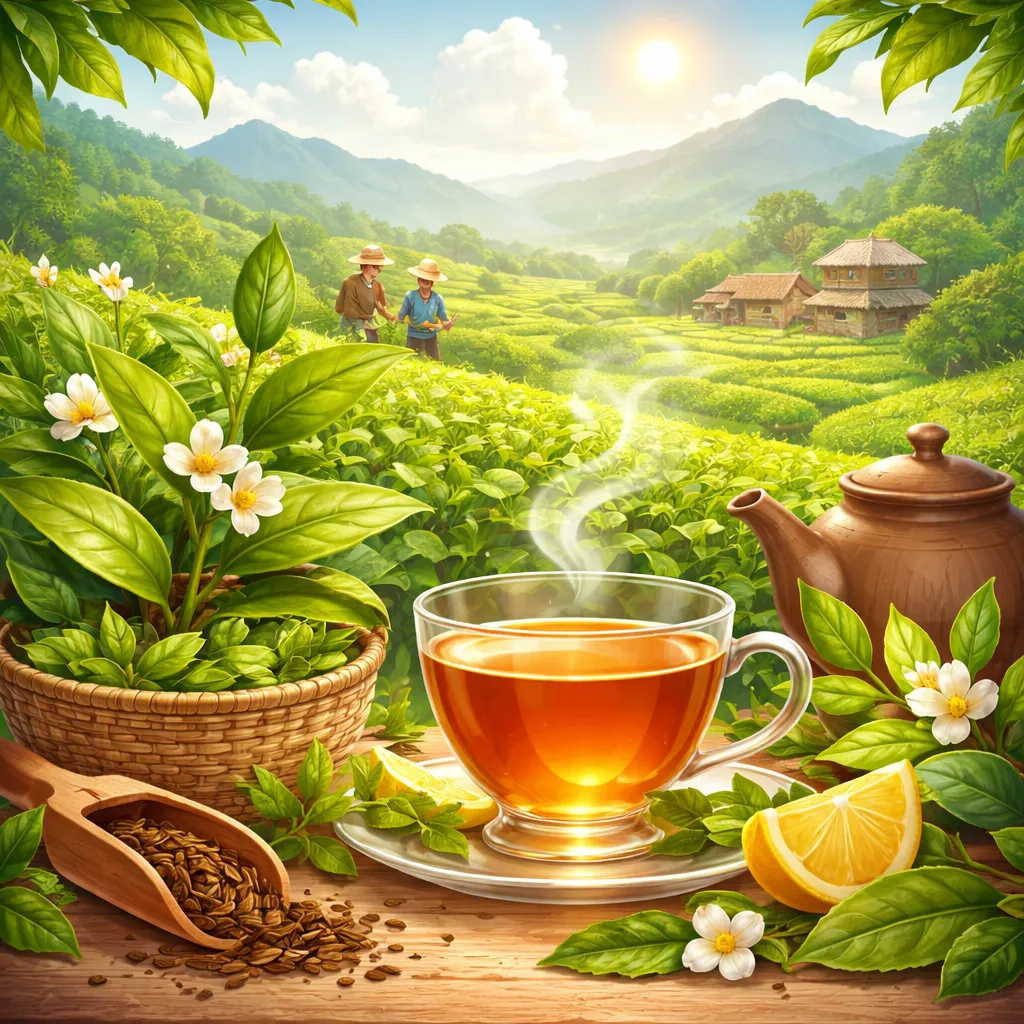

Imagine a chilly morning. You wrap your hands around a warm, comforting mug. The steam rises with a gentle, earthy smell. This soothing drink has been shared by people all over the world for thousands of years. But did you know it starts its life on a beautiful, green bush with shiny leaves? This plant grows on misty hillsides, and its leaves are carefully picked to make your drink. Let’s take a quiet journey to learn about the amazing Tea Plant.
Let’s Learn the Word! – Open the Treasure Box of Language
Formal Name and Pronunciation This leafy friend is called the Tea Plant. Its scientific name is Camellia sinensis. You can say it like this: /tiː plænt/ (tee plant). The word “Tea” sounds just like the letter “T.” Tea. Say it: Tea Plant. It’s a simple, warm-sounding name.
The Etymology Tale The word “Tea” has a global journey! In the Chinese Min dialect, it’s called “te.” This word traveled on ships to Europe, becoming “thee” in Dutch and then “tea” in English. In other parts of China, it’s called “cha,” which became “chai” in many languages. So, the name tells the story of ancient trade routes across land and sea.
Nicknames and Friendly Aliases The Tea Plant is known by names that describe its home and use. It is often called the Tea Bush or Tea Shrub. Because of its scientific name, it is called Camellia. The leaves from different places get special names, like Darjeeling or Assam. The plant itself is sometimes called the Mother of All Teas.
Building Your Word Web: Core Parts Let’s learn the words for a Tea Plant’s body. The Leaf is the superstar—the shiny, green part we harvest. The Bud is the tiny, new leaf at the tip, often the most prized. The Stem is the woody branch that holds the leaves. The Flower is small, white, and has a sweet smell. The Seed is a hard nut inside a fruit, used to grow new plants. The Root spreads out to drink water and food from the soil. A Garden of tea plants is a tea estate or plantation.
Action and State Words Tea Plants are patient growers. They grow slowly in cool, misty places. Workers pluck or harvest the young leaves and buds. The leaves are withered, rolled, oxidized, and dried to make different kinds of tea. We brew or steep the dried leaves in hot water. A Tea Plant is evergreen, slow-growing, aromatic, and long-lived.
Ecosystem Friends Vocabulary A tea garden is a mini-forest. Birds like to nest in the bushes. Insects visit the flowers. In some places, tea plants grow under the shade of taller trees, which provides a home for many creatures. The plant helps hold the soil on hillsides, preventing erosion. It is a peaceful part of the landscape.
Cultural Imprint in Language Tea is woven into the fabric of daily life and ceremony. A famous Chinese proverb says, “A day without tea is a day without joy.” In Japan, the tea ceremony is called “Chanoyu,” a practice of grace and respect. The English phrase “a nice cup of tea” means a simple solution or comfort. Tea symbolizes peace, hospitality, and taking a quiet moment.
Ready for Discovery We know its comforting, global name. Are you ready to be a garden detective and uncover how this leafy plant becomes a world-famous drink? Let’s explore the secrets of the Tea Plant.
Discover the Plant’s Secrets! – A Nature Detective’s Notebook
The Plant Passport The Tea Plant belongs to the Theaceae family. Its genus is Camellia. It is an evergreen shrub that can grow as tall as a small tree if left alone. The leaves are dark green, shiny, and have a serrated edge. The flowers are white with yellow centers. The plant loves humid, rainy climates with cool temperatures, often growing on mountain slopes. It can live and produce leaves for over a hundred years!
Survival Smarts The Tea Plant is a master of cool, cloudy places. Its leaves have a waxy coating that helps them retain moisture in misty air. It prefers acidic soil, which is common in mountainous regions. The plant contains special chemicals like caffeine and antioxidants. Scientists think these might help protect the leaves from insects and diseases in the wild. Its slow growth helps it store energy and produce flavorful leaves.
Its Role and Gifts In nature, tea bushes help prevent soil erosion on hillsides. Their dense growth provides shelter for small animals. The plant’s greatest gift to people is, of course, the leaf. When processed, it gives us black tea, green tea, white tea, and oolong tea—all from the same plant! The difference is in how the leaves are treated after picking. Tea is enjoyed for its taste, its gentle caffeine, and its calming rituals.
Human History and Cultural Symbol Tea was first discovered in China over 5,000 years ago, according to legend. It spread to Japan, Korea, and later to Europe and the world through the Silk Road and trade ships. In England, afternoon tea became a tradition. The Tea Plant has shaped economies, sparked trade wars, and inspired countless ceremonies. It represents discovery, tradition, and the simple pleasure of sharing a drink.
Fun “Wow!” Facts Get ready for a processing fact! All the different teas—black, green, white—come from the leaves of the same Tea Plant! The color and flavor change based on how much the leaf is oxidized (exposed to air) after picking. And here’s a consumption fact: After water, tea is the most widely consumed drink in the whole world!
From Misty Mountain to Your Cup The story of the Tea Plant is one of patience and craft. Would you like to try growing your own little tea bush? You can grow a Tea Plant in a pot as a houseplant! Let’s see how.
Let’s Grow It Together! – A Little Guardian’s Action Guide
Good for Home Growing? Yes, you can! The Tea Plant makes a beautiful and interesting houseplant. It grows slowly and likes cool temperatures, so it’s perfect for a bright room. You won’t harvest enough leaves for daily tea, but you can nurture the plant and maybe even pick a few leaves to dry. It’s a long-term project of care and observation.
Little Gardener’s Toolkit You will need a small Tea Plant seedling from a specialty garden store or online. Get a medium-sized pot with good drainage holes. Use acidic, well-draining potting mix (like soil for azaleas or rhododendrons). Have a watering can, a spray bottle for misting, and a bright spot with indirect light ready.
Step-by-Step Growing Guide
Planting Your Leafy Friend Place your seedling in the center of the pot. Fill around it with the acidic soil, leaving a little space at the top. Water it thoroughly until water runs out the drainage holes. Place the pot in a spot with bright, filtered light—like near an east-facing window. Tea plants do not like direct, hot afternoon sun.
Care Calendar Keep the soil consistently moist but never soggy. Use rainwater or filtered water if your tap water is very hard. Mist the leaves often to mimic humid mountain air. Feed it with a little acid-loving plant fertilizer in the spring and summer. In winter, let it rest and water less. Be patient; it grows slowly.
Watch and Be Friends Watch the new, bright green leaves emerge. Notice how shiny and tough they are. Your plant might even produce a delicate white flower if it’s happy! Measure its growth every few months. Talk to your plant about the misty mountains it comes from. The goal is to grow a healthy plant, not a big harvest.
Problem Diagnosis If leaf edges turn brown, the air might be too dry. Mist more often. If leaves turn yellow, the soil might not be acidic enough, or you might be overwatering. Make sure the pot drains well. Scale insects might appear as tiny bumps on stems; wipe them off with a damp cloth. The main need is patience and consistent care.
Your Rewards and Gifts Your gift is growing a living piece of history. You are learning about plant care, global cultures, and patience. Nurturing a Tea Plant teaches responsibility, observation, and the quiet joy of tending to a slow-growing friend. You become a grower of tranquility.
Creative Fun Start a Tea Time Journal. Draw your plant’s slow progress. Press a leaf or a flower. Research a tea ceremony from another country and write about it. With an adult, taste different types of tea and describe their flavors in your journal. Create a “passport” for your plant, stamping it with countries famous for tea. Write a haiku poem about watching a tea plant grow. Make a simple painting of a misty tea garden.
Growing a Sip of History By tending a Tea Plant, you are not just growing a shrub. You are growing a connection to centuries of tradition, a lesson in botany, and a reminder to appreciate slow, simple things. You are a cultivator of calm.
Conclusion and Forever Curiosity What a warm, slow, and fascinating journey from leaf to cup! You started to learn about the Tea Plant, you discovered its secrets as the leafy, patient gift of the mountains, and you learned how to care for your own little piece of this tradition. You now know the Tea Plant is not just a source of drink; it is a symbol of peace, a subject of science, a catalyst for global trade, and a teacher of patience. Remember, its value unfolds slowly, like a leaf steeping in hot water. Your curiosity helps you savor the stories in everyday rituals. Keep exploring the world through plants, tasting with wonder, and growing your garden of knowledge. Your adventure to learn about the Tea Plant shows us that the simplest leaves can hold the deepest traditions and the warmest comforts.