
What Is This Animal?
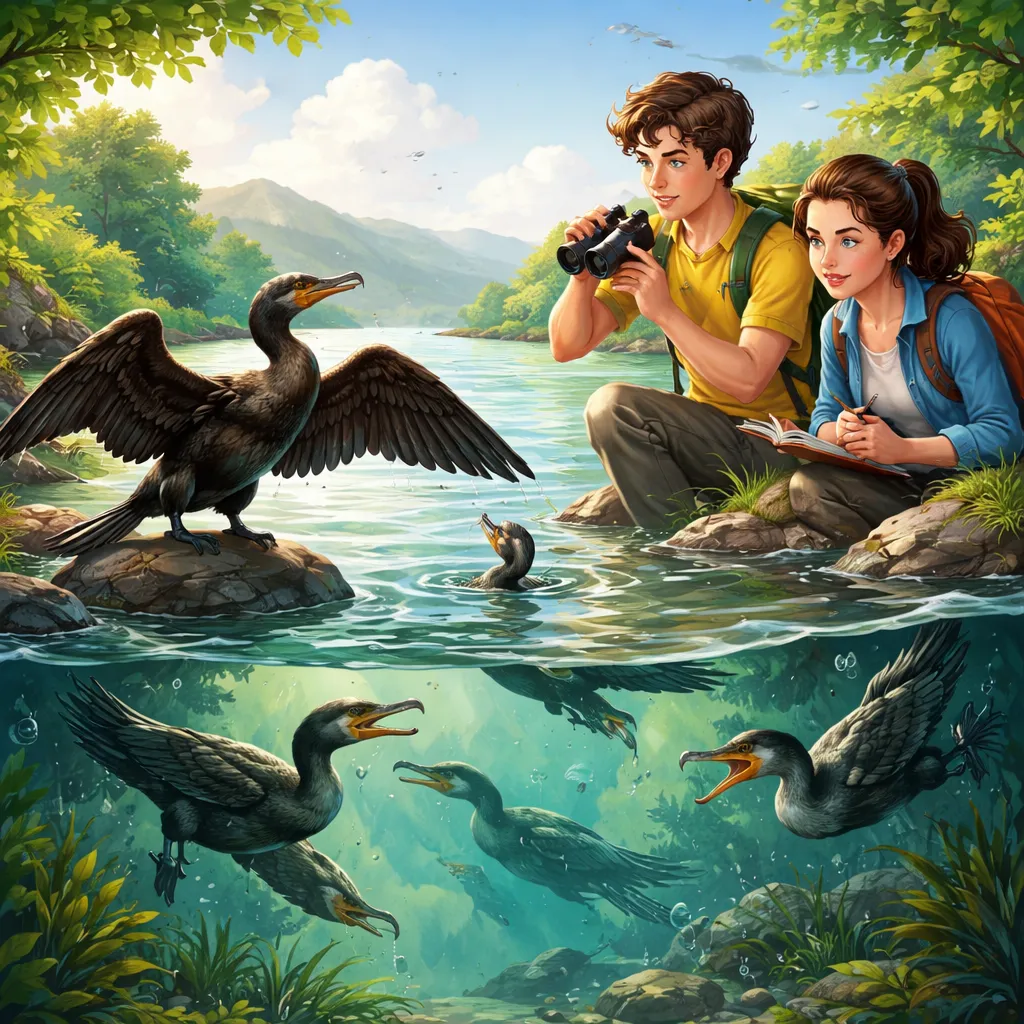
A cormorant is a large, dark water bird with a long neck and hooked beak. It has webbed feet for swimming. Its feathers are not fully waterproof. After diving, it spreads its wings to dry. You often see cormorants standing with wings outstretched.
Cormorants live near water. They are found on coasts, lakes, and rivers around the world. They are excellent swimmers. They dive deep to catch fish. They use their feet to propel themselves underwater. They can stay submerged for over a minute.
These birds are often seen in groups. They perch on rocks, docks, and trees. They nest in colonies. They are social birds. They work together to find schools of fish.
For children, cormorants are interesting. Their wing-drying pose is easy to recognize. Their diving skills are impressive. Learning about cormorants teaches children about water birds, coastal ecosystems, and the adaptations that help animals thrive in water.
English Learning About This Animal
Let us learn the English word cormorant. We say it like this: /ˈkɔːrmərənt/. The cor sounds like “core.” The mo sounds like “muh.” The rant sounds like “rant.” Put them together: cormorant. Say it three times. Cormorant. Cormorant. Cormorant.
Now let us learn words about a cormorant’s body. The beak is long and hooked at the tip. The neck is long and flexible. The feet are webbed for swimming. The wings are spread to dry after diving. The chicks are baby cormorants.
There is a famous saying about cormorants. Fishermen say, “The cormorant dives deep and comes up with its reward.” This describes their fishing skill. Another saying is, “The cormorant stands with wings open, waiting for the sun to dry its feathers.” This reflects their unique drying habit.
These English words help children understand cormorant anatomy. When they say webbed feet, they learn how cormorants swim. When they say chicks, they know the babies. Parents can practice these words while looking at pictures. Point to the parts. Say the words together.
Animal Facts and Science Knowledge
Cormorants belong to the family Phalacrocoracidae. There are about forty cormorant species. They are found on every continent except Antarctica. The great cormorant is found worldwide. The double-crested cormorant is common in North America. Cormorants are related to boobies and gannets.
Cormorants live near water. They live on coasts, lakes, rivers, and wetlands. They need areas with fish. They perch on rocks, trees, and man-made structures. They are adaptable. They live in cities near water.
Cormorants are carnivores. They eat fish, eels, and crustaceans. They dive underwater to hunt. They swim with their feet. They catch fish with their hooked beaks. They swallow fish headfirst. They can dive up to one hundred feet deep.
Cormorants have special abilities. Their feathers are not fully waterproof. This allows them to dive deeper. They weigh less underwater. After diving, they spread their wings to dry. They can stay underwater for up to two minutes. Their eyes can see clearly underwater.
Cormorants are social birds. They nest in large colonies. They build nests on cliffs, trees, or the ground. Both parents feed the chicks. Chicks beg for food by reaching into the parent’s throat. Parents regurgitate fish for them.
How to Interact With This Animal Safely
Cormorants are wild birds. They are not pets. The best way to interact is to watch from a distance. Look for them on lakes, rivers, and coasts. Watch them dive. Watch them spread their wings to dry.
Teach children to respect cormorants. Do not try to approach them. They will fly away if people come too close. Use binoculars for a closer look. Sit quietly and watch.
If you find a cormorant colony, keep your distance. Do not disturb nesting birds. They may abandon their nests if frightened. Stay on paths. Follow local rules.
Cormorants sometimes conflict with fishermen. They eat fish that people want to catch. But they are part of the ecosystem. Learning about them helps us understand the balance of nature.
In some places, cormorants are protected. In others, they are managed. Learning about them helps us make good decisions.
What Can We Learn From This Animal
Cormorants teach us about adaptation. Their feathers let them dive deep. Children learn that adapting to our surroundings helps us. Wearing the right clothes, learning new skills, and adjusting to situations help us thrive.
Cormorants teach us about patience. They stand with wings open, waiting for them to dry. Children learn that waiting is sometimes necessary. Being patient, taking time, and letting things happen are good habits.
Cormorants teach us about community. They nest in large colonies. They raise young together. Children learn that families and communities help each other. Working together, sharing, and caring for others make us strong.
Cormorants teach us about water. They show us that water is full of life. Children learn that lakes, rivers, and oceans are home to amazing creatures. Protecting water protects cormorants.
Fun Learning Activities
Let us make learning about cormorant fun. One activity is the cormorant dive game. Ask your child to pretend to dive underwater. Swim with feet like webbed feet. Catch a fish. Come up. Spread arms like wings to dry. Say “cormorant dives” and “cormorant dries its wings.”
Another activity is drawing a cormorant. Look at pictures of cormorants. Notice the long neck, hooked beak, and webbed feet. Draw a cormorant standing with wings spread. Add water below. Label the parts. Say the words aloud.
Create a story about a cormorant family. Ask your child what the cormorants do. Do they dive for fish? Do they feed their chicks? Do they perch on rocks? Write a few sentences together. Let your child draw pictures. Read the story aloud.
Make a cormorant craft. Use black paper for the body. Add a long neck and hooked beak. Add webbed feet. Add wings spread wide. Move the craft cormorant. Practice saying “cormorant dives” and “cormorant spreads its wings.”
Learn about water birds. Talk about other birds that live near water. Compare cormorants to ducks, herons, and gulls. Use words like “dive,” “webbed feet,” and “colony.”
Learn about bird adaptations. Talk about why cormorant feathers are not waterproof. Compare to ducks that have waterproof feathers. Use words like “adaptation,” “buoyancy,” and “insulation.”
These simple activities bring learning to life. Children build English vocabulary while playing. They learn science through understanding bird adaptations. They develop appreciation through learning about water ecosystems. Learning about cormorant becomes a journey to lakes and coasts. Each moment spent together strengthens language, curiosity, and a growing appreciation for the dark, diving birds that teach us that adaptation, patience, and community help us thrive in the water and on the shore.