
What Is This Animal?
An ant is a tiny insect that lives in large groups. It has six legs and a small body divided into three parts. Ants come in many colors. Most are black, brown, or red. They move quickly along trails. You can find them in gardens, sidewalks, and forests.
Ants are social insects. This means they live together in colonies. A colony can have thousands of ants. Each ant has a job. Some find food. Some care for young ants. Some build and protect the nest. They work as one big family.
Ants build homes underground. They dig tunnels and chambers. These tunnels connect to each other. The nest keeps ants safe from weather and enemies. Some ants build nests in wood or under rocks. Children often spot ant hills in parks or backyards.
Ants are strong for their size. They can carry objects much heavier than themselves. They work together to move food. For children, ants are a wonderful example of how small creatures can do amazing things when they cooperate.
English Learning About This Animal
Let us learn the English word ant. We say it like this: /ænt/. The a makes a short sound, like in “cat.” The n uses the tip of the tongue. The t is a quick, soft sound. Say it together: ant. Now say it three times. Ant. Ant. Ant.
Now let us learn words about an ant’s body. The head holds the eyes and antennae. The antennae help the ant feel, smell, and communicate. The thorax is the middle section where the legs attach. The abdomen is the back section. The mandibles are the strong jaws. Ants use them to carry food and dig.
There is a wise proverb about ants. It comes from ancient writings. It says, “Go to the ant, you sluggard. Consider her ways and be wise.” This means we can learn good habits by watching ants. They work hard without being told. Another simple saying is, “Ants are busy, but they are never in a hurry.” This reminds us to work steadily without rushing.
These English words help children describe what they see. When they say mandibles, they learn a precise word for ant jaws. When they say antennae, they understand how ants touch and sense. Parents can practice these words while watching ants outside. Point to the parts in pictures. Say the words together.
Animal Facts and Science Knowledge
Ants belong to the insect group called Hymenoptera. This group also includes bees and wasps. Ants are insects. They have three body parts. They have six legs. They have two antennae. Their hard outer shell is called an exoskeleton. It protects their soft body inside.
Ants live in colonies. Each colony has one queen. The queen lays eggs. She can live for many years. Worker ants are female. They do not lay eggs. They find food, build the nest, and protect the colony. Male ants have wings. Their only job is to mate with the queen. They die shortly after.
Ants communicate with chemicals. They release special scents called pheromones. When an ant finds food, it leaves a scent trail. Other ants follow the trail to the food. This is how they work together. Ants also use their antennae to touch and share information.
Ants eat many things. Some eat leaves. Some eat other insects. Some eat sweet liquids. Harvester ants collect seeds. Leafcutter ants cut pieces of leaves. They carry them to the nest. They use the leaves to grow fungus. This fungus becomes their food.
Ants have special abilities. They can lift fifty times their own body weight. They work together to move large objects. Some ants build bridges with their bodies. They connect to help others cross gaps. Ants also farm other insects. They protect aphids and drink the sweet liquid aphids produce.
How to Interact With This Animal Safely
Ants are wild insects. They usually do not harm people. Most ants are harmless. Some ants can bite or sting if they feel threatened. Teach children to watch ants without touching. Observing from a short distance is the best way to enjoy them.
If you find an ant trail, let the ants go about their work. Do not step on them. Do not spray water on them. Do not block their path. Ants are busy finding food for their colony. Interrupting them can cause stress to the whole colony.
If an ant crawls on a child’s hand, stay calm. Gently blow on the ant. It will walk away. Do not pinch or crush it. Ants release alarm scents when hurt. This can attract more ants. A calm response keeps everyone safe.
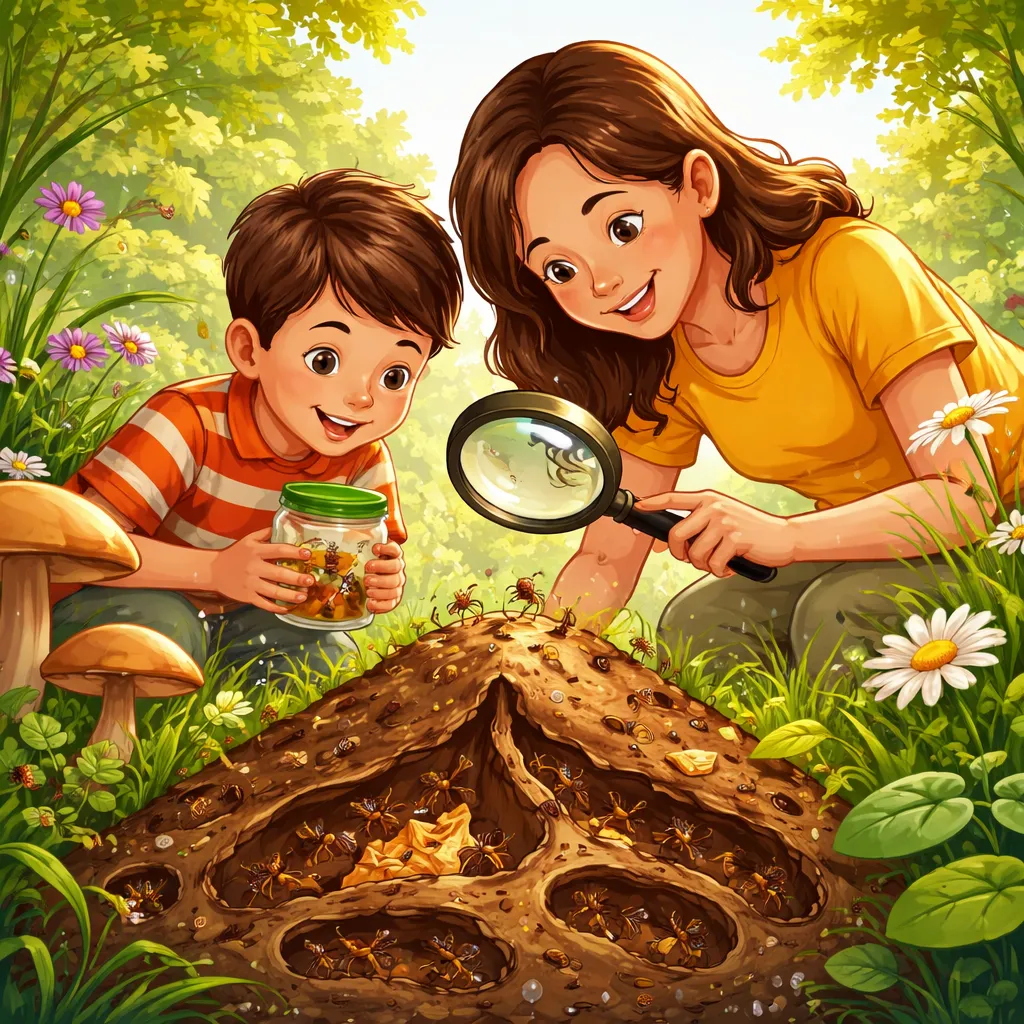
Teach children not to put ants in jars for long periods. Ants need their colony. They need food, water, and the right temperature. Taking an ant away from its home can harm it. If your child wants to observe ants up close, use a magnifying glass outside. Watch them on the ground.
Keep food areas clean. Ants come inside looking for food. Wipe up crumbs. Store sweet foods in containers. This keeps ants safe outside where they belong. It also teaches children to be tidy and respectful of small creatures.
What Can We Learn From This Animal
Ants teach us about teamwork. Every ant has a job. They work together to build nests, find food, and raise young. No ant does everything alone. Children learn that working with others makes big tasks easier. In games, in school projects, and in family life, teamwork helps everyone succeed.
Ants teach us about preparation. Ants gather food before winter comes. They do not wait until they are hungry. Children learn to prepare for what comes next. Putting toys away, packing a bag the night before, and practicing a skill ahead of time are all ways to prepare.
Ants teach us about persistence. Ants do not give up when they meet an obstacle. They climb over, dig under, or go around. They keep trying until they reach their goal. Children learn that trying again is important. When something is hard, persistence helps them find a way.
Ants teach us about doing our part. Each ant contributes to the colony. Even small jobs matter. Children learn that their actions make a difference. Helping with small tasks at home, sharing with others, and being kind all contribute to a happy family and community.
Fun Learning Activities
Let us make learning about ant fun. One activity is the ant trail game. Ask your child to walk like an ant. Move in a line. Follow each other around the room. Stop to pick up small objects. Carry them to a “nest.” Say “ants follow the trail” and “ants carry food home.”
Another activity is building an ant observation spot. Find a place outside where ants are active. Place a small piece of fruit or a few crumbs nearby. Watch what happens. Count how many ants come. Notice how they follow the same path. Draw what you see. Use words like “trail,” “worker,” and “antennae.”
Draw an ant and label its parts. Draw the head, antennae, thorax, abdomen, and legs. Add the mandibles. Write the words next to each part. Say them aloud. For younger children, draw the ant first. Let them point to the parts as you say the words.
Create a story about an ant’s journey. Ask your child where the ant goes. What does it find? Does it tell other ants? Write a few sentences together. Let your child draw pictures. Read the story aloud.
Make an ant farm from a clear container. Fill it with soil. Add a few ants from outside. Watch them dig tunnels. Observe for a few days. Then release them back where you found them. This activity requires adult help. It gives children a close look at ant life.
Through these simple moments, children build language and understanding. Learning about ant becomes a shared experience between parent and child. Each small observation, each new word, and each gentle interaction adds to a child’s growing world. Ants, with their quiet strength and endless teamwork, leave a lasting lesson about working together, preparing for the future, and finding purpose in every small task.