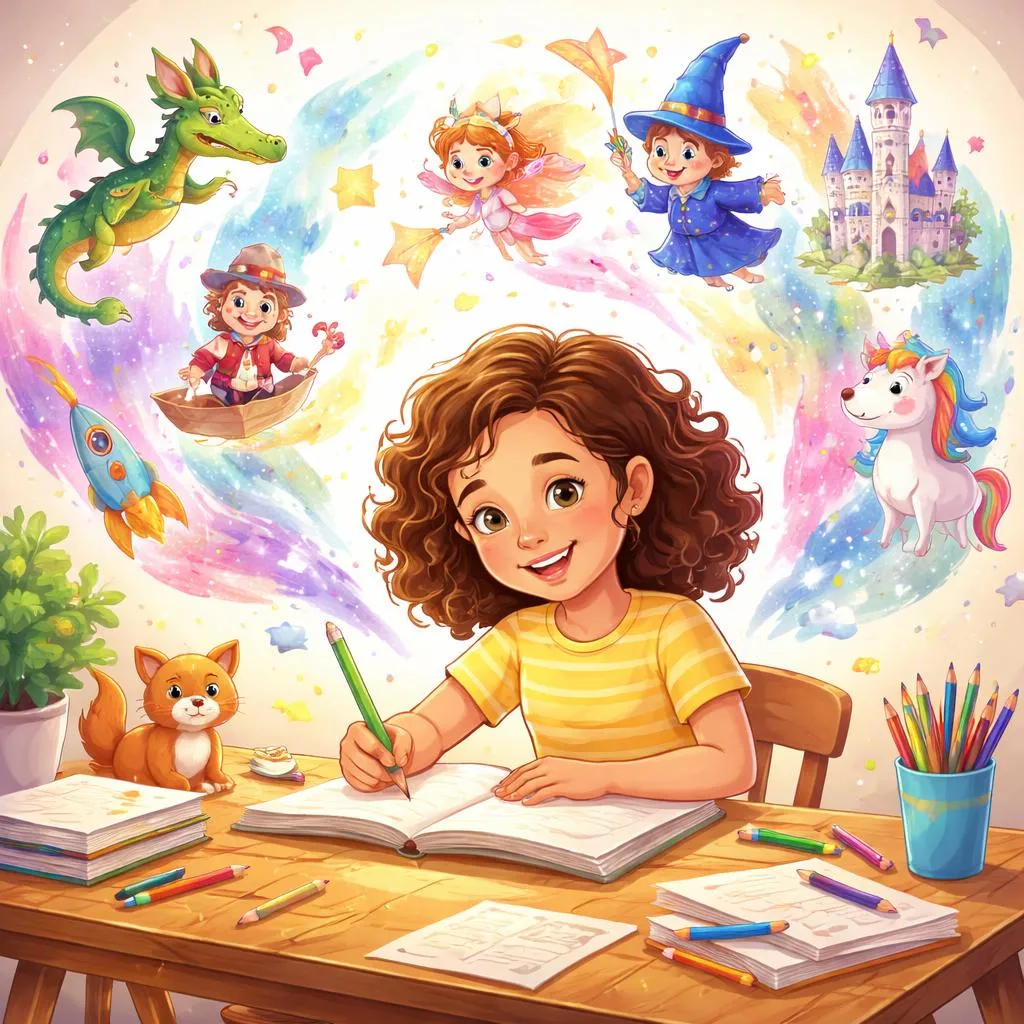

Every child has stories living inside them. The challenge is getting those stories out. Writing children's stories tips provide the guidance young writers need to transform their ideas into actual stories. These tips break down the mysterious process of writing into clear steps. They give children tools they can use again and again. They build confidence by showing that writing is a skill anyone can learn. This article explores practical tips teachers can share to help young authors discover the joy of creating their own tales.
What Are Writing Children's Stories Tips? Writing children's stories tips are simple guidelines that help young writers create better stories. They cover every part of the writing process. Getting ideas. Planning the story. Creating characters. Describing settings. Writing sentences that flow. Fixing mistakes. Adding illustrations. Sharing the finished work. These tips come from experienced authors and teachers who understand how children learn to write. They are not rules that must be followed exactly. They are tools that writers can use when needed. The best tips make writing feel easier and more fun. They remove obstacles and open doors to creativity.
Meaning and Explanation Behind Writing Tips Writing tips matter because they demystify the writing process. Many children think good writers simply sit down and produce perfect stories. They do not see the planning, revising, and editing that happens behind the scenes. Writing tips reveal this hidden work. They show that even professional writers follow steps. They make mistakes and fix them. They get stuck and find ways forward.
Tips also provide a shared language for talking about writing. When everyone knows what a "character" is, discussions become possible. When "setting" is a familiar concept, children can think deliberately about where their stories happen. This shared vocabulary builds a community of writers who can help each other improve.
The right tips at the right time prevent frustration. A child struggling with how to start learns about brainstorming. Another stuck on what happens next learns about story mountains. The tips meet them where they are and offer a path forward.
Categories or Lists of Writing Tips Writing children's stories tips can be organized into helpful categories. This makes them easier to teach and remember.
Idea Generation Tips:
Look around the room. What objects could star in a story?
Think about something funny that happened recently.
Imagine "what if" about ordinary situations.
What if your pet could talk?
What if it rained cupcakes?
What if your backpack was magic?
Planning Tips:
Think about the beginning, middle, and end before writing.
Who is the main character? What do they want?
Where does the story happen?
What problem will the character face?
How will the problem get solved?
Character Creation Tips:
Give characters names that fit their personality.
Think about how characters look, talk, and act.
What does the character like? Dislike?
What makes this character special?
Readers should care about what happens to this character.
Writing Tips:
Start with an exciting first sentence.
Use words that paint pictures in readers' minds.
Show what happens instead of just telling.
Include some dialogue where characters talk.
Keep sentences clear and not too long.
Revision Tips:
Read the story out loud to hear how it sounds.
Check if any parts are confusing.
Add more details where needed.
Take out parts that do not matter.
Fix spelling and punctuation at the end.
Daily Life Examples Using Writing Tips Writing children's stories tips connect to experiences children already have. When someone describes a weekend adventure, point out how that could become a story. When a child complains about something unfair, suggest writing a story where a character faces the same problem. When the class shares a funny moment, capture it as a possible story idea.
The tip about "show don't tell" comes alive through examples. Instead of writing "The character was sad," show tears falling, shoulders slumping, a quiet voice. Children recognize these signs from their own lives. They have seen friends look sad. They have felt sadness themselves. The writing tip simply gives them words for what they already know.
Dialogue tips connect to everyday conversations. Children know how people talk. They know friends interrupt each other. They know parents give instructions. They know teachers ask questions. Writing dialogue simply means putting these familiar speech patterns onto the page.
Printable Flashcards for Writing Tips Flashcards make writing children's stories tips portable and memorable.
Tip Cards: Each card contains one clear tip on one side and a simple example on the back.
Front: Start with a strong beginning.
Back: "The night the library books came alive, no one was more surprised than Liam."
Question Cards: Cards that ask questions to guide story development.
Who is your main character?
What does your character want?
What gets in the way?
How does the story end?
Word Cards: Cards with useful writing vocabulary.
Character, setting, problem, solution, dialogue, action.
Teachers can keep these cards accessible during writing time. Children flip through them when stuck. The cards provide just-in-time support without teacher intervention.
Learning Activities or Games for Writing Tips Activities make writing children's stories tips concrete and memorable.
Activity 1: Tip of the Day Introduce one new writing tip each day. Write it on the board. Discuss what it means. Show an example. Then give children a few minutes to try using the tip in their current writing. This gradual introduction prevents overwhelm. Each tip gets attention before becoming part of the writer's toolkit.
Activity 2: Tip Scavenger Hunt Read a favorite picture book to the class. Ask children to find examples of writing tips in action. Where does the author show instead of tell? Where is there a strong beginning? What words paint pictures? This builds reading comprehension while reinforcing writing knowledge.
Activity 3: Tip Sorting Write various writing tips on separate cards. Also write examples of each tip in use on other cards. Children work in pairs to match each tip with its example. This deepens understanding through hands-on practice.
Activity 4: Tip Posters Divide the class into small groups. Assign each group one writing tip. They create a colorful poster explaining their tip with words and pictures. Display the posters around the room as ongoing reference tools.
Vocabulary Learning from Writing Tips Teaching writing children's stories tips naturally introduces important vocabulary.
Writing Process Words: Brainstorm, plan, draft, revise, edit, publish, share.
Story Element Words: Character, setting, plot, problem, solution, beginning, middle, end.
Craft Words: Describe, show, tell, dialogue, action, detail, word choice, voice.
Revision Words: Add, remove, move, change, improve, clarify, correct.
Teachers can introduce these words gradually as they become relevant. A word wall of writing vocabulary provides ongoing reference. Using the words consistently in discussions helps them become part of children's active vocabulary.
Phonics Points in Writing The process of writing stories provides authentic phonics practice.
Sound Spelling: When children write, they practice connecting sounds to letters. Encourage stretching words out and writing the sounds heard. This invented spelling builds phonemic awareness while allowing stories to flow.
Word Patterns: Writers naturally use words from common families. Light, night, bright. Run, fun, sun. These patterns reinforce phonics learning through meaningful use.
Sight Words: Frequently used words appear again and again in writing. The, and, said, was, went. Repeated writing builds automatic recognition.
Punctuation: Writing stories introduces punctuation naturally. Periods stop sentences. Question marks ask things. Exclamation points show excitement. Quotation marks surround spoken words.
Teachers can notice and celebrate phonics growth in student writing. "I see you used an exclamation mark there. That shows the character was really excited."
Grammar Patterns in Story Writing Writing stories provides meaningful contexts for using correct grammar.
Past Tense for Stories: Most stories use past tense consistently. The character walked into the forest. The dragon breathed fire. This reinforces irregular past forms through repeated use.
Dialogue Punctuation: Writing conversation introduces quotation marks, commas, and speaker tags. "I am not afraid," said the mouse. This grammar becomes meaningful when children want their characters to talk.
Descriptive Language: Good stories need adjectives and adverbs. The dark forest. The tiny mouse. The quietly creeping shadow. These parts of speech serve real purposes in storytelling.
Sentence Variety: Writers learn to mix short and long sentences. Short ones create tension. Longer ones provide description. This variety develops naturally through storytelling.
Teachers can gently guide grammar during the editing phase. "Let's read this sentence together. Does it sound like something is missing?"
Learning Tips for Young Writers Beyond specific writing tips, broader learning tips support young authors.
Tip: Write Every Day Regular practice builds writing muscles. Even five minutes daily makes a difference. The more children write, the easier writing becomes.
Tip: Read Like a Writer Pay attention to how favorite authors write. What do they do in their beginnings? How do they describe things? Writers learn from other writers.
Tip: Keep an Idea Notebook Ideas disappear if not captured. A special notebook for story ideas ensures no good idea gets forgotten. Jot down thoughts, interesting words, funny moments.
Tip: Share Work with Others Writing becomes real when shared. Read stories to classmates, family, anyone who will listen. Their reactions show what works and what might need improvement.
Tip: Be Kind to Your Own Writing First drafts are supposed to be messy. Perfection comes later. Celebrate getting ideas down. Fixing comes after creating.
Educational Games for Writing Practice Games make applying writing children's stories tips playful and engaging.
Game: Story Starters Basket Fill a basket with slips of paper. Each slip has a different story beginning. "The door creaked open and..." "Nobody believed that Sarah could..." "Under my bed, I found..." Children draw one and continue the story. This removes the pressure of starting from nothing.
Game: Sentence Stretching Start with a very simple sentence. The dog ran. Take turns adding words to make it more interesting. The brown dog ran quickly. The tired brown dog ran quickly through the park. This game teaches descriptive writing playfully.
Game: Character Creation Station Provide cards with different character traits. Brave, silly, grumpy, kind, curious, scared. Children draw a trait and create a character who embodies it. Name, appearance, likes, dislikes, secret wish. This builds character development skills.
Game: Story in Six Sentences Challenge children to write a complete story in exactly six sentences. One for beginning. One for character introduction. One for problem. Two for what happens next. One for ending. This constraint forces careful word choice and plot focus.
Printable Materials for Writing Practice Printable resources support ongoing writing development.
Story Planning Sheets: Simple graphic organizers where children plan their story before writing. Space for characters, setting, problem, solution, and main events.
Revision Checklists: Simple lists children use to check their own work. Did I include a beginning, middle, and end? Did I describe my characters? Did I show what happened? Did I check spelling?
Word Banks: Themed word lists children can reference during writing. Feeling words. Action words. Describing words. Weather words. Place words.
Story Starters: Pages with various story beginnings that children can continue. Space provided for writing and illustrating.
Author Biography Page: A template where children write about themselves as authors. Name, age, favorite things to write about, a self-portrait. This builds identity as writers.
Connecting Writing Tips to Publishing Writing children's stories tips ultimately lead to sharing finished work.
Classroom Publishing: Create a system for publishing completed stories. A special basket or shelf for finished books. Regular time for authors to share their work. Celebration of each new publication.
Author Visit Day: Invite parents or another class to an Author Visit Day. Young authors read their stories to visitors. This real audience motivates careful work and builds confidence.
Class Anthology: Collect stories on a theme into a class anthology. Make copies for every child. This shows that their writing matters enough to be preserved.
Writing Portfolio: Keep a folder of each child's writing throughout the year. Review progress together. Celebrate how much they have learned. The portfolio shows growth that might otherwise go unnoticed.
The most important truth about writing children's stories tips is that they are just tools. The real magic comes from the child holding the pencil. The tips guide, support, and encourage. But the story itself belongs to the young author. Their unique voice. Their special perspective. Their imagination at work. Tips help remove obstacles so that voice can be heard. They provide structure so creativity can flow. They build confidence so children keep writing. And keeping writing is the only tip that really matters in the end. Because every story written is a victory. Every page filled is progress. Every young author who finishes a story learns something priceless: I have ideas worth sharing. I can make something from nothing. I am a writer.