
Opening Introduction
Mia was in the garden with her grandma. She gently touched the soft, yellow petals of a sunflower. "It's so pretty," she said. "But what makes it a flower?" Her grandma pointed to the center. "This beautiful flower is actually a very smart piece of nature. It has many parts, each with a special job. Just like you have a heart, lungs, and a brain, a flower has its own parts. Let's take a closer look and learn the parts of a flower and plant biology simple. When you know the names, you see flowers in a whole new way." Mia was curious. What were the parts called? What did they do? She leaned in to look. Let's look closely with Mia.
Core Knowledge Explanation
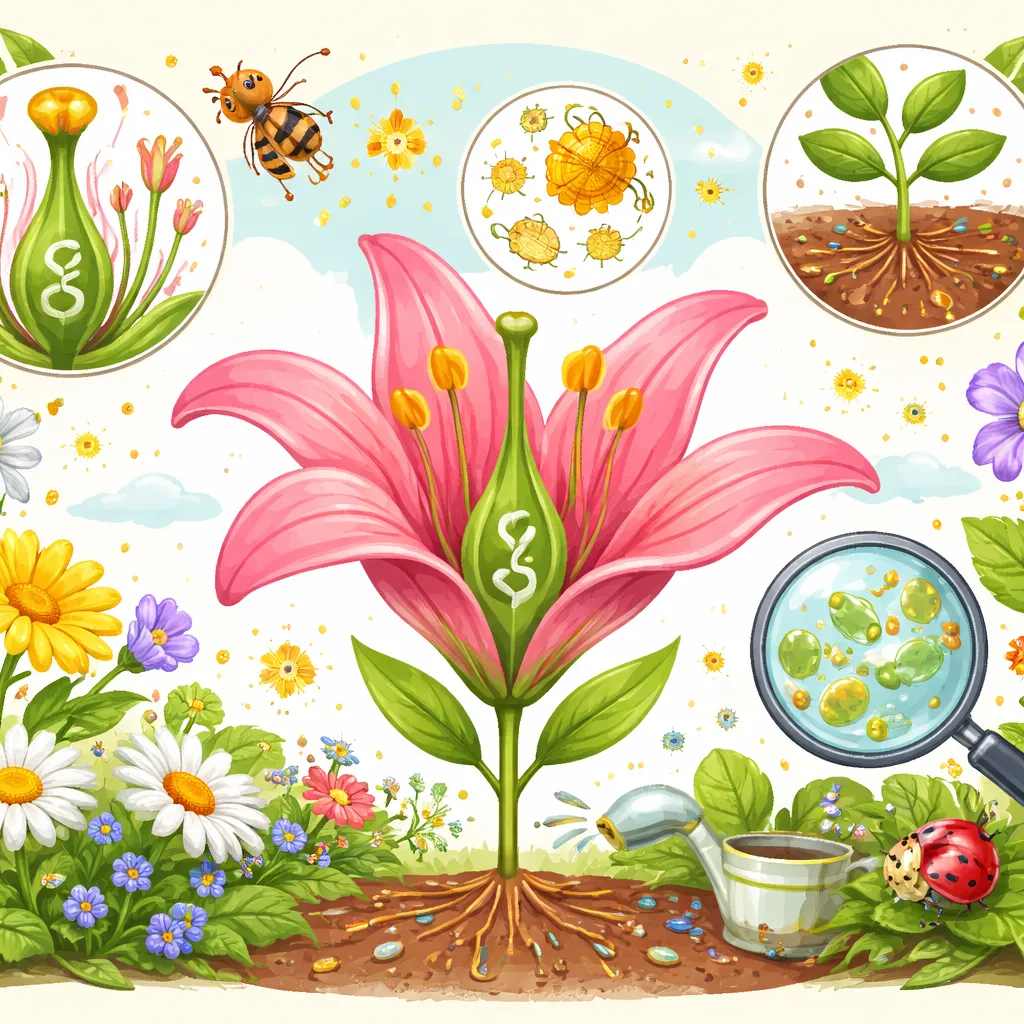
A plant is a living thing. It grows, eats, and makes new plants. A flower is a special part of some plants. Its main job is to make seeds. Seeds can grow into new plants. To understand this, we need to know the parts of a flower and plant biology simple. Let's start with the flower. A flower has four main parts. The first part is the petal. Petals are the colorful, soft leaves. They are often bright and smell nice. Why? Their job is to attract bees, butterflies, and birds. These animals are called pollinators. They help the flower make seeds.
The second part is the pistil. The pistil is the female part of the flower. It is usually in the center. The top of the pistil is sticky. It is called the stigma. Its job is to catch pollen. The middle part is a tube called the style. The bottom part is the ovary. The ovary holds tiny eggs called ovules. The third part is the stamen. The stamen is the male part of the flower. It surrounds the pistil. The stamen has a thin filament and a tip called the anther. The anther makes yellow powder called pollen. The fourth part is the sepal. Sepals are small, green leaves under the petals. They protect the flower bud before it opens. These are the main parts of a flower and plant biology simple.
Now, how does a plant work? Let's talk about plant biology. The flower is just one part. The plant has roots under the ground. Roots hold the plant in the soil. They also drink water and nutrients from the soil. Nutrients are like plant food. The stem is like the plant's body. It holds up the plant. It has tiny tubes inside. These tubes carry water and nutrients from the roots to the leaves and flowers. The leaves are the plant's food factories. They use sunlight, air, and water to make food. This process is called photosynthesis. The plant also breathes through tiny holes in the leaves. This is plant biology in a simple way. Every part works together so the plant can live, grow, and make new flowers and seeds.
Fun Interactive Learning
Let's be plant scientists. The best way to learn the parts of a flower and plant biology simple is to look at a real flower. Ask a grown-up for a simple flower, like a lily or a tulip. You will also need tweezers. Be very gentle. First, look at the flower. Find the petals. Count them. Gently pull off the petals. Now, you can see the inside. Find the tall, thin part in the middle. That is the pistil. Around it, you will see the stamens with yellow pollen. Use tweezers to carefully take out one stamen. See the yellow powder? That's pollen. Then, look at the very bottom. See the small green leaves? Those are the sepals. As you do this, say the names. "This is the pistil. This is the stamen." This is a real science project.
Another fun activity is "Build a Plant." Use craft materials. Take a green pipe cleaner for the stem. Use brown yarn for the roots. Cut out a green paper leaf. Tape it to the stem. Then, make a flower. Use a colorful cupcake liner for the petals. In the center, glue a yellow pom-pom for the anther (pollen) and a small brown pom-pom for the pistil. Label each part with a small sticker. "This is the leaf. It makes food." This helps you remember the parts of a flower and plant biology simple in a creative way. You can also draw a big plant and label all the parts from roots to flower. Use your drawing to teach someone else.
Expanded Learning
Plants are the most important living things on Earth. They give us the oxygen we breathe. They give us food like fruits, vegetables, and grains. Learning about the parts of a flower and plant biology simple helps us understand our world. Without plants, we could not live. Flowers have been around for millions of years. They have changed to attract different pollinators. A red, tube-shaped flower might attract a hummingbird. A flower that smells like rotting meat might attract a fly. Nature is very clever.
In different countries, the same flower parts have the same names in science. The word "pistil" is used by scientists in Japan, Brazil, and Egypt. Science words are a global language. When you learn the parts of a flower and plant biology simple, you are learning the language of scientists. This helps you read books, watch documentaries, and talk about nature with people everywhere. Let's make a plant part chant. Chants are fun and help you remember.
Roots drink from the ground below, a stem helps the whole plant grow! Leaves reach for the sun so bright, making food with all their might! Petals colorful, a beautiful sight, attracting bees from morning light! Stamen with pollen, yellow and fine, pistil in the center, in a line! Every part has a job to do, for the flower, and for you!
What You Will Learn
You are learning about botany, the study of plants. You are learning the parts of a flower and plant biology simple: petal, pistil (stigma, style, ovary), stamen (anther, filament), sepal, roots, stem, leaves. You are also learning about photosynthesis, pollen, nutrients, and pollinators.
You are learning descriptive and explanatory sentences. You can say, "The petals attract bees with their bright color." You can explain, "The roots anchor the plant and take in water." You can observe, "The leaves are green because they use sunlight to make food." You are using English to describe scientific processes clearly. This builds a strong foundation for all science learning.
You are building wonderful skills. You are building observation skills. You look closely at nature. You are building vocabulary. You learn precise scientific terms. You are building understanding of systems. You see how parts work together. You are building appreciation for nature. You understand how plants support life. You are building confidence. You can talk about biology.
You are forming a curious and scientific habit. The habit of asking "how" and "why" about the natural world. You see that even a simple flower is a complex and beautiful system. Learning the parts of a flower and plant biology simple opens your eyes to the wonder of plants and makes you a friend to nature.
Using What You Learned in Life
Use your new knowledge in the garden or park. When you see a flower, try to find the parts. "I see the red petals. Where is the pistil?" When you water a plant, remember the roots are drinking. When you eat a vegetable, think about which part of the plant it is. A carrot is a root. Lettuce is leaves. Broccoli is a flower! You can also grow a simple plant, like a bean in a jar. Watch the roots grow down and the stem grow up. Point out the parts as they appear.
At school, you can be the plant expert during science class. You can explain photosynthesis simply. "Leaves use sunlight to make food from air and water." You can also do a show-and-tell with a plant you drew or the flower you took apart. Teach your classmates the names. The more you use the parts of a flower and plant biology simple, the more you will see the science in every plant around you. You are becoming a junior botanist.
Closing Encouragement
You are a plant detective. You are a biology explorer. You are a curious and careful nature lover. I am so proud of you. Learning all about flower parts and plant biology shows you have a sharp mind and a love for the living world.
Keep exploring, keep growing your knowledge like a plant grows toward the sun. Remember, every time you learn the name of a part, you are understanding a little more of nature's secret language.
You are observant, you are knowledgeable, and you are learning the language of life. Great work, my wonderful plant scientist.