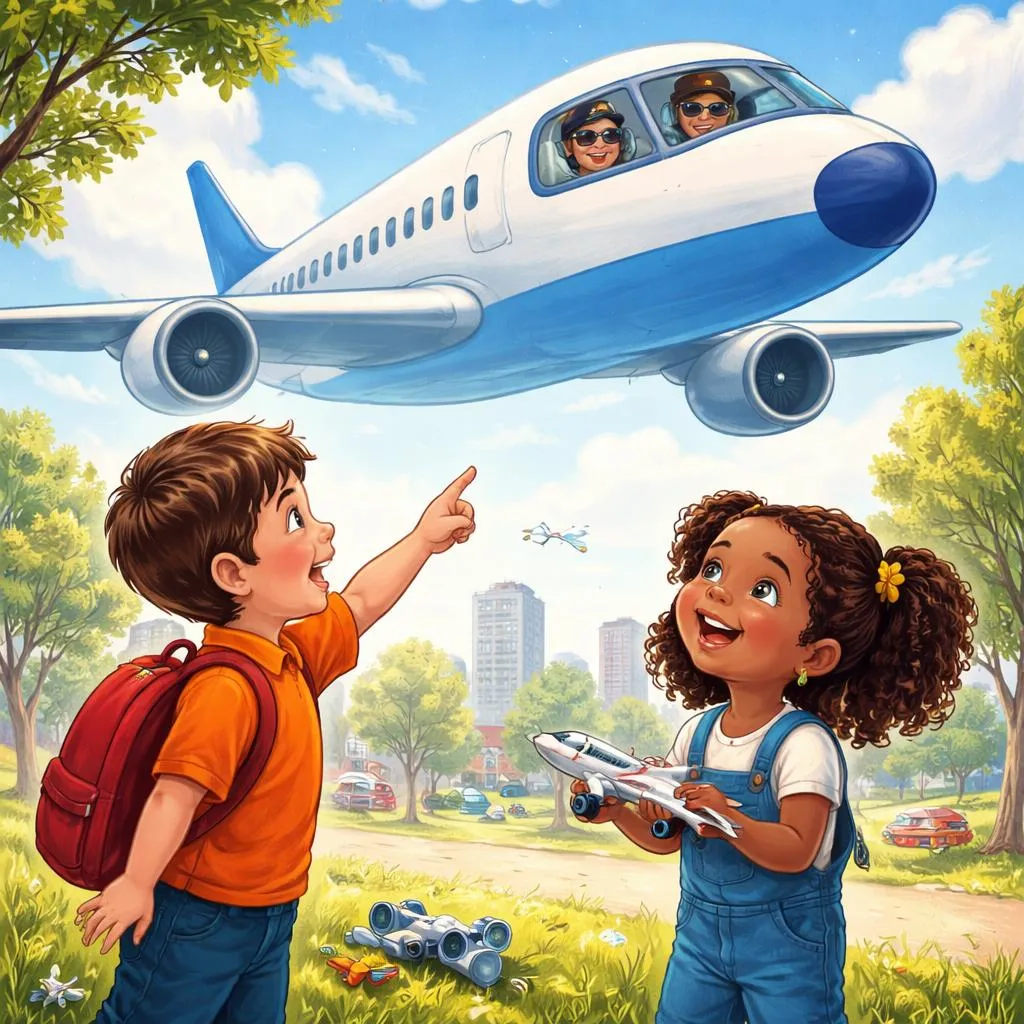

What Do These Expressions Mean? “A pilot” and “an aviator” both mean a person who flies an aircraft. They tell a child that this person sits in the cockpit, steers the plane, and takes people up in the sky. Children hear these words when looking at airplanes, learning about jobs, or watching movies. Both describe flyers.
“A pilot” is the common, everyday word for a person who flies a plane or helicopter. A child says it when asking “Is the pilot flying the plane?” It is the standard term.
“An aviator” means the same thing, but it sounds older and more formal. It is often used in history books or for early flyers. A child might hear it in a story about the Wright brothers. It is less common today.
These expressions seem similar. Both mean “a person who flies an aircraft.” Both describe the same job. But one is for everyday talk while one is for historical or formal use.
What's the Difference? One is the standard, everyday word. One is an older or more formal word. “Pilot” is what you say to your family and friends. It is simple and direct. Children learn it first.
“Aviator” is used in history, old movies, or formal writing. You might read about “early aviators” like Amelia Earhart. A child saying “aviator” sounds like they are reading a history book. It is correct but unusual.
Think of a child looking at a plane in the sky. “The pilot is flying” is right. “The aviator is flying” would sound odd for a modern plane. One is natural. One is historical.
One is for all conversations. The other is for history or formal contexts. “Pilot” for today’s planes. “Aviator” for early flight or old movies. Use the first for speaking. Use the second for history lessons.
Also, “aviator” sometimes means a person who designs or studies flight, not just flies. But most often, it means pilot.
When Do We Use Each One? Use “pilot” for everyday conversation. Use it for airline pilots, helicopter pilots, and any person flying an aircraft today. Use it as the standard word. It fits daily life.
Examples at home: “The pilot landed the plane smoothly.” “My uncle is a pilot.” “I want to be a pilot when I grow up.”
Use “aviator” rarely. Use it in history lessons, old stories, or formal writing. Use it to teach the word. Children almost never need to say this word.
Examples for history: “The Wright brothers were early aviators.” (history) “Amelia Earhart was a famous aviator.” (historical figure) “In the 1920s, aviators wore leather helmets.” (old times)
Most children should just say “pilot.” It is clear, natural, and modern. “Aviator” is good to understand for reading history. But for speaking, “pilot” is best.
Example Sentences for Kids A pilot: “A pilot flies an airplane.” “The pilot wears a special uniform.” “I saw the pilot in the cockpit.”
An aviator: “Early aviators flew small, open planes.” (history) “Amelia Earhart was a famous aviator.” (learning) “The word aviator means pilot, especially from the past.”
Notice “pilot” is normal speech. “Aviator” is for history and old stories. Children learn both. One for today. One for the past.
Parents can use “pilot” every day. Save “aviator” for history lessons. “Early aviators flew without GPS. Now we call them pilots.” Learning happens in small moments.
Common Mistakes to Avoid Some children say “aviator” for a modern pilot. That is not wrong, but it sounds strange. Use “pilot” for today’s planes. Save “aviator” for history.
Wrong: “The aviator on my plane gave me a snack.” Better: “The pilot on my plane gave me a snack.”
Another mistake: thinking “aviator” is a different job. It is the same job, just an older word. Teach the connection.
Wrong: “An aviator is not a pilot.” Right: “An aviator is an old-fashioned word for a pilot.”
Some learners think “aviator” is only for small planes. It can be for any plane, but it is historical. For modern planes, say “pilot.”
Also avoid using “aviator” in everyday talk. Friends may not understand. Use “pilot” for clarity.
Easy Memory Tips Think of “pilot” as a modern cockpit with screens and buttons. Today’s pilot. For everyday.
Think of “aviator” as a leather hat and goggles from a black-and-white photo. Old-time flyer. For history.
Another trick: remember the time period. “Pilot” = now. “Aviator” = past. Now gets “pilot.” Past gets “aviator.”
Parents can say: “Pilot for a jet. Aviator for a biplane set.”
Practice at home. Airline pilot: “pilot.” Old movie: “aviator.”
Quick Practice Time Let us try a small exercise. Choose the better phrase for each situation.
A child watches a plane land at the airport. a) “The aviator landed the plane.” b) “The pilot landed the plane.”
A child reads a book about the history of flight. a) “Early pilots flew risky missions.” b) “Early aviators flew risky missions.”
Answers: 1 – b. A modern plane landing fits the everyday “pilot.” 2 – a or b. Both work. “Aviators” is more historical and fits a history book.
Fill in the blank: “When I talk about the person flying our plane today, I say ______.” (“Pilot” is the modern, everyday, natural choice.)
One more: “When I read about the Wright brothers, they are called ______.” (“Aviators” fits the historical, early-flight, old-time description.)
Flying is a dream for many. “Pilot” is for today’s hero. “Aviator” is for history’s hero. Teach your child both. A child who learns both can talk about planes of the past and present.