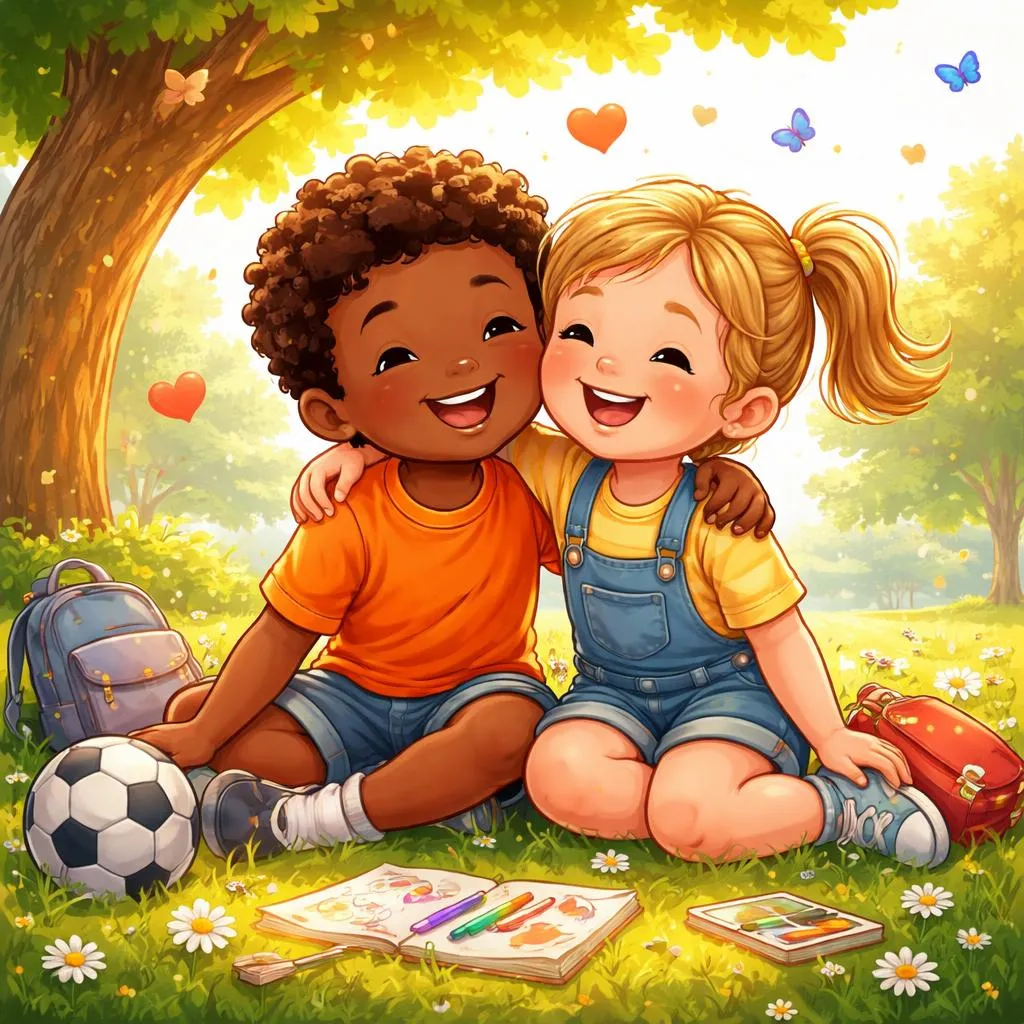

What Do These Expressions Mean? “You're my friend” and “we are pals” both tell someone that you care about them and enjoy their company. They let another child know that they are special to you. Children say these words after playing, sharing, or helping each other. Both build strong bonds.
“You're my friend” means I consider you a person I trust and like to be with. It is clear and direct. A child says it when they feel close to someone. It is warm and sincere.
“We are pals” means we are good friends who enjoy each other's company. It is more casual and playful. A child says it when they have a fun, easygoing friendship. It feels light and happy.
These expressions seem similar. Both say “I like being with you.” Both celebrate connection. But one is more serious while one is more playful.
What's the Difference? One is more serious and sincere. One is more playful and casual. “You're my friend” is a meaningful statement. It can be said in quiet moments. It carries weight.
“We are pals” is light and fun. It is good for active, silly friendships. It sounds less serious. It is for buddies who joke and play.
Think of a child who shares a secret. “You're my friend” fits the trust. “We are pals” would feel too casual. One is for deep friendship. One is for fun friendship.
One is for all friendships. The other is for buddy friendships. “You're my friend” works for shy friends, brave friends, old friends, new friends. “We are pals” works for friends you romp and run with. Use the first for meaning. Use the second for fun.
Also, “pal” is an older word but still used by children. “Friend” is more universal. Both are kind. Both are good.
When Do We Use Each One? Use “you're my friend” for meaningful, sincere moments. Use it when someone helps you, shares a feeling, or is kind. Use it to show deep caring. It fits special connection moments.
Examples at home and school: “You're my friend. Thank you for helping me.” “You're my friend. I trust you.” “You're my friend. That means I will always be here for you.”
Use “we are pals” for fun, playful moments. Use it when joking, running, or playing games. Use it for lighthearted friendship. It fits silly, happy times.
Examples for playfulness: “We are pals. Let's build a fort.” “You and me? We are pals for life.” “We are pals. That means we share our snacks.”
Children can use both. “You're my friend” for heart moments. “We are pals” for fun moments. Both build happy friendships.
Example Sentences for Kids You're my friend: “You're my friend. I like you just the way you are.” “You're my friend. I will help you if you fall.” “You're my friend. That will never change.”
We are pals: “We are pals. Let's go on an adventure.” “We are pals. That means we always have fun together.” “We are pals. High five!”
Notice “you're my friend” sounds like a promise. “We are pals” sounds like a cheer. Children learn both. One for the heart. One for the fun.
Parents can use both. Quiet moment: “you're my friend.” Playtime: “we are pals.” Children learn different friendship words.
Common Mistakes to Avoid Some children call everyone “pal” too casually. It can sound like they are being friendly but not sincere. Save “we are pals” for real friends. “Friend” is always sincere.
Wrong: “We are pals” (child they just met, never played with). Better: “Let's play. Maybe we can be friends.”
Another mistake: forgetting that “pal” sounds old to some ears. Most children understand it, but “friend” is clearer. When in doubt, say “friend.” It is understood by everyone.
Wrong: “You're my pal” (to a child who doesn't know the word). Better: “You're my friend.”
Some learners use “pal” only for boys. Pal is for anyone. Girls can be pals too. Friend is better to avoid gender confusion. Use friend for everyone.
Also avoid saying “you're my friend” to someone who is not. If you do not feel it, do not say it. Friendship words should be honest. Empty words hurt later.
Easy Memory Tips Think of “you're my friend” as a heart. The heart beats steady and true. Deep and meaningful. For serious, caring moments.
Think of “we are pals” as a high five. The hands slap together joyfully. Fast and fun. For playful, silly moments.
Another trick: remember the feeling. “Friend” is for your heart. “Pal” is for your play. Heart gets “friend.” Play gets “pal.”
Parents can say: “Friend for the heart. Pal for the cart.” That means deep feelings get “friend.” Playful fun gets “pal.”
Practice at home. Sharing a feeling: “you're my friend.” Playing tag: “we are pals!” Two different friendship levels.
Quick Practice Time Let us try a small exercise. Choose the better phrase for each situation.
A child comforts a friend who is crying. The friend feels better. a) “We are pals.” b) “You're my friend. I don't like to see you sad.”
Two children are running in the yard, laughing, and about to jump in a pile of leaves. a) “You're my friend.” b) “We are pals! Let's jump!”
Answers: 1 – b. A serious, caring moment fits “you're my friend.” 2 – b. A fun, playful moment fits the cheerful “we are pals.”
Fill in the blank: “When my friend shares a secret with me, I say ______.” (“You're my friend” fits the trusting, meaningful moment.)
One more: “When my friend and I run to the swings shouting with joy, I shout ______.” (“We are pals!” fits the playful, energetic moment.)
Friendship is special. “You're my friend” speaks to the heart. “We are pals” celebrates the fun. Teach your child both. A child who knows how to be a friend grows up loved.
Wrap-up “You're my friend” is a sincere, meaningful statement for deep caring moments. “We are pals” is a playful, joyful exclamation for fun, active friendships. Use “you're my friend” for heart-to-heart talks. Use “we are pals” for playtime and silly adventures. Both phrases celebrate connection. A friend is a treasure. A pal is a joy.