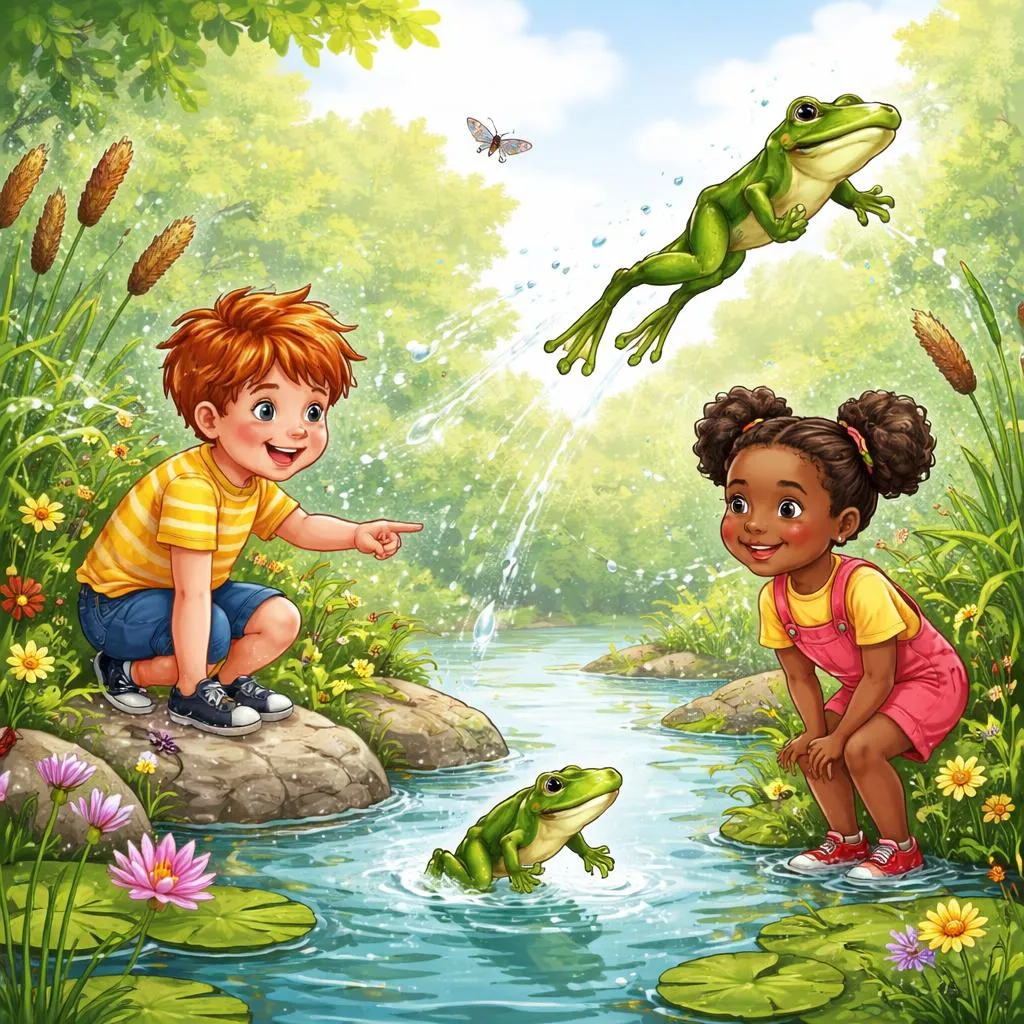

What Do These Expressions Mean? “It's jumping” and “it's leaping” both mean pushing off the ground into the air. They tell someone that an animal or person is moving upward and forward off the ground. Children say these words about frogs, kangaroos, or kids on a trampoline. Both describe airborne motion.
“It's jumping” is the common, everyday word for leaving the ground. A child says it when a rabbit hops over a log. It is simple and direct.
“It's leaping” means a long, high, or graceful jump, often with style. It is a more dramatic word. A child says it when a deer bounds over a fence. It feels more exciting.
These expressions seem similar. Both mean “off the ground.” Both describe hopping. But one is for normal jumps while one is for big, dramatic jumps.
What's the Difference? One is for ordinary jumps. One is for big, dramatic, or graceful jumps. “It's jumping” works for any jump. A bunny hop, a kid on one foot, a frog. It is the neutral word.
“It's leaping” suggests a long, high, or beautiful jump. A ballet dancer leaps. A gazelle leaps. It implies distance or grace. It is stronger.
Think of a frog moving from lily pad to lily pad. “It's jumping” is right. A deer jumping over a high fence. “It's leaping” fits better. One is for small jumps. One is for big, impressive jumps.
One is for everyday. The other is for dramatic movements. “Jumping” for a hop. “Leaping” for a bound. Use the first for normal. Use the second for impressive.
Also, “leaping” is less common in child talk. Children learn “jump” first. Teach “leap” as a more exciting word.
When Do We Use Each One? Use “it's jumping” for most everyday jumps. Use it for frogs, rabbits, kids, and grasshoppers. Use it for any push off the ground. It fits normal talk.
Examples at home: “The frog is jumping into the water.” “My brother is jumping on the bed.” “The dog is jumping to catch the ball.”
Use “it's leaping” for large, dramatic, or graceful jumps. Use it for deer, gazelles, ballet dancers, or superheroes. Use it to sound exciting. It fits dramatic talk.
Examples for drama: “The deer is leaping over the fence.” “The dancer is leaping across the stage.” “The cat is leaping from the counter to the shelf.”
Children can use both. “Jumping” for normal. “Leaping” for dramatic. Both describe going up.
Example Sentences for Kids It's jumping: “It's jumping up and down.” “The kangaroo is jumping.” “I’m jumping over the puddle.”
It's leaping: “The horse is leaping over the hurdle.” “The superhero is leaping from building to building.” “The rabbit made a huge leap across the field.”
Notice “jumping” is for ordinary hops. “Leaping” is for big, dramatic, or graceful jumps. Children learn both. One for everyday. One for excitement.
Parents can use both. A frog: “it's jumping.” A deer: “it's leaping.” Children learn different levels of jump.
Common Mistakes to Avoid Some children say “leaping” for a small hop. That is an exaggeration. A bunny hop is jumping, not leaping. Save “leaping” for big jumps.
Wrong: “The bug is leaping.” Better: “The bug is jumping.”
Another mistake: using “jumping” for a beautiful ballet jump. That is fine, but “leaping” is more precise. If the jump is long and graceful, say “leaping.” “Jumping” is not wrong, just less specific.
Wrong: “The dancer is jumping.” (true but less poetic) Better: “The dancer is leaping.”
Some learners think “leap” is only for animals. People can leap. A long jump athlete leaps. A child can leap over a puddle.
Also avoid saying “jumping” for a jump that never left the ground. If feet stay on ground, it is not a jump. It is a “hop” or a “bounce.” Use the right word.
Easy Memory Tips Think of “jumping” as a small bounce. Up. Down. Normal. For everyday hops.
Think of “leaping” as a superhero flying. Long. High. Exciting. For big, dramatic jumps.
Another trick: remember the size. “Jumping” is small or medium. “Leaping” is large or graceful. Small gets “jump.” Large gets “leap.”
Parents can say: “Jump for a bump. Leap for a heap.”
Practice at home. Kid on a trampoline: “it's jumping.” Deer over a fence: “it's leaping.”
Quick Practice Time Let us try a small exercise. Choose the better phrase for each situation.
A child watches a grasshopper move from one blade of grass to another. a) “It's leaping.” b) “It's jumping.”
A child watches a dolphin jump high out of the water and far through the air. a) “It's jumping.” b) “It's leaping.”
Answers: 1 – b. A grasshopper’s small hop fits the normal “jumping.” 2 – b. A dolphin’s high, far, dramatic jump fits the exciting “leaping.”
Fill in the blank: “When I see a frog hop from one lily pad to another, I say ______.” (“It's jumping” is the everyday, normal, neutral choice.)
One more: “When I see a cheetah bound across the savanna in huge strides, I say ______.” (“It's leaping” fits the dramatic, long, impressive movement description.)
Jumping is fun. “It's jumping” for a hop. “It's leaping” for a bound. Teach your child both. A child who learns both can describe every kind of jump.
Wrap-up “It's jumping” describes ordinary, everyday jumps of any size. “It's leaping” describes large, dramatic, or graceful jumps that are longer or higher than usual. Use “it's jumping” for frogs, rabbits, and kids on the ground. Use “it's leaping” for deer, dancers, and superheroes. Both words mean off the ground. A child who learns both can tell you if something just hopped or truly soared.