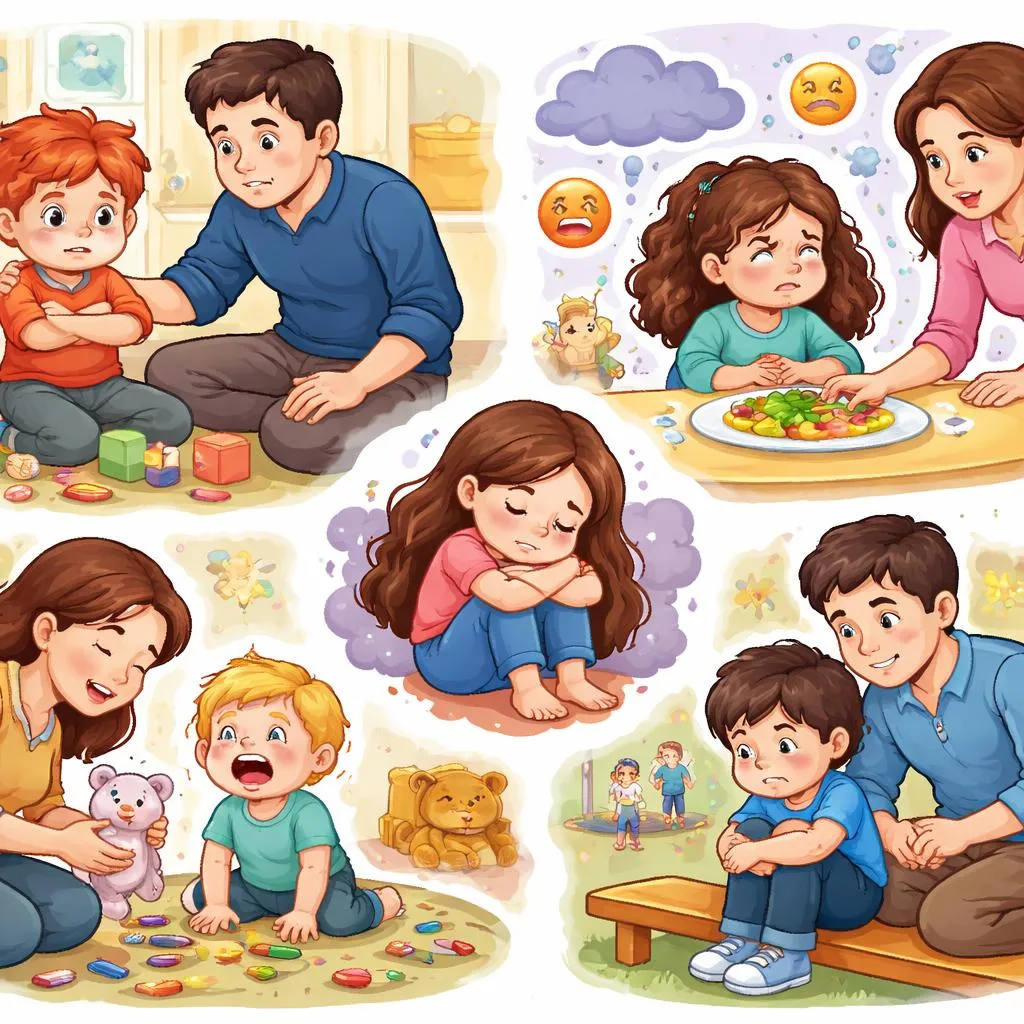

Children feel many emotions. Some emotions are easy to name. Others are harder. Two words that often confuse kids are “dissatisfied” and “displeased.” Both describe unhappy feelings. But they are not the same. This article helps parents and children understand the difference. We will explore when to use each word. We will also share fun ways to remember them. Let us begin.
Are Similar Words Really Interchangeable? Many words in English look alike. They seem to mean the same thing. But small differences matter. Using the wrong word can change your message. “Dissatisfied” and “displeased” are a good example. They both mean “not happy.” But you use them in different situations. Kids need to learn these small differences. It helps them speak clearly. It also helps them understand stories and conversations. Parents can guide children by showing real-life examples. When a child says “I am not happy,” ask which word fits better. This builds stronger vocabulary skills.
Set 1: Dissatisfied vs Displeased — Which One Is More Common? Let us look at how often people use each word. “Dissatisfied” appears more in daily life. You hear it at work, school, or home. For example, a customer feels dissatisfied with a broken toy. A student feels dissatisfied with a low grade. “Displeased” is less common. It sounds older or more formal. You might find it in stories or polite letters. Parents can help kids notice this difference. Read books together. Point out when an author uses “displeased.” Then compare it to times you use “dissatisfied.” This shows kids that frequency matters. Common words are useful for everyday talking. Rare words are good for special moments.
Set 2: Dissatisfied vs Displeased — Same Meaning, Different Contexts Both words describe unhappiness. But the context changes which word you choose. “Dissatisfied” often connects to expectations. You expect something good, but it is not good enough. Example: You expect a big ice cream. You get a small one. You feel dissatisfied. “Displeased” often connects to behavior or actions. Someone does something wrong. You feel displeased with them. Example: A child draws on the wall. The parent feels displeased. Teach kids this difference by asking questions. “Did you expect more?” That is dissatisfaction. “Did someone do something wrong?” That is displeasure. Context is the key.
Set 3: Dissatisfied vs Displeased — Which Word Is “Bigger” or More Emphatic? Some words carry stronger feelings. “Dissatisfied” is usually milder. It means something is not quite right. You can fix it. For example, you feel dissatisfied with a messy room. You clean it. The feeling goes away. “Displeased” can feel stronger. It often includes disappointment or disapproval. It lasts longer. For example, a parent feels displeased with a lie. That feeling does not go away quickly. So “displeased” feels bigger in emotional weight. Kids can imagine a scale. Dissatisfied is a 3 out of 10. Displeased is a 7 out of 10. This visual helps them choose the right word.
Set 4: Dissatisfied vs Displeased — Concrete vs Abstract Concrete words connect to real things you can touch. Abstract words connect to ideas or feelings. “Dissatisfied” is more concrete. You can point to the cause. “I am dissatisfied with this pizza.” The pizza is real. “Displeased” is more abstract. It often refers to a general feeling. “I am displeased with your attitude.” Attitude is not a physical thing. Kids learn concrete words first. So “dissatisfied” may be easier at a young age. As children grow, introduce abstract words like “displeased.” Talk about feelings without physical causes. This builds emotional intelligence.
Set 5: Dissatisfied vs Displeased — Verb or Noun? First Understand the Role Both words are adjectives. They describe a state of feeling. But their root verbs are different. “Dissatisfied” comes from “satisfy.” “Displeased” comes from “please.” Knowing the verb helps kids remember the adjective. Ask a child: “Does this situation fail to satisfy you?” That is dissatisfaction. “Does this situation fail to please you?” That is displeasure. You can also turn them into nouns. Dissatisfaction and displeasure. Use these nouns in simple sentences. “His dissatisfaction grew.” “Her displeasure showed on her face.” Understanding word roles makes grammar less scary. Parents can play a matching game. Say a verb. Ask the child to say the adjective form.
Set 6: Dissatisfied vs Displeased — American English vs British English English changes across countries. American and British speakers use these words slightly differently. In American English, “dissatisfied” is very common. You hear it in schools, stores, and homes. “Displeased” sounds a bit old-fashioned. In British English, “displeased” appears more often. It is still polite but more accepted in daily talk. Spelling does not change. But frequency does. Parents can show kids maps or videos from both countries. Listen to how people talk. This teaches that language lives and breathes. No single way is wrong. Just different.
Set 7: Dissatisfied vs Displeased — Which Fits Formal Situations? Formal situations need careful word choice. Writing a letter to a teacher. Speaking to a principal. Complaining politely at a restaurant. “Displeased” fits formal settings better. It sounds respectful and calm. Example: “I am displeased with the service.” “Dissatisfied” is neutral. You can use it anywhere. But in very formal writing, “displeased” adds a layer of politeness. Kids do not need formal English every day. But learning it early helps later. Practice writing a formal complaint together. Use “displeased” first. Then rewrite it with “dissatisfied.” Compare the tone. Which sounds more serious? Which sounds more everyday?
Set 8: Dissatisfied vs Displeased — Which One Is Easier for Kids to Remember? Kids remember words that are shorter or more fun. “Dissatisfied” has four syllables. “Displeased” has two syllables. Shorter is often easier. But “dissatisfied” has a clear opposite: satisfied. Kids already know “satisfied” from meals or games. So “dissatisfied” builds on known words. “Displeased” is harder to connect. The opposite “pleased” is less common. So for young learners, start with “dissatisfied.” Use it often. Say “Are you satisfied or dissatisfied?” When kids are ready, introduce “displeased.” Compare it to “pleased” and “unhappy.” Use drawings or stickers to represent each word. Visual aids help memory.
Mini Exercise: Can You Spot the Differences Between These Similar Words? Let us practice. Read each sentence. Choose “dissatisfied” or “displeased.” Answers are at the bottom.
The cat knocked over the vase. The owner felt ______.
The movie was too short. The audience felt ______.
Mom was ______ with the messy room.
I expected a bigger gift. Now I feel ______.
The teacher was ______ with the loud class.
My sandwich had less cheese than usual. I feel ______.
Answers: 1 displeased, 2 dissatisfied, 3 displeased, 4 dissatisfied, 5 displeased, 6 dissatisfied
Discuss each answer with your child. Ask why one word fits better. Talk about expectations and behavior. This builds real understanding.
Parent Tips: How to Help Kids Learn and Remember Similar Words Parents play a big role. Here are simple tips. First, use the words yourself. Say “I feel dissatisfied when the store runs out of milk.” Say “I am displeased when you forget to say thank you.” Kids learn by hearing. Second, make a feelings chart. Write “dissatisfied” and “displeased” on it. Add drawings. A broken toy for dissatisfied. A frowning face for displeased. Third, play the “Expectation vs Action” game. Name a situation. Ask your child: “Is this about a low expectation or a wrong action?” Fourth, read books together. Pause when a character feels unhappy. Ask which word fits. Fifth, celebrate small wins. When your child uses either word correctly, give high fives. Learning emotions takes time. Patience and praise work best.
Children will feel both dissatisfied and displeased many times. These are normal feelings. Giving them the right words empowers them. They can express needs clearly. They can explain problems calmly. They can understand story characters better. Keep practicing. Keep talking. Your child’s vocabulary will grow. And so will their emotional confidence.