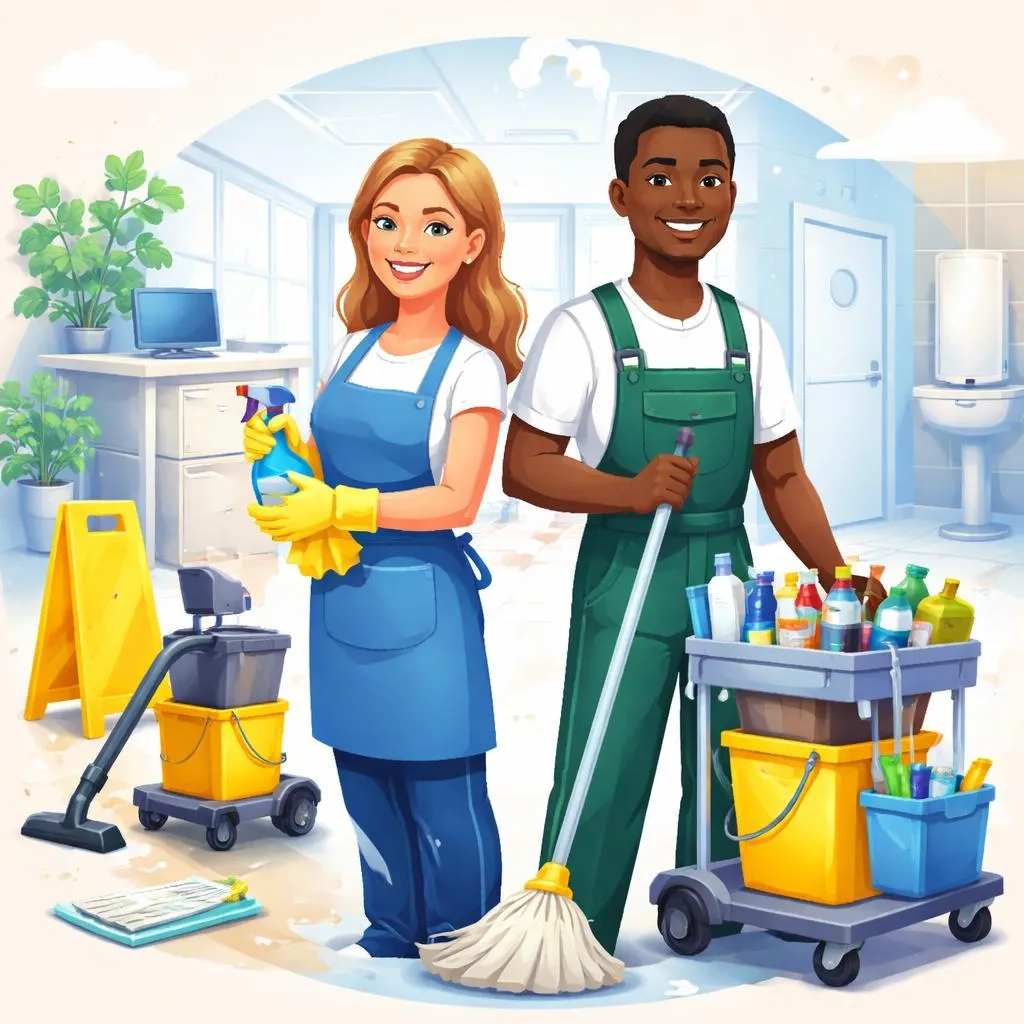

People who keep spaces clean have special names. Two words that describe cleanliness workers are “cleaner” and “janitor.” These words both mean a person who cleans. But they are not exactly the same. Knowing the difference helps kids understand who keeps schools and offices tidy. It also helps parents talk about different cleaning jobs. This article explores both words in a clear and respectful way. Parents and children can read together. We will compare meanings, contexts, and easy memory tricks. Let us begin this clean learning journey.
Are Similar Words Really Interchangeable? English has many word pairs that seem identical. “Cleaner” and “janitor” both mean a person who cleans. But you cannot always swap them. Each word carries a unique shade of meaning. Using the wrong word can make your message less clear. Kids need to learn these small differences. It helps them describe people who clean homes, schools, or offices. It also helps them understand different job titles. Parents can point out both words during daily moments. Say “The cleaner came to clean our house.” Say “The janitor mopped the school hallway.” This builds natural awareness.
Set 1: Cleaner vs Janitor — Which One Is More Common? Let us check how often people use each word. “Cleaner” appears very frequently in daily talk. You hear it at home, in schools, and on TV. “House cleaner.” “Dry cleaner.” “Janitor” is also common but more specific to buildings. “School janitor.” “Janitor’s closet.” Parents can help kids notice this difference. Listen for both words during one family week. Count how many times you hear “cleaner.” Then count “janitor.” This simple game shows kids that frequency matters for real-life English.
Set 2: Cleaner vs Janitor — Same Meaning, Different Contexts Both mean a person who cleans. But the context changes your choice. “Cleaner” is a broad term for anyone who cleans homes, offices, or other spaces. Example: “The cleaner vacuumed the carpet.” “Janitor” is a more specific term for someone who cleans and maintains a building, often a school or office, and may also do minor repairs. Example: “The janitor fixed the broken lock and mopped the floor.” Teach kids this difference with a simple question. “Does this person only clean?” That points to cleaner. “Does this person also do maintenance?” That points to janitor.
Set 3: Cleaner vs Janitor — Which Word Is “Bigger” or More Emphatic? Some cleaning words feel more about maintenance than just cleaning. “Janitor” often includes minor repairs, heating, and building upkeep. “Cleaner” focuses on cleaning only. So “janitor” is a broader role. Kids can imagine two people. Cleaner vacuums and dusts. Janitor does all that plus changes light bulbs and fixes small problems. This image helps them understand the difference in responsibility.
Set 4: Cleaner vs Janitor — Concrete vs Abstract Concrete words connect to clear, physical things. Abstract words connect to ideas and concepts. Both words describe real people. “Cleaner” is concrete. You can point to a cleaner. “Janitor” is also concrete. Both are easy for kids to understand with examples.
Set 5: Cleaner vs Janitor — Verb or Noun? First Understand the Role Both words are nouns. “Cleaner” comes from the verb “clean.” “Janitor” comes from the Latin word for “doorkeeper.” Knowing the roots helps kids build vocabulary. You can say “A cleaner cleans.” You can say “A janitor maintains a building.” Parents can play a word-family game. Say a sentence. Ask the child to choose “cleaner” or “janitor.” Then use both in one sentence. “The janitor is a cleaner who also does repairs.”
Set 6: Cleaner vs Janitor — American English vs British English English varies across countries. American and British speakers use these words with differences. “Cleaner” is common in both dialects. “Janitor” is used more in American English. In British English, “caretaker” is often used instead of “janitor.” “School caretaker” is common in the UK. Americans say “school janitor.” Spelling does not change. Parents can show kids movies or shows from both countries. Listen for how characters describe people who clean and maintain buildings. This teaches a regional difference.
Set 7: Cleaner vs Janitor — Which Fits Formal Situations? Formal situations need careful word choice. Writing a school report. Speaking to a teacher. Describing cleaning jobs. “Janitor” fits well in formal, school-related contexts. Example: “The janitor ensured the building was safe and clean.” “Cleaner” is also formal but more general. “The cleaner came twice a week” works well. For school or office maintenance, choose “janitor.” For general cleaning, choose “cleaner.” Kids can practice writing two formal sentences. One using “cleaner.” One using “janitor.” Compare which implies maintenance duties.
Set 8: Cleaner vs Janitor — Which One Is Easier for Kids to Remember? Kids remember words that connect to their daily lives. “Cleaner” has two syllables. “Janitor” has three syllables. Shorter is easier. “Cleaner” appears in many daily phrases. “Cleaner spray.” “Vacuum cleaner.” “House cleaner.” This repetition makes “cleaner” familiar. “Janitor” sounds like “janitor” and “janitor’s closet.” You can say “Janitor is the person who keeps your school clean.” For very young learners, start with “cleaner” for anyone who cleans. Use it at home. “The cleaner helped us tidy up.” For older kids, introduce “janitor” for school or building maintenance workers. Praise them when they try it.
Mini Exercise: Can You Spot the Differences Between These Similar Words? Let us practice together. Read each sentence. Choose “cleaner” or “janitor.” Answers are at the bottom.
The ______ mopped the classroom floor.
The ______ fixed the broken desk and changed the light bulb.
We hired a ______ to clean our house every two weeks.
The school ______ unlocked the doors each morning.
The ______ dusted the shelves and washed the windows.
The ______ also handled the heating system.
Answers: 1 cleaner, 2 janitor, 3 cleaner, 4 janitor, 5 cleaner, 6 janitor
Discuss each answer with your child. Ask why one word fits better. Talk about cleaning only (cleaner) versus cleaning plus maintenance (janitor). This turns learning into a clean conversation.
Parent Tips: How to Help Kids Learn and Remember Similar Words Parents can make vocabulary building part of respecting all jobs. First, use both words in your daily talks. Say “A cleaner makes our home sparkle.” Say “A janitor takes care of the whole school building.” Kids absorb what they hear. Second, create a cleaning chart. Draw a mop for “cleaner” (cleaning only). Draw a toolbox for “janitor” (cleaning plus repairs). Third, read books about community helpers. Pause when a cleaner or janitor appears. Ask “Is it a cleaner or a janitor?” Fourth, play the “Clean vs Maintain” game. Only cleans equals cleaner. Cleans and does repairs equals janitor. Fifth, celebrate every correct use. A proud high-five or a “neat” smile works wonders.
Children benefit from understanding both cleaner and janitor. These words help them talk about the important people who keep spaces clean and safe. Giving kids the right tools empowers them. They can thank a cleaner for a tidy home. They can appreciate a janitor for a clean school. They can respect all the workers who make our world shine. Keep practicing together. Keep celebrating the cleaners and janitors who fill our world with neat, clean, healthy spaces. Your child’s vocabulary will grow. And so will their gratitude for the hardworking people who clean and maintain our buildings.