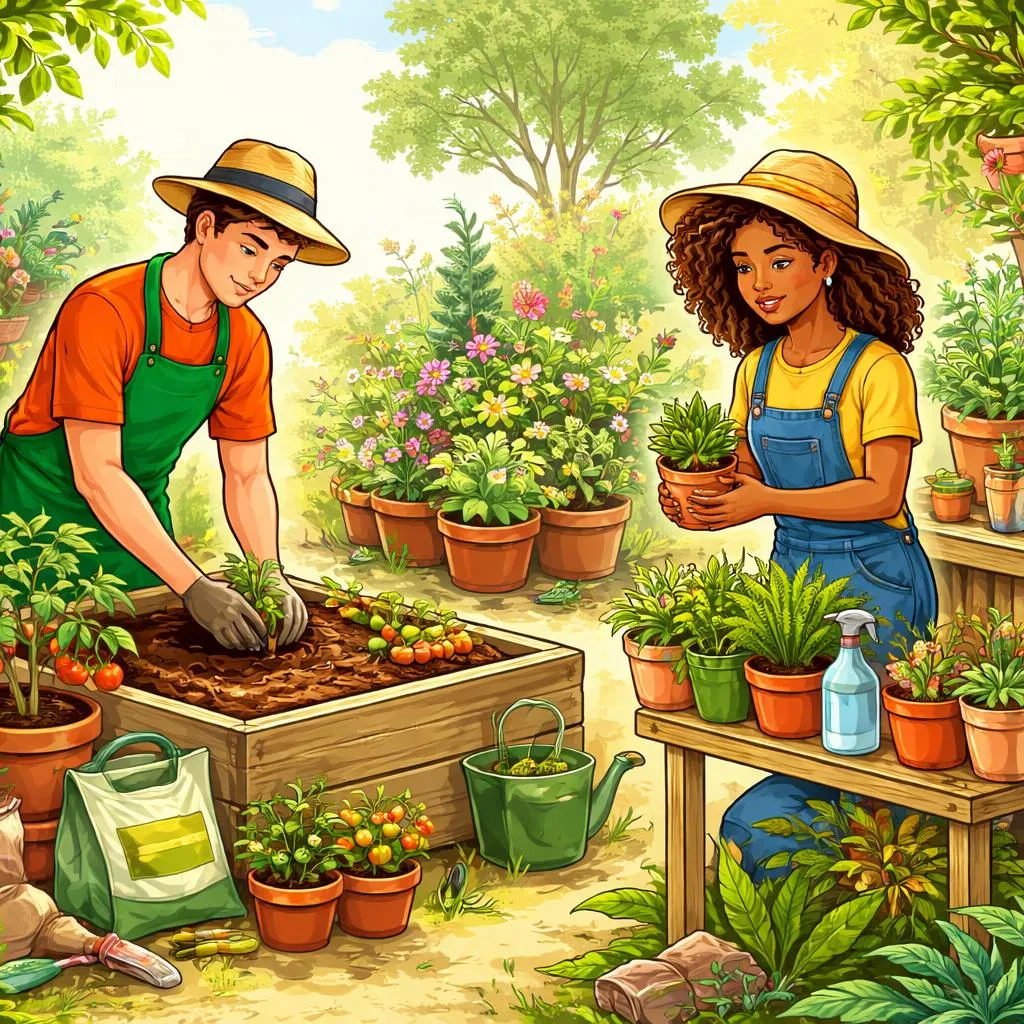

People who care for plants have special names. Two words that describe plant caretakers are “gardener” and “planter.” These words both mean a person who grows plants. But they are not exactly the same. Knowing the difference helps kids understand how flowers and vegetables grow. It also helps parents talk about gardening. This article explores both words in a clear and friendly way. Parents and children can read together. We will compare meanings, contexts, and easy memory tricks. Let us begin this green learning journey.
Are Similar Words Really Interchangeable? English has many word pairs that seem identical. “Gardener” and “planter” both mean a person who grows plants. But you cannot always swap them. Each word carries a unique shade of meaning. Using the wrong word can make your message less clear. Kids need to learn these small differences. It helps them describe people who tend gardens. It also helps them understand where flowers come from. Parents can point out both words during daily moments. Say “The gardener waters the roses.” Say “The planter puts seeds in the soil.” This builds natural awareness.
Set 1: Gardener vs Planter — Which One Is More Common? Let us check how often people use each word. “Gardener” appears very frequently in daily talk. You hear it at home, in schools, and on TV. “Master gardener.” “Landscape gardener.” “Planter” is less common. It sounds more specific to the act of planting. “Tree planter.” “Seed planter.” Parents can help kids notice this difference. Listen for both words during one family week. Count how many times you hear “gardener.” Then count “planter.” This simple game shows kids that frequency matters for real-life English.
Set 2: Gardener vs Planter — Same Meaning, Different Contexts Both mean a person who grows plants. But the context changes your choice. “Gardener” is a broad term for someone who tends a garden, including watering, weeding, pruning, and planting. Example: “The gardener trimmed the hedges.” “Planter” is a more specific term for someone who puts seeds or plants into the ground. Example: “The planter dug holes for the seedlings.” Teach kids this difference with a simple question. “Does this person do ongoing garden care?” That points to gardener. “Does this person focus on putting plants in the ground?” That points to planter.
Set 3: Gardener vs Planter — Which Word Is “Bigger” or More Emphatic? Some plant-care words feel more about ongoing care than one-time action. “Gardener” is the larger category. A gardener plants, waters, weeds, and prunes. “Planter” is a more specific role, often just the planting part. So “gardener” is broader. Kids can imagine two circles. Gardener is the big circle. Planter is a smaller circle inside. This image helps them understand the difference in scope.
Set 4: Gardener vs Planter — Concrete vs Abstract Concrete words connect to clear, physical things. Abstract words connect to ideas and concepts. Both words describe real people. “Gardener” is concrete. You can point to a gardener. “Planter” is also concrete. Both are easy for kids to understand with examples.
Set 5: Gardener vs Planter — Verb or Noun? First Understand the Role Both words are nouns. “Gardener” comes from “garden.” “Planter” comes from the verb “plant.” Knowing the roots helps kids build vocabulary. You can say “A gardener works in a garden.” You can say “A planter plants seeds.” Parents can play a word-family game. Say a sentence. Ask the child to choose “gardener” or “planter.” Then use both in one sentence. “The planter is a type of gardener.”
Set 6: Gardener vs Planter — American English vs British English English varies across countries. American and British speakers use these words almost the same way. Both use “gardener” and “planter” frequently. However, British English sometimes uses “planter” for a decorative container. “A flower planter” is a pot. Americans use this too. For a person, both dialects use “gardener” more often. Spelling does not change. Parents can show kids movies or shows from both countries. Listen for how characters describe plant caretakers. This teaches that most garden words work the same across English.
Set 7: Gardener vs Planter — Which Fits Formal Situations? Formal situations need careful word choice. Writing a school report. Speaking to a teacher. Describing plant care. “Gardener” fits well in most formal settings. Example: “The gardener maintained the botanical garden.” “Planter” is also formal but more specific. “The tree planter reforested the area” works well. For ongoing garden care, choose “gardener.” For the act of planting, choose “planter.” Kids can practice writing two formal sentences. One using “gardener.” One using “planter.” Compare which is about ongoing care and which is about planting.
Set 8: Gardener vs Planter — Which One Is Easier for Kids to Remember? Kids remember words that connect to their daily lives. “Gardener” has three syllables. “Planter” has two syllables. Shorter is easier. “Gardener” appears in many daily phrases. “Gardener’s gloves.” “Gardener’s world.” “Gardener’s shed.” This repetition makes “gardener” familiar. “Planter” sounds like “plant” and “er.” You can say “Planter means a person who plants.” For very young learners, start with “gardener” for someone who cares for plants. Use it during gardening time. “You are a gardener.” For older kids, introduce “planter” for someone who puts plants in the ground. Praise them when they try it.
Mini Exercise: Can You Spot the Differences Between These Similar Words? Let us practice together. Read each sentence. Choose “gardener” or “planter.” Answers are at the bottom.
The ______ pulled weeds and watered the flowers.
The ______ put the young tomato plants into the soil.
My grandmother is an excellent ______ who grows roses.
The tree ______ planted hundreds of saplings.
The ______ pruned the bushes and mowed the lawn.
The seed ______ carefully placed each seed in a row.
Answers: 1 gardener, 2 planter, 3 gardener, 4 planter, 5 gardener, 6 planter
Discuss each answer with your child. Ask why one word fits better. Talk about ongoing garden care (gardener) versus the specific act of planting (planter). This turns learning into a gardening conversation.
Parent Tips: How to Help Kids Learn and Remember Similar Words Parents can make vocabulary building part of gardening together. First, use both words in your daily talks. Say “A gardener takes care of a garden all year.” Say “A planter puts seeds or plants into the ground.” Kids absorb what they hear. Second, create a garden chart. Draw a watering can for “gardener” (ongoing care). Draw a seed packet for “planter” (planting). Third, read books about gardens and plants. Pause when a plant caretaker appears. Ask “Is it a gardener or a planter?” Fourth, play the “Care vs Plant” game. Ongoing garden care equals gardener. Putting plants in the ground equals planter. Fifth, celebrate every correct use. A proud high-five or a “green thumb” smile works wonders.
Children benefit from understanding both gardener and planter. These words help them talk about plant care and gardening. Giving kids the right tools empowers them. They can be gardeners when they care for plants over time. They can be planters when they put seeds in soil. They can appreciate all the people who help plants grow. Keep practicing together. Keep celebrating the gardeners and planters who fill our world with flowers, vegetables, and greenery. Your child’s vocabulary will grow. And so will their love for the beautiful world of gardening.