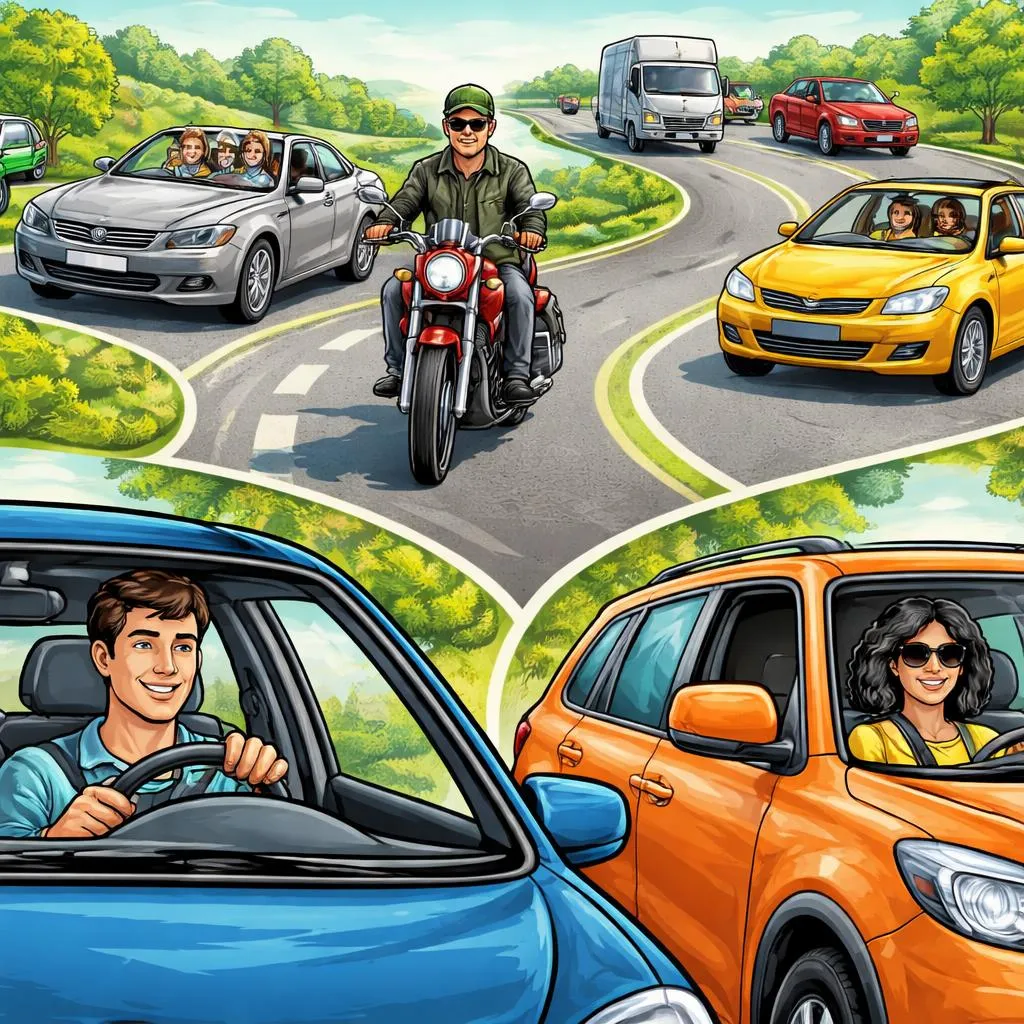

People who drive cars have different names. Two words that describe vehicle operators are “driver” and “motorist.” These words both mean a person who drives. But they are not exactly the same. Knowing the difference helps kids understand road safety. It also helps parents talk about driving. This article explores both words in a clear and friendly way. Parents and children can read together. We will compare meanings, contexts, and easy memory tricks. Let us begin this learning journey.
Are Similar Words Really Interchangeable? English has many word pairs that seem identical. “Driver” and “motorist” both mean a person who drives. But you cannot always swap them. Each word carries a unique shade of meaning. Using the wrong word can make your message less clear. Kids need to learn these small differences. It helps them describe people on the road. It also helps them understand traffic reports. Parents can point out both words during daily moments. Say “The driver stopped at the red light.” Say “The motorist used a GPS.” This builds natural awareness.
Set 1: Driver vs Motorist — Which One Is More Common? Let us check how often people use each word. “Driver” appears very frequently in daily talk. You hear it at home, in schools, and on TV. “Bus driver.” “Driver’s license.” “Motorist” is less common. It sounds more formal or official. News reports use “motorist.” Insurance forms use “motorist.” Parents can help kids notice this difference. Listen for both words during one family week. Count how many times you hear “driver.” Then count “motorist.” This simple game shows kids that frequency matters for real-life English.
Set 2: Driver vs Motorist — Same Meaning, Different Contexts Both mean a person who drives. But the context changes your choice. “Driver” is the general, everyday term for anyone who operates a vehicle. Example: “The driver waited for the green light.” “Motorist” is a more formal term, often used in news or legal contexts. Example: “Police warned motorists about icy roads.” Teach kids this difference with a simple question. “Are you talking in everyday language?” That points to driver. “Are you talking in a formal or news way?” That points to motorist.
Set 3: Driver vs Motorist — Which Word Is “Bigger” or More Emphatic? Some driving words feel more about the action than the person. “Driver” focuses on the act of driving. “Motorist” focuses on the person operating a motor vehicle. So “motorist” is slightly more specific about vehicle type. Kids can imagine two people. Driver could be a bus driver or a race car driver. Motorist is specifically someone in a car. This image helps them understand the difference in specificity.
Set 4: Driver vs Motorist — Concrete vs Abstract Concrete words connect to clear, physical things. Abstract words connect to ideas and concepts. Both words describe real people. “Driver” is concrete. You can point to a driver. “Motorist” is also concrete. Both are easy for kids to understand with examples.
Set 5: Driver vs Motorist — Verb or Noun? First Understand the Role Both words are nouns. “Driver” comes from the verb “drive.” “Motorist” comes from “motor.” Knowing the roots helps kids build vocabulary. You can say “A driver drives a vehicle.” You can say “A motorist operates a motor vehicle.” Parents can play a word-family game. Say a sentence. Ask the child to choose “driver” or “motorist.” Then use both in one sentence. “The motorist is a driver of a car.”
Set 6: Driver vs Motorist — American English vs British English English varies across countries. American and British speakers use these words almost the same way. Both use “driver” frequently. “Motorist” is used in both dialects, often in formal or news contexts. In British English, “motorist” may appear more often in road safety campaigns. Americans use “driver” more often. Spelling does not change. Parents can show kids movies or shows from both countries. Listen for how characters describe people who drive. This teaches that “driver” is universal while “motorist” is more formal.
Set 7: Driver vs Motorist — Which Fits Formal Situations? Formal situations need careful word choice. Writing a school report. Speaking to a teacher. Describing traffic. “Motorist” fits very well in formal, official, or news settings. Example: “Motorists are advised to use alternate routes.” “Driver” is also formal but more general. “The driver was cited for speeding” works well. For official traffic reports, choose “motorist.” For everyday talk, choose “driver.” Kids can practice writing two formal sentences. One using “driver.” One using “motorist.” Compare which sounds more like a news report.
Set 8: Driver vs Motorist — Which One Is Easier for Kids to Remember? Kids remember words that connect to their daily lives. “Driver” has two syllables. “Motorist” has three syllables. Shorter is easier. “Driver” appears in many daily phrases. “Bus driver.” “Race car driver.” “Driver’s seat.” This repetition makes “driver” familiar. “Motorist” sounds like “motor” and “ist.” You can say “Motorist is a formal word for someone who drives a motor vehicle.” For very young learners, start with “driver” for anyone who drives. Use it when in the car. “The driver is your mom.” For older kids, introduce “motorist” for formal or news contexts. Praise them when they try it.
Mini Exercise: Can You Spot the Differences Between These Similar Words? Let us practice together. Read each sentence. Choose “driver” or “motorist.” Answers are at the bottom.
The ______ signaled before turning left.
______ should be careful in foggy weather.
My dad is a good ______.
The ______ was stuck in traffic for an hour.
The school bus ______ waved to the children.
Police warned ______ about a stalled vehicle ahead.
Answers: 1 driver, 2 motorists, 3 driver, 4 motorist, 5 driver, 6 motorists
Discuss each answer with your child. Ask why one word fits better. Talk about everyday language (driver) versus formal or news language (motorist). This turns learning into a road safety conversation.
Parent Tips: How to Help Kids Learn and Remember Similar Words Parents can make vocabulary building part of car rides and safety talks. First, use both words in your daily talks. Say “The driver is taking us to the store.” Say “Motorists should always wear seatbelts.” Kids absorb what they hear. Second, create a road chart. Draw a steering wheel for “driver” (everyday). Draw a police car for “motorist” (formal/news). Third, read books about transportation. Pause when a person driving appears. Ask “Is it a driver or a motorist?” Fourth, play the “Everyday vs Formal” game. Everyday talk equals driver. Formal, news, or official contexts equals motorist. Fifth, celebrate every correct use. A proud high-five or a “safe driver” smile works wonders.
Children benefit from understanding both driver and motorist. These words help them talk about people on the road. Giving kids the right tools empowers them. They can call a family member a driver. They can understand “motorist” on the news. They can be safe and informed. Keep practicing together. Keep celebrating the drivers and motorists who follow the rules and keep our roads safe. Your child’s vocabulary will grow. And so will their understanding of the many ways we describe the people who share our streets and highways.