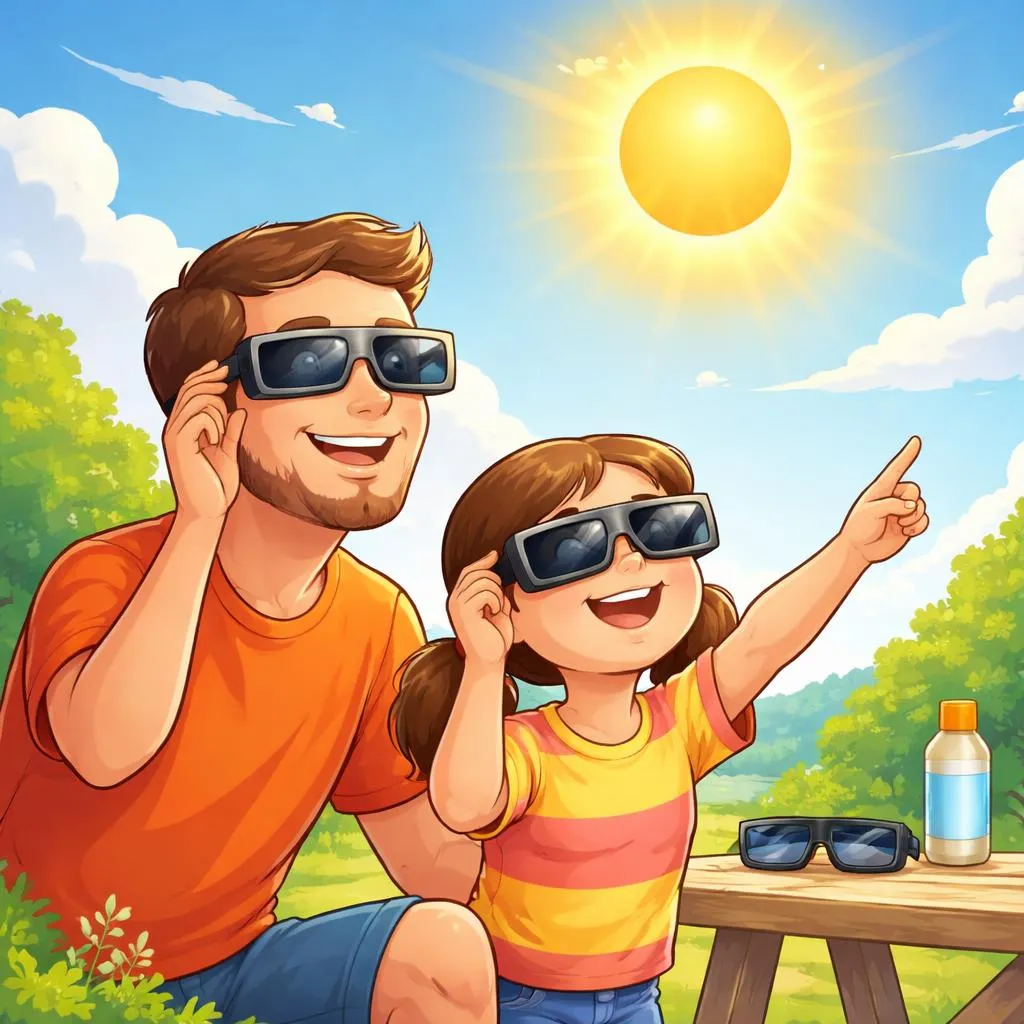

What Do These Expressions Mean? “See the sun” and “view the sun” both mean to look at Earth’s star in the daytime sky. They tell a child to observe the bright ball of light that gives us day. Children hear these words during sunrises, sunsets, or science lessons. Both require safety.
“See the sun” means to look at the sun with your own eyes, usually briefly or indirectly. It is simple and direct. A parent says it at sunrise or sunset when the sun is dim. It is everyday language.
“View the sun” means to observe the sun deliberately, often with special solar filters or telescopes. It sounds more scientific. A parent might say it during a solar eclipse. It emphasizes safe viewing with tools.
These expressions seem similar. Both mean “look at the sun.” Both require caution. But one is for everyday looking and one is for safe, tool-aided observation.
What's the Difference? One is for indirect or safe, everyday looking. One is for deliberate, tool-aided observation. “See the sun” is for seeing the sun during sunrise, sunset, or through the clouds. It is safe when the sun is dim. Never look directly at the bright sun.
“View the sun” is for when you use special solar glasses or solar telescopes. You view sunspots or eclipses. It is more specific and scientific. It always requires protection.
Think of a child watching a sunrise. “See the sun coming up” is right. A child using solar eclipse glasses. “View the sun safely” fits better. One is for dim viewing. One is for tools.
One is for everyday. The other is for safe scientific observation. “See the sun” at sunset. “View the sun” with solar filters. Use the first for safe, dim times. Use the second for tool-aided.
Also, safety is key. Never let a child look directly at the bright sun without protection. Teach safety first.
When Do We Use Each One? Use “see the sun” for safe, everyday viewing. Use it at sunrise, sunset, or through thick clouds. Use it when the sun is not dangerously bright. It fits safe, casual talk.
Examples at home: “Look, we can see the sun setting over the hill.” “The sun is behind the clouds, but I can still see it.” “In the morning, I see the sun rise through my window.”
Use “view the sun” for safe, tool-aided observation. Use it with solar glasses, solar telescopes, or during eclipses. Use it for science lessons. It fits scientific talk.
Examples for tools: “We can view the sun safely with these special glasses.” “The astronomer showed us how to view the sun through a solar telescope.” “Never view the sun without protection. Use the filter.”
Children can use both. “See the sun” for safe viewing. “View the sun” for tool-aided. Safety first.
Example Sentences for Kids See the sun: “We see the sun rise every morning.” “I can see the sun through the clouds.” “At sunset, we see the sun turn orange.”
View the sun: “We will view the sun through solar glasses.” “Scientists view the sun with special telescopes.” “During an eclipse, view the sun with a filter.”
Notice “see the sun” is for dim or indirect viewing. “View the sun” is for safe, tool-aided observation. Children learn both. One for everyday. One for science.
Parents can use both. Sunset: “see the sun.” Solar glasses: “view the sun safely.” Children learn safety.
Common Mistakes to Avoid The most dangerous mistake is looking directly at the sun. Never say “view the sun” without mentioning protection. Always teach safety first. No direct looking.
Wrong: “View the sun with your naked eye.” (dangerous) Right: “Always use special glasses to view the sun safely.”
Another mistake: saying “see the sun” for a dim sunrise. That is safe. That is fine. But if the sun is bright, do not look. Teach the difference.
Wrong: “See the bright sun at noon.” (dangerous) Right: “Don’t look at the bright sun. It hurts your eyes.”
Some learners think “view the sun” means only with a telescope. You can view the sun with solar glasses too. Any safe method counts.
Also avoid saying “see the sun” when it is dark. You see the moon at night, not the sun. Be accurate.
Easy Memory Tips Think of “see the sun” as a sunrise. Dim. Orange. Safe. For everyday.
Think of “view the sun” as solar glasses. Dark lenses. Protection. For safe science.
Another trick: remember the safety. “See” = safe times (sunrise, sunset). “View” = with protection (glasses, filters). Safe times get “see.” Protection gets “view.”
Parents can say: “See at rise. View with device on your eyes.”
Practice at home. Sunset: “see the sun.” Eclipse glasses: “view the sun safely.”
Quick Practice Time Let us try a small exercise. Choose the better phrase for each situation.
A child watches the sun rise over the ocean. It is dim and orange. a) “View the sun with glasses.” b) “See the sun rising.”
A child uses special solar filters to look at a solar eclipse. a) “See the sun.” b) “View the sun safely with the filters.”
Answers: 1 – b. A safe, dim sunrise fits “see the sun.” 2 – b. A safe, tool-aided eclipse viewing fits “view the sun.”
Fill in the blank: “When I watch the sunset from my porch, I ______.” (“See the sun” is the safe, everyday, dim-sun choice.)
One more: “When I use special glasses to look at sunspots, I ______.” (“View the sun” fits the tool-aided, safe, scientific description.)
The sun is beautiful but dangerous. “See the sun” safely at rise and set. “View the sun” only with protection. Teach your child both. A child who learns both will love the sun and respect its power.
Wrap-up “See the sun” is for safe, everyday viewing at sunrise, sunset, or through clouds when the sun is dim. “View the sun” is for safe, tool-aided observation using solar glasses, solar telescopes, or filters during eclipses. Use “see the sun” for beautiful skies at dawn and dusk. Use “view the sun” for scientific observation with proper eye protection. Both phrases require safety. A child who learns the difference will enjoy the sun without ever harming their eyes.