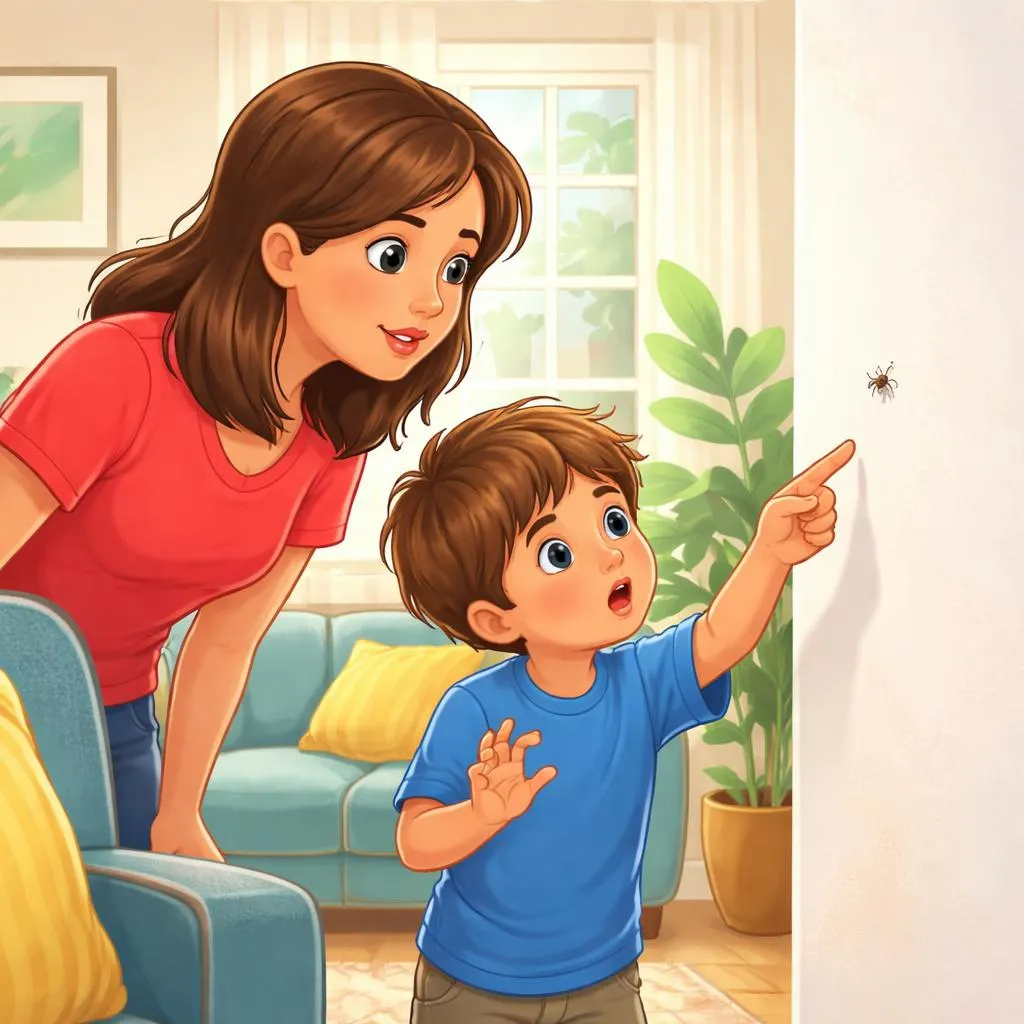

What Do These Expressions Mean? “I don't see it” and “it's not visible” both mean that an object cannot be seen from your current position. They tell someone that your eyes cannot find the thing you are looking for. Children say these words when searching for a hidden toy, a star, or a tiny bug. Both ask for help or more light.
“I don't see it” means my eyes have not spotted the object. It is personal and direct. A child says it when looking for a missing puzzle piece. It is the everyday phrase.
“It's not visible” means the object cannot be seen at all, possibly because it is hidden or too dark. It is more formal and objective. An adult says it about a star behind a cloud. It is less common for children.
These expressions seem similar. Both say “I cannot find it with my eyes.” Both ask for more searching. But one is about the person's failure to see while one is about the object's state.
What's the Difference? One is about the person. One is about the object. “I don't see it” is about your eyesight or attention. Maybe you are not looking in the right place. It is personal.
“It's not visible” is a statement about the object. The object is hidden, too small, or too far. It is not your fault. It is a fact about the thing.
Think of a child looking for a star on a cloudy night. “I don't see any stars” could be true if you are not looking up. “The stars are not visible” means the clouds are blocking them. One is about you. One is about the sky.
One is for everyday searching. The other is for scientific or formal observation. “I don't see it” for looking in a messy room. “It's not visible” for a telescope observation. Use the first for home. Use the second for science.
Also, “visible” is a less common word for young children. Teach it for science lessons. Use “see” for daily talk.
When Do We Use Each One? Use “I don't see it” for most everyday searches. Use it when you are looking for a lost object in a room. Use it to say you need more help. It fits home and school.
Examples at home: “I don't see it. Is it under the bed?” “I don't see my blue sock anywhere.” “I don't see the remote. Can you help?”
Use “it's not visible” for formal or scientific observation. Use it for stars, distant mountains, or tiny particles. Use it to describe objects that are hidden by nature. It fits science talk.
Examples for science: “The comet is not visible tonight because of clouds.” “The writing is not visible without a magnifying glass.” “The stars are not visible in the city because of light pollution.”
Children can use both. “I don't see it” for home searches. “It's not visible” for science or special observations. Both are correct.
Example Sentences for Kids I don't see it: “I don't see it. Maybe it's in the closet.” “I don't see my library book. Did you borrow it?” “I don't see the toy. Look again.”
It's not visible: “The moon is not visible tonight because of clouds.” “The tiny writing is not visible without a light.” “The bird is not visible in the dark.”
Notice “I don't see it” is about the person. “It's not visible” is about the object. Children learn both. One for searching. One for science.
Parents can use both. Looking for a pencil: “I don't see it.” Talking about stars: “they are not visible tonight.” Children learn different contexts.
Common Mistakes to Avoid Some children say “it's not visible” for a lost toy in their room. That sounds strange. A lost toy is usually visible but you missed it. Say “I don't see it” instead.
Wrong: “My toy is not visible.” Right: “I don't see my toy. Can you help?”
Another mistake: saying “I don't see it” for things that are truly invisible. A black hole is not visible. But for everyday things, “I don't see it” is fine. The difference is subtle.
Wrong: “I don't see the wind.” (wind is invisible) Better: “I can't see the wind. I can only feel it.”
Some learners forget that “not visible” can be temporary. The sun is not visible at night, but it is there. Teach the difference between “not visible now” and “lost forever.”
Also avoid saying “I don't see it” in a whining voice. A calm “I don't see it” asks for help. A whine asks for a reaction. Be calm and clear.
Easy Memory Tips Think of “I don't see it” as a person shading their eyes. The hand shields the sun. They look and look. For personal searching.
Think of “it's not visible” as a cloud covering the moon. The moon is behind the cloud. Object is hidden. For scientific observation.
Another trick: remember the cause. “I don't see it” = I might have missed it. “It's not visible” = it is impossible to see right now. My fault gets “I don't see.” Nature's fault gets “not visible.”
Parents can say: “See for a search. Visible for a science perch.” That means looking for lost items gets “I don't see it.” Science and nature get “not visible.”
Practice at home. Find a lost pencil: “I don't see it.” Stars behind clouds: “the stars are not visible tonight.” Two different invisible things.
Quick Practice Time Let us try a small exercise. Choose the better phrase for each situation.
A child is looking for a red crayon in a box of crayons. They cannot spot it. a) “The red crayon is not visible.” b) “I don't see the red crayon.”
A science teacher explains that a certain type of bacteria is too small to be seen without a microscope. a) “I don't see the bacteria.” b) “The bacteria is not visible without a microscope.”
Answers: 1 – b. A lost crayon in a box fits the personal “I don't see it.” 2 – b. A scientific fact about visibility fits the formal “not visible.”
Fill in the blank: “When I cannot find my shoe after looking everywhere, I say ______.” (“I don't see it” is the personal, searching, everyday choice.)
One more: “When a teacher says we cannot see a germ with just our eyes, they say it's ______.” (“Not visible” fits the formal, scientific, objective description.)
Seeing is not always possible. “I don't see it” asks for help. “It's not visible” states a fact. Teach your child both. A child who knows the difference knows when to search and when to use a microscope.
Wrap-up “I don't see it” is a personal statement that your eyes have not found the object; it is used in everyday searching. “It's not visible” is a formal, scientific statement that the object cannot be seen due to distance, light, or size. Use “I don't see it” for lost toys, pencils, and socks. Use “it's not visible” for stars behind clouds, tiny germs, or objects in the dark. Both phrases describe a failure to see. A child who learns both knows when to look harder and when to accept that seeing is impossible.