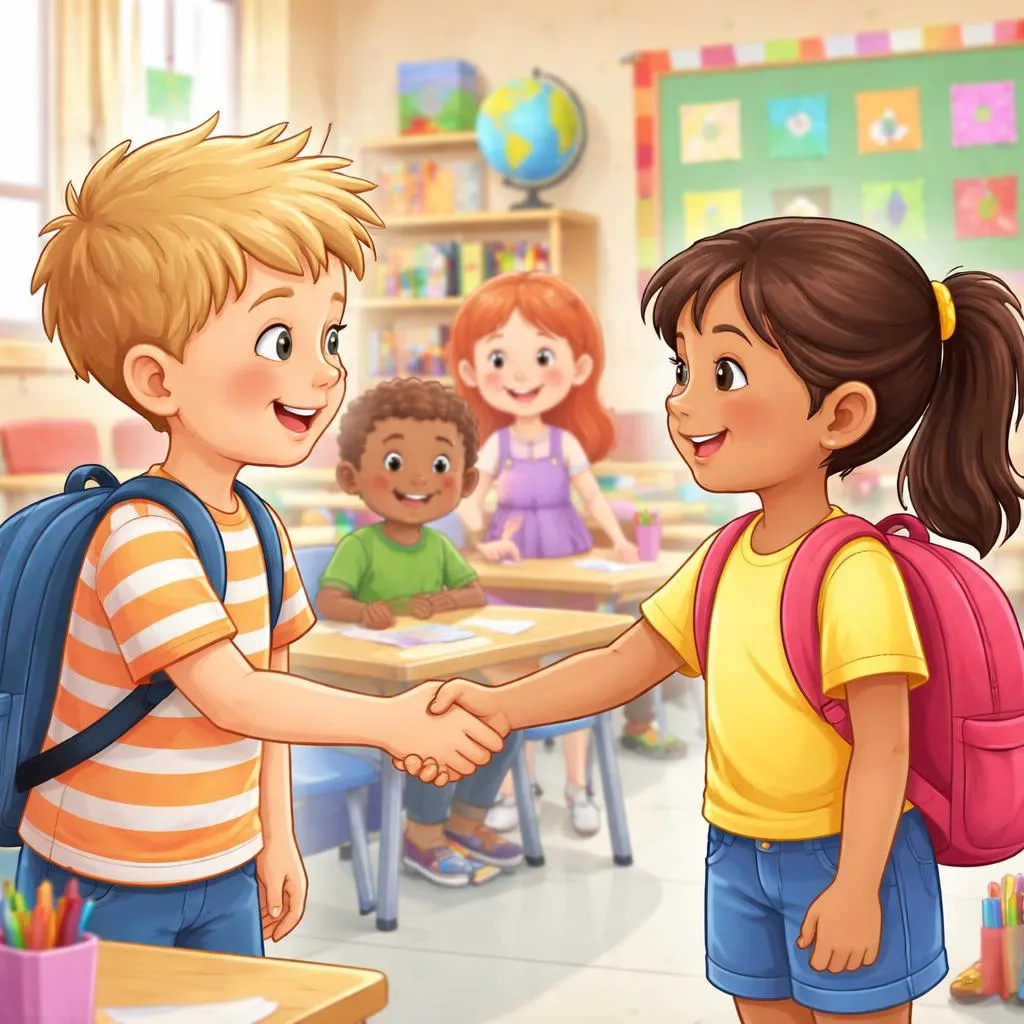

What Do These Expressions Mean? “Let's be friends” and “can we be friends?” both invite someone to start a friendship. They tell another child that you want to play together, share, and care about each other. Children say these words to new classmates, neighbors, or kids at the park. Both build connections.
“Let's be friends” means I want us to be friends, and I am suggesting we start now. It is confident and direct. A child says it when they feel sure the other person will say yes. It is a statement.
“Can we be friends?” means I am asking for your agreement to be friends. It is softer and more polite. A child says it when they are shy or unsure. It is a question.
These expressions seem similar. Both seek friendship. Both invite connection. But one is a direct statement while one is a polite question.
What's the Difference? One is a confident statement. One is a polite question. “Let's be friends” assumes the answer is yes. It is friendly and enthusiastic. It works well when the other child seems open.
“Can we be friends?” asks for permission. It is gentler and less pushy. It works well when the child is shy or when the other child seems unsure. It gives the other child space to say yes.
Think of a child at a playground. The other child is smiling and playing alone. “Let's be friends” is confident and kind. The other child is looking sad and scared. “Can we be friends?” is softer and more gentle.
One is for confident moments. The other is for unsure moments. “Let's be friends” for when you think they will say yes. “Can we be friends?” for when you want to be extra polite. Use the first for confidence. Use the second for gentleness.
Also, “let's be friends” is a call to action. “Can we be friends” is a request. Both are kind. Both start friendships.
When Do We Use Each One? Use “let's be friends” when you feel confident. Use it when the other child seems friendly and open. Use it to start play directly. It fits outgoing moments.
Examples at home and school: “Let's be friends. Do you want to play tag?” “You like dinosaurs too. Let's be friends!” “Let's be friends. I can share my crayons.”
Use “can we be friends?” when you are shy or unsure. Use it to be extra polite. Use it when the other child seems quiet or nervous. It fits gentle moments.
Examples for gentleness: “Can we be friends? I'm new here.” “I like your backpack. Can we be friends?” “Can we be friends? We can play together.”
Children can use both. “Let's be friends” for confidence. “Can we be friends?” for gentleness. Both build friendships.
Example Sentences for Kids Let's be friends: “Let's be friends. I like your smile.” “We both love soccer. Let's be friends.” “Let's be friends. Let's play on the swings.”
Can we be friends? “Hi, I'm Sam. Can we be friends?” “Can we be friends? I don't know anyone here.” “Can we be friends? You look nice.”
Notice “let's be friends” is like an invitation to dance. “Can we be friends?” is like asking for a dance. Children learn both. One for confidence. One for politeness.
Parents can practice both with their child. For a bold child: “let's be friends.” For a shy child: “can we be friends?” Children learn different tones for different moments.
Common Mistakes to Avoid Some children say “let's be friends” too loudly or forcefully. It can feel like a demand, not an invitation. Say it with a smile and a soft voice. Friendship is offered, not demanded.
Wrong: “LET'S BE FRIENDS!” (shouting) Right: “Let's be friends?” (smiling, kind voice)
Another mistake: saying “can we be friends” and then walking away. Wait for the answer. If they say yes, start playing. If they say no, say “okay, maybe another day.”
Wrong: “Can we be friends?” (walks away without waiting) Right: “Can we be friends?” (waits for yes or no).
Some learners forget to say their name. “Can we be friends? I'm Maya.” Using a name makes it personal and brave.
Also avoid being sad if someone says no. Not everyone will want to be friends. Say “okay, have a good day” and find someone else. Rejection is not about your worth.
Easy Memory Tips Think of “let's be friends” as a high five. The hand goes up confidently. You expect a slap. Bold and friendly.
Think of “can we be friends?” as a shy wave. The hand waves softly. You wait to see if they wave back. Gentle and polite.
Another trick: remember the confidence level. “Let's be” is sure. “Can we be” is asking. Sure gets “let's be.” Asking gets “can we be.”
Parents can say: “Let's when you know. Can when you want to go slow.” That means confident moments get “let's be friends.” Shy or unsure moments get “can we be friends?”
Practice at home. Role-play a confident meeting: “let's be friends!” Role-play a shy meeting: “can we be friends?” Two different ways to start a friendship.
Quick Practice Time Let us try a small exercise. Choose the better phrase for each situation.
A child sees another child playing alone with the same toy they love. The child feels confident. a) “Can we be friends? We both like trucks.” b) “Let's be friends! We can play trucks together.”
A shy child walks up to a group of kids playing. They feel nervous. a) “Let's be friends. I'm joining your game.” b) “Hi. Can we be friends? I'm new.”
Answers: 1 – b. A confident child fits the bold “let's be friends.” 2 – b. A shy child fits the gentle “can we be friends?”
Fill in the blank: “When I feel brave and the other child seems nice, I say ______.” (“Let's be friends” fits the confident, outgoing approach.)
One more: “When I feel shy and the other child looks busy, I say ______.” (“Can we be friends?” fits the polite, gentle question.)
Friendship is a gift. “Let's be friends” offers the gift boldly. “Can we be friends?” offers the gift gently. Teach your child both. A child who knows how to make friends will never be alone.
Wrap-up “Let's be friends” is a confident, direct statement inviting friendship. “Can we be friends?” is a gentle, polite question asking for permission to be friends. Use “let's be friends” when you feel confident. Use “can we be friends” when you are shy or want to be extra polite. Both phrases build beautiful friendships. A child who asks for friendship has the bravest heart of all.