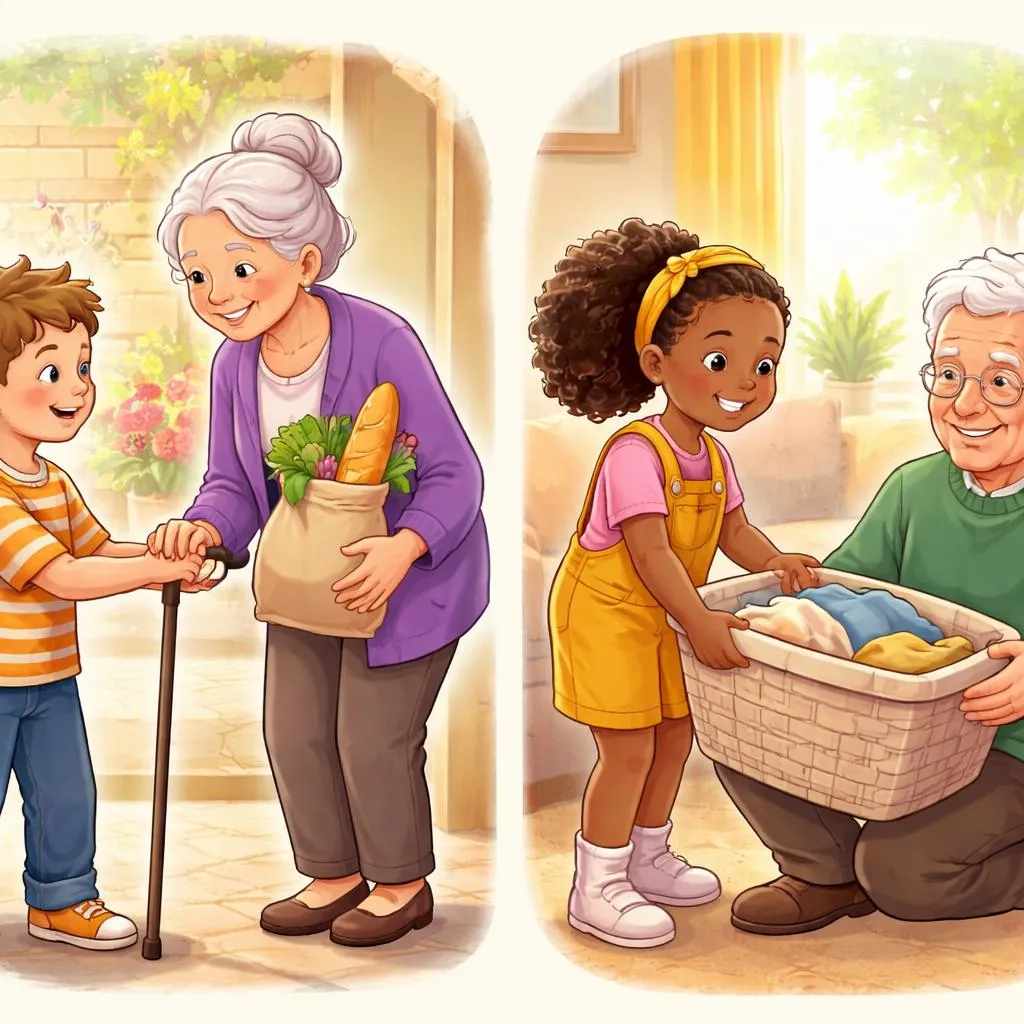

What Do These Expressions Mean? “Can I help you?” and “may I assist?” both offer to provide support to someone. They ask a person if they would like your assistance with a task or problem. Children say these words when they see someone struggling or in need. Both show a kind heart.
“Can I help you?” means do you need me to provide support right now. It is common and friendly. A child says it when a friend drops groceries. It feels warm and natural.
“May I assist?” means would you permit me to provide formal support. It sounds more polite and professional. An adult says it in a store or an office. It feels respectful but distant.
These expressions seem very similar. Both offer to do something good for another person. Both show you notice someone needs support. But one is for everyday kindness while one is for formal service.
What's the Difference? One is for friends and family. One is for customers or strangers in formal settings. “Can I help you?” works for almost everyone. A friend, a parent, a neighbor, a teacher. It is the perfect, natural choice.
“May I assist?” sounds like a store employee. You hear it at a hotel or a fancy shop. A child saying “may I assist?” sounds like they are playing store. It is correct, but it is not everyday language for kids.
Think of a child seeing an older person drop their keys. “Can I help you pick those up?” is perfect. “May I assist you with those keys?” sounds too formal. One matches real kindness. One sounds like a script.
One is for offering to do a task. The other is for offering service in a professional role. “Can I help you?” is what kind people say. “May I assist?” is what workers say. Children are kind people, not workers.
Also, “assist” sounds like a small role. “Help” sounds like real caring. Children want to really help. They should say “help.”
When Do We Use Each One? Use “can I help you?” for most situations. Use it at home, at school, and with friends. Use it when you see someone struggling. It fits daily kindness.
Examples at home: “Can I help you carry those bags?” “Can I help you find your glasses?” “Can I help you set the table?”
Use “may I assist?” very rarely. Use it in formal play or when pretending to be a store worker. Use it to understand what adults say in stores. Children almost never need to say this phrase.
Examples for role-play: “May I assist you with finding a book?” (pretend library) “May I assist you, sir?” (playing store) “May I assist our guest?” (pretend butler)
Most children should just say “can I help you?” It is kind, clear, and natural. “May I assist?” is good to understand for stores and formal places. But for real kindness, “can I help you?” is best.
Example Sentences for Kids Can I help you? “Can I help you with that heavy box?” “Can I help you? You look like you need a hand.” “Can I help you tie your shoe?”
May I assist? “May I assist you in finding a size?” (pretend store) “May I assist you with your coat?” (formal play) “May I assist the next customer?” (adult work talk)
Notice “can I help you?” sounds like a real friend. “May I assist?” sounds like a store robot. Children learn both. But they should say “can I help you?” for real kindness.
Parents can use “can I help you?” every day. Save “may I assist?” for vocabulary lessons. “In a store, a worker might say ‘may I assist you?’ That is a very polite way to offer help.” Learning happens in small moments.
Common Mistakes to Avoid Some children say “may I assist?” to their parents. That sounds very strange. Parents are not store customers. Say “can I help you, Mama?” It is warmer and kinder.
Wrong: “May I assist you, Daddy?” Right: “Can I help you, Daddy? What are you doing?”
Another mistake: forgetting to wait for an answer. After you offer help, wait. The person might say no. That is okay. Kindness is offering, not forcing.
Wrong: “Can I help you?” (starts helping without waiting) Right: “Can I help you?” (waits for yes or no)
Some learners offer help but do not mean it. Only offer if you truly want to help. Empty offers are not kind. Mean what you say.
Also avoid using “assist” for emotional support. “Can I help you feel better” works. “May I assist you feel better” is wrong. Assist is for tasks. Help is for tasks and feelings.
Easy Memory Tips Think of “can I help you?” as a hand reaching out. The hand is open. The face is friendly. Real kindness. Real support. For everyday caring.
Think of “may I assist?” as a uniform. The uniform has a name tag. The person is working. Formal and professional.
Another trick: remember the relationship. “Help” is for people you care about. “Assist” is for customers. Care gets “help.” Customer gets “assist.”
Parents can say: “Help for heart. Assist for the store cart.” That means real kindness gets “help.” Playing store gets “assist.”
Practice at home. See someone struggling: “can I help you?” Play pretend store: “may I assist you?” Two different worlds. One kind child.
Quick Practice Time Let us try a small exercise. Choose the better phrase for each situation.
Your child sees a friend drop their pencil case on the floor. a) “May I assist you with your pencils?” b) “Can I help you pick those up?”
Your child is playing pretend grocery store with a younger sibling. a) “Can I help you find the apples?” b) “May I assist you in the produce section?”
Answers: 1 – b. A real friend needs the warm “can I help you?” 2 – a or b. Pretend play can use either. “May I assist” is fun for role-play.
Fill in the blank: “When I see my mom carrying too many bags, I say ______.” (“Can I help you?” is the natural, kind choice.)
One more: “When a store worker asks if I need anything, they say ______.” (“May I assist you?” is what workers often say in formal stores.)
Offering help is beautiful. “Can I help you?” opens your heart. “May I assist you?” opens a formal door. Teach your child both. Use the kind one most. That builds a good person.
Wrap-up “Can I help you?” offers everyday kindness to friends and family. “May I assist?” offers formal support in professional or pretend settings. Use “can I help you?” at home and school. Understand “may I assist?” for stores and role-play. Both phrases offer support. A child who offers help makes the world a little warmer.