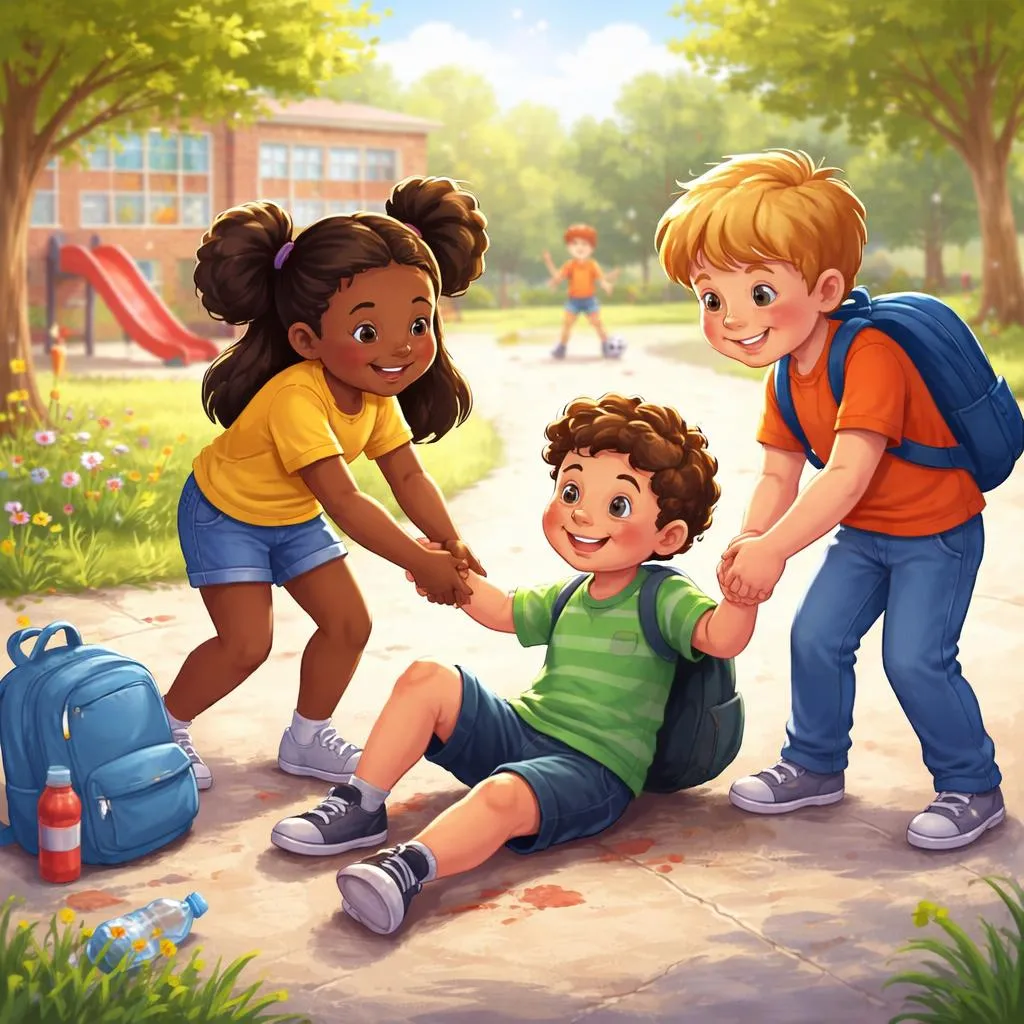

What Do These Expressions Mean? “Help each other” and “assist one another” both tell children to support one another in times of need. They instruct kids to give aid, share strength, and be kind when someone struggles. Children hear these words during teamwork, playtime, or family chores. Both build caring hearts.
“Help each other” means give support to one another. It is warm and common. A parent says it when one child falls and another can offer a hand. It focuses on practical kindness.
“Assist one another” means provide aid to each other. It is more formal and less common. A teacher might say it during a group project. It sounds more grown-up.
These expressions seem similar. Both ask children to be kind and supportive. Both build community. But one is for everyday talk while one is for formal instruction.
What's the Difference? One is for daily life. One is for formal moments. “Help each other” is what parents say at home. It is the natural, warm phrase. Children learn it early.
“Assist one another” sounds like a classroom rule or a book. It is correct but formal. A child saying “assist one another” sounds like a little teacher. It is unusual in family talk.
Think of a child who dropped their books. “Help each other pick them up” is warm. “Assist one another in gathering your materials” is too formal. One matches the moment. One does not.
One is for all ages. The other is for older children or formal settings. “Help each other” works for toddlers and teenagers. “Assist one another” is for older kids who understand formal language. Use the first for daily kindness. Use the second for vocabulary lessons.
Also, “assist one another” is longer and harder to say. Young children will stumble over it. “Help each other” is short and easy. Keep it simple for little ones.
When Do We Use Each One? Use “help each other” for most everyday moments. Use it at home, on the playground, or during chores. Use it to encourage natural kindness. It fits daily life.
Examples at home: “Help each other put the toys away.” “If someone falls, help each other up.” “Help each other with your homework.”
Use “assist one another” for formal or instructional moments. Use it in a classroom rule, a speech, or a written note. Use it to teach the phrase for vocabulary. It fits formal teaching.
Examples for formality: “In this class, we assist one another.” (teacher) “Please assist one another with the heavy boxes.” (formal instruction) “Assist one another. That is our family motto.” (special saying)
Children need both phrases. “Help each other” for daily kindness. “Assist one another” for understanding formal language. Both build helpful children.
Example Sentences for Kids Help each other: “Help each other build the fort.” “We are a team. We help each other.” “Help each other. That is what friends do.”
Assist one another: “In this club, we assist one another.” (formal rule) “Assist one another with your coats.” (teacher) “We should assist one another whenever possible.” (written rule)
Notice “help each other” sounds like a friend. “Assist one another” sounds like a rule book. Children learn both. One for heart. One for formality.
Parents can use both. Playtime: “help each other.” Reading a classroom rule: “assist one another.” Children learn kindness in many forms.
Common Mistakes to Avoid Some parents say “assist one another” to a young child. The child may not understand. Say “help each other” first. Teach kindness in simple words.
Wrong: “Assist one another with your shoes” (to a 4-year-old). Better: “Help each other tie your shoes.”
Another mistake: forgetting that “assist one another” includes everyone. The phrase means everyone helps everyone. Not just one child helping another. Teach the circle of kindness.
Wrong: “You help her, and she assists you.” Better: “You help each other. That means both of you give and receive help.”
Some learners think “assist” is only for big tasks. You can assist with small things too. Picking up a pencil is assisting. Kindness is kindness, no matter the size.
Also avoid saying “help each other” when a child needs to ask for help. Sometimes a child needs to say “help me” first. Teach both giving and receiving help. Kindness goes both ways.
Easy Memory Tips Think of “help each other” as a teeter-totter. Two children go up and down together. Balanced and fun. For daily kindness.
Think of “assist one another” as a team captain. The captain gives instructions. Formal and clear. For rules and classrooms.
Another trick: remember the age. “Help each other” for young children. “Assist one another” for older kids and formal rules. Young gets “help each other.” Older gets “assist one another.”
Parents can say: “Help for the heart. Assist for a formal start.” That means daily kindness gets “help each other.” Classroom rules get “assist one another.”
Practice at home. Build a puzzle: “help each other.” Read a classroom rule: “we assist one another.” Two different kindness levels.
Quick Practice Time Let us try a small exercise. Choose the better phrase for each situation.
Two siblings are cleaning up their room. The parent wants them to work together kindly. a) “Assist one another with the toys.” b) “Help each other clean up.”
A teacher is writing rules for a 4th grade classroom. One rule is about kindness. a) “Help each other when someone is sad.” b) “Assist one another in times of need.”
Answers: 1 – b. A parent at home fits the warm “help each other.” 2 – b. A written classroom rule fits the formal “assist one another.”
Fill in the blank: “When my child sees a friend struggling with a heavy backpack, I remind them to ______.” (“Help each other” is the natural, kind, everyday phrase.)
One more: “When I read the school handbook, it says students should ______.” (“Assist one another” fits formal, written language.)
Helping hands make lighter work. “Help each other” teaches daily kindness. “Assist one another” teaches formal care. Teach your child both. A child who helps is a child who is loved.
Wrap-up “Help each other” is the warm, everyday phrase for children to support one another. “Assist one another” is a more formal version used in classrooms, rules, and written instructions. Use “help each other” at home and on the playground. Use “assist one another” for formal teaching or reading rules. Both phrases build kind, supportive children. A child who helps others will never be alone.