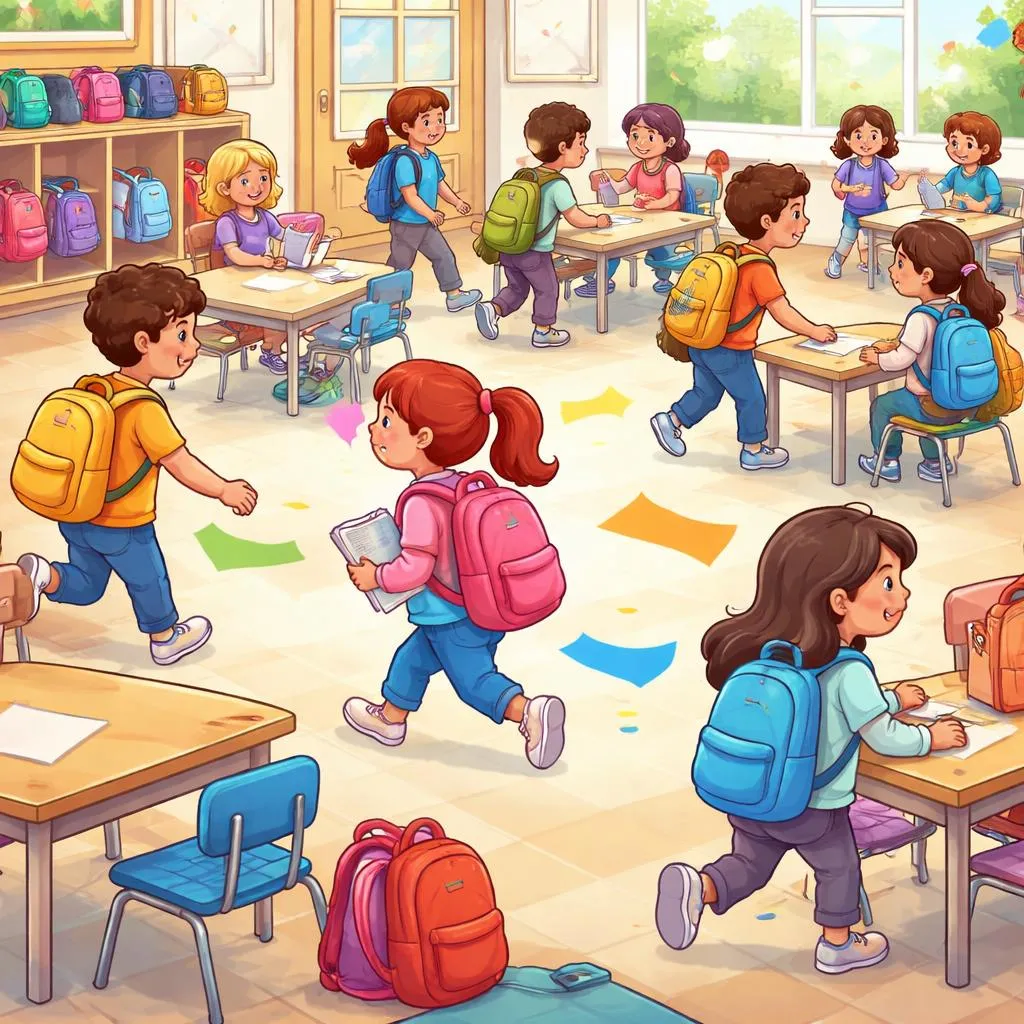

Welcome to our busy classroom corner. Today we meet Mia, a girl who loves transitions. Last Monday, Mia packed her backpack quickly. The bell rang loudly. She rushed to the door. She said, "I am moving to the library now." Her friend Leo stayed seated. He slid his chair closer to the desk. He said, "I am shifting to the front row." See the difference? One traveled across the room. The other adjusted position slightly. Let us explore why.
Understanding Moving To And Shifting To
Moving To Means Going From One Place To Another
Imagine a bird flying from a tree to a roof. Wings flap strongly. This is moving to travel. Distance covers space.
Think of a bus driving from stop to stop. Wheels turn fast. This is moving to transport. Location changes fully.
Picture yourself walking from home to school. Feet step steadily. This is moving to arrive. Destination shifts completely.
Shifting To Means Adjusting Position Or Direction Slightly
Now imagine a cat turning its head to watch a toy. Neck twists gently. This is shifting to adjust. Angle changes small.
Think of a driver turning the steering wheel slightly. Car curves smoothly. This is shifting to steer. Path bends a little.
Consider sliding a chair closer to the table. Legs scrape softly. This is shifting to reposition. Placement tweaks slightly.
How To Tell Them Apart Fast
Moving to covers distance. Shifting to makes small adjustments. Ask yourself: Did I go somewhere new? If yes, it is moving to. Did I just adjust where I am? If yes, it is shifting to.
Moving to feels like a journey. Shifting to feels like a nudge. One is big. The other is small.
Remember the scale. Moving to changes location entirely. Shifting to changes orientation slightly. Look at the distance.
Three Real Life Scenarios
Scene one happens between classes. Mia walks from math to art. She hurries down the hall. She says, "I am moving to the art room." Leo stays in the classroom. He slides his desk forward. He says, "I am shifting to see the board better." Both actions help learning.
Scene two happens at recess. Mia runs to the swings. She climbs onto a seat. She says, "I am moving to the swing set." Leo stands near the slide. He steps sideways to avoid a puddle. He says, "I am shifting to stay dry." They laugh and play.
Scene three happens at home. Mia moves from her bedroom to the kitchen. She says, "I am moving to get a snack." Leo sits on the couch. He shifts to a comfier spot. He says, "I am shifting to relax better." Mom smiles at both.
Notice the shift. Full relocation first. Small adjustment second. Choose your phrase based on distance.
Common Mistakes And How To Fix Them
Mistake one: Saying "I shifted to the playground after school." Why it is wrong: Playground requires moving far. Shifting is for small tweaks. Correct alternative: "I moved to the playground after school." Memory trick: Move far; shift near.
Mistake two: Saying "I moved my chair an inch closer." Why it is wrong: An inch is shifting. Moving implies bigger change. Correct alternative: "I shifted my chair an inch closer." Memory trick: Shift small distances; move big ones.
Mistake three: Saying "She shifted to a new school last week." Why it is wrong: New school means moving. Shifting is minor. Correct alternative: "She moved to a new school last week." Memory trick: Move homes; shift seats.
Mistake four: Saying "He moved his eyes to look at the bird." Why it is wrong: Eyes shift, not move. Moving is for whole body. Correct alternative: "He shifted his eyes to look at the bird." Memory trick: Shift body parts; move whole self.
Memory trick: Think of a chess game. Moving to is picking up a piece and placing it elsewhere. Shifting to is nudging a piece slightly. Your brain knows the difference.
Fun Activities To Master These Words
Activity one is a motion game. I say a word. You act it out. Moving to? Walk from one corner to another. Shifting to? Turn your shoulders slightly. We laugh together.
Activity two is a story chain. Start with "I moved to the park by..." The next person adds "Then I shifted to the bench by..." Use silly verbs. Giggle at the images.
Activity three is a drawing race. Draw someone moving to a new house. Draw someone shifting a picture frame. Show your partner. Guess which is which.
Activity four is a show-and-tell. Bring a map. Say, "I used moving to for this trip." Bring a compass. Say, "I used shifting to for this direction." Demonstrate the feeling.
These games train your brain. You will pick the right word naturally. Play them with friends today.
Easy Rhyme To Remember Forever
Go far away, that is moving.
Nudge a bit, that is shifting.
Cross the room, quick and clear.
Turn your head, shift the gear.
New place found, move with might.
Same spot tweaked, shift just right.
School to home, move with joy.
Chair to desk, shift deploy.
Clap and chant this rhyme. Soon it lives in your memory. No more mix-ups.
Your Homework Assignment This Week
Choose one task below. Write or draw your answer. Share it tomorrow.
Task one: Transition journal. Prepare a small notebook. Draw three pictures. First: Moving to the library. Second: Shifting to the front row. Third: Both smiling. Write a sentence under each. Example: "I moved to the library. I shifted my chair. Both helped me learn."
Task two: Role-play version. With parents, play "School Day." You say, "I will move to the kitchen." Parents say, "I will shift the lamp closer." Switch roles. Practice using phrases correctly.
Task three: Sharing version. Tomorrow in class, tell your deskmate: "I moved to soccer practice. I shifted my water bottle. What about you?" Listen to their examples.
Bring your work to class. We will hang the best drawings. Everyone shares their sentences.
Life Practice Weekly Challenge
Complete one challenge. Show proof to your teacher or parent.
Challenge A: Morning routine. Move from bed to breakfast table. Shift your pillow fluffier. Say, "I moved to eat. I shifted my pillow." Feel the difference. Take a photo of your breakfast spot.
Challenge B: Playtime hero. Move to the slide. Shift to avoid a puddle. Place them side by side. Label them correctly. Show your friend.
Challenge C: Reading nook. Move to a new storybook. Shift to a comfier chair. Use them during story time. Tell your version to a sibling.
Challenge D: Garden fun. Move a potted plant to the sun. Shift its leaves for better light. Observe the change. Talk about it. Draw the plant each day.
Do at least one challenge. Smile when you use the right phrase. You are growing smarter every day. Keep exploring words. Great job today.