
Fun Introduction
Last Tuesday, Mia played with her toy car. She dropped it on the floor. It fell with a loud clatter. Her cat jumped in surprise. Later, Mia lowered the window blinds. She pulled the string slowly. The room grew dim and cozy. Both actions moved things downward. But dropping was sudden and accidental. Lowering was careful and controlled. Mia wondered about the difference. She asked her dad. Dad smiled and explained. Dropping lets go completely. Lowering guides things down safely. Let’s learn together.
Word Breakdown
Core Principle
We reject boring dictionary definitions. We use pictures in your mind. We add functions and memory hooks. This helps you remember forever.
Drop To Do
Image: Imagine dropping a marble from your hand. It falls straight down. That is drop to do. It means releasing something so it falls.
Function: It is for letting go suddenly. Like drop a pencil on the floor. Or drop crumbs for birds.
Sensory Description: You hear a clink or thud. You feel your hand open. Your eyes follow the fall.
Memory Anchor: A marble bouncing on tiles. See the quick bounce? That is drop to do.
Lower To Do
Image: Think of lowering a window shade. You pull the string gently. That is lower to do. It means moving something down slowly.
Function: It is for controlled descent. Like lower a chair to sit. Or lower a ladder safely.
Sensory Description: You hear a soft slide. You feel steady resistance. Your hands move with care.
Memory Anchor: A hand pulling a shade cord. See the smooth motion? That is lower to do.
Advanced Comparison
Drop is sudden release. Lower is guided descent. Drop happens quickly. Lower takes time. Use drop for accidents. Use lower for careful moves.
Scene Comparison
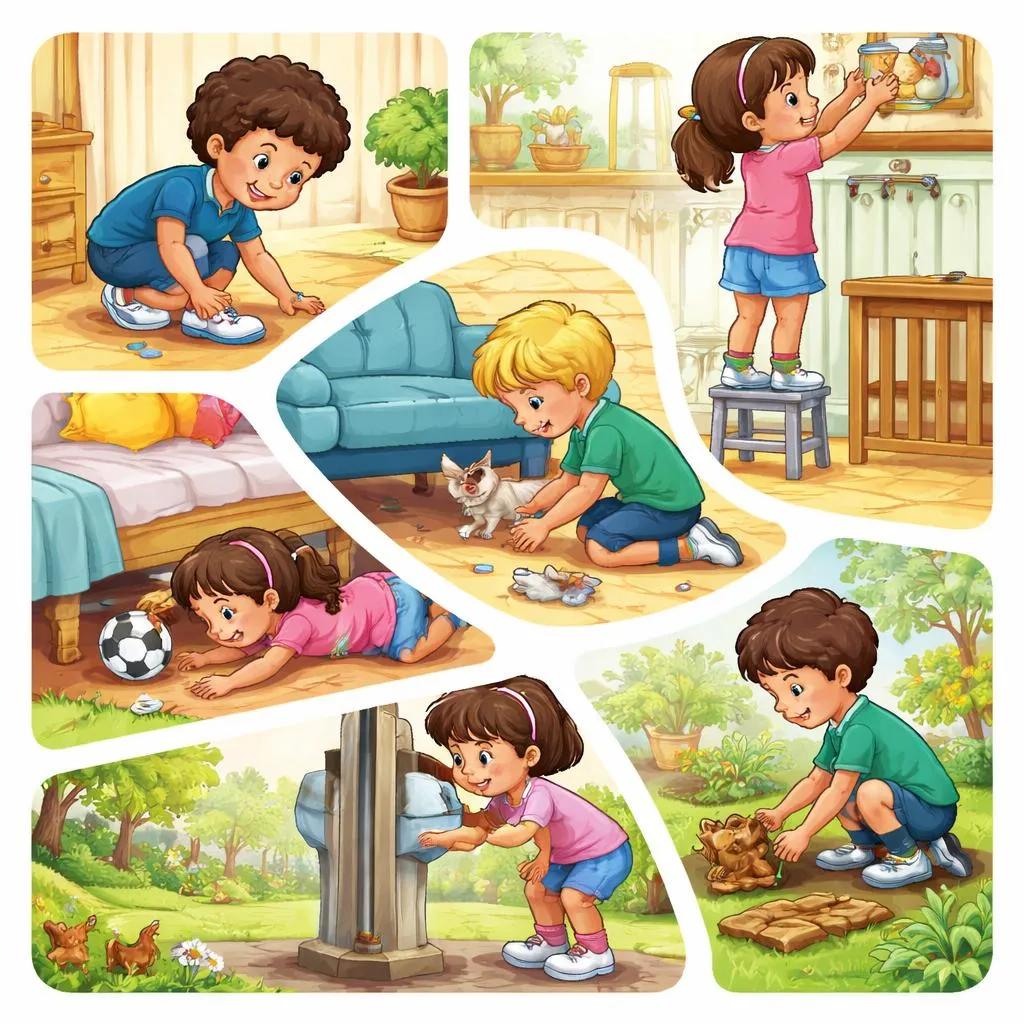
Scene One happens in the classroom. Leo drops his eraser. It bounces under the desk. He crawls to fetch it. This is drop to do—unplanned fall.
Scene Two takes place in the library. Emma lowers a stack of books. She places them gently on the shelf. This is lower to do—controlled placement.
Scene Three occurs at the park. Ben drops his ice cream cone. It splats on the ground. Mia lowers her kite string. The kite glides down slowly. Notice the shift. Dropping is messy. Lowering is neat.
Pitfalls Deep Reminder
Mistake One is saying “I lowered the glass and it shattered.” Why wrong? Lowering should protect fragile things. Dropping causes breaks. Funny result? Glass thinks it is a trampoline. Correct phrase is I dropped the glass and it shattered. Memory trick: Drop breaks, lower protects.
Mistake Two is saying “I dropped the window shade slowly.” Why wrong? Dropping is sudden. Lowering is slow. Funny result? Shade thinks it is a roller coaster. Correct phrase is I lowered the window shade slowly. Memory trick: Lower is gradual.
Mistake Three is saying “I lowered the heavy box onto my foot.” Why wrong? Heavy boxes need careful lowering. Dropping them hurts. Funny result? Foot gets squashed flat. Correct phrase is I lowered the heavy box with help. Memory trick: Lower heavy loads safely.
Mistake Four is saying “I dropped my voice to whisper.” Why wrong? Voice needs lowering, not dropping. Dropping voice sounds like a bomb. Funny result? Whisper sounds like a shout. Correct phrase is I lowered my voice to whisper. Memory trick: Lower volume.
Interactive Exercises
Read each sentence. Pick drop or lower.
I will ___ the apple core into the trash. (drop/lower)
She ___ the lamp to change the bulb. (drop/lower)
We ___ the rope to climb down. (drop/lower)
He ___ his backpack off his shoulders. (drop/lower)
They ___ the banner for the party. (drop/lower)
Act with a friend. Use the phrases.
Scene A: Sudden Dropping
A: I need to drop this now.
B: Watch your toes.
Scene B: Careful Lowering
A: I will lower the chair.
B: Hold it steady and slow.
Spot the Mistake
Which sentence sounds odd? Explain why.
Sentence: I lowered the pencil and it rolled away.
Reason: Pencils drop, they do not lower. Use drop instead.
Sentence: I dropped the ladder rung by rung.
Reason: Ladders lower, they do not drop. Use lower instead.
Sentence: I lowered the cookie and my dog ate it.
Reason: Cookies drop, they do not lower. Use drop instead.
Create Sentences
Use both phrases.
Drop to do: I drop my keys when I am clumsy.
Lower to do: I lower my voice during story time.
Bonus Challenge
You need to put a heavy book on a high shelf. Do you drop or lower it? Answer: Lower. Books need care.
Rhyme Time
Drop it fast, lower it slow.
One lets go, one lets go with flow.
Accident? Choose drop.
Careful move? Lower, do not stop.
Homework Task
Pick one activity. Complete it this week. Share with family.
Option One: Observation Journal. Get a small notebook. Draw three pictures. Write a sentence under each.
Picture One: You drop something. Sentence: I dropped my spoon at breakfast.
Picture Two: You lower something. Sentence: I lowered the blinds for nap time.
Picture Three: You drop something else. Sentence: I dropped my toy car.
Show your journal to a parent. Explain the differences.
Option Two: Role Play. With a parent, act out moments. Use phrases correctly.
You: Mom, I will drop the laundry in the basket.
Parent: Aim for the center.
You: Dad, I will lower the chair so I can sit.
Parent: Good, do it gently.
Practice until it feels natural.
Option Three: Sharing Time. Tomorrow at school, tell a friend. Describe one drop and one lower. Say: Yesterday I dropped my pencil. I lowered my backpack. Ask your friend about theirs.
Life Practice
Week Challenge: Try one task. Complete within seven days. Share your success.
Task One: Observation Log. For three days, note drop and lower moments. Draw icons.
Day One: Drop a crumb. Draw a crumb icon.
Day Two: Lower a shade. Draw a window icon.
Day Three: Drop a toy. Draw a toy icon.
Show your log to your teacher. Place it on the classroom wall.
Task Two: Action Demo. Use both phrases in real actions.
Step One: Drop quickly. Say: I drop things when I am careless.
Step Two: Lower carefully. Say: I lower things to keep them safe.
Demonstrate to a sibling. Explain the difference.
Task Three: Social Mission. Use phrases with others.
Drop to help a friend. Say: I drop the ball for you to catch.
Lower to help a friend. Say: I lower the seat so you can sit.
Record a short voice message. Send it to your teacher.
Task Four: Creative Story. Write a short tale. Include both phrases.
Title: The Clumsy Helper.
Story: I dropped the eggs on the floor. Then I lowered the milk jug carefully. What a mess!
Share your story in class.
Remember, practice makes perfect. Use these phrases often. Soon they will feel easy.