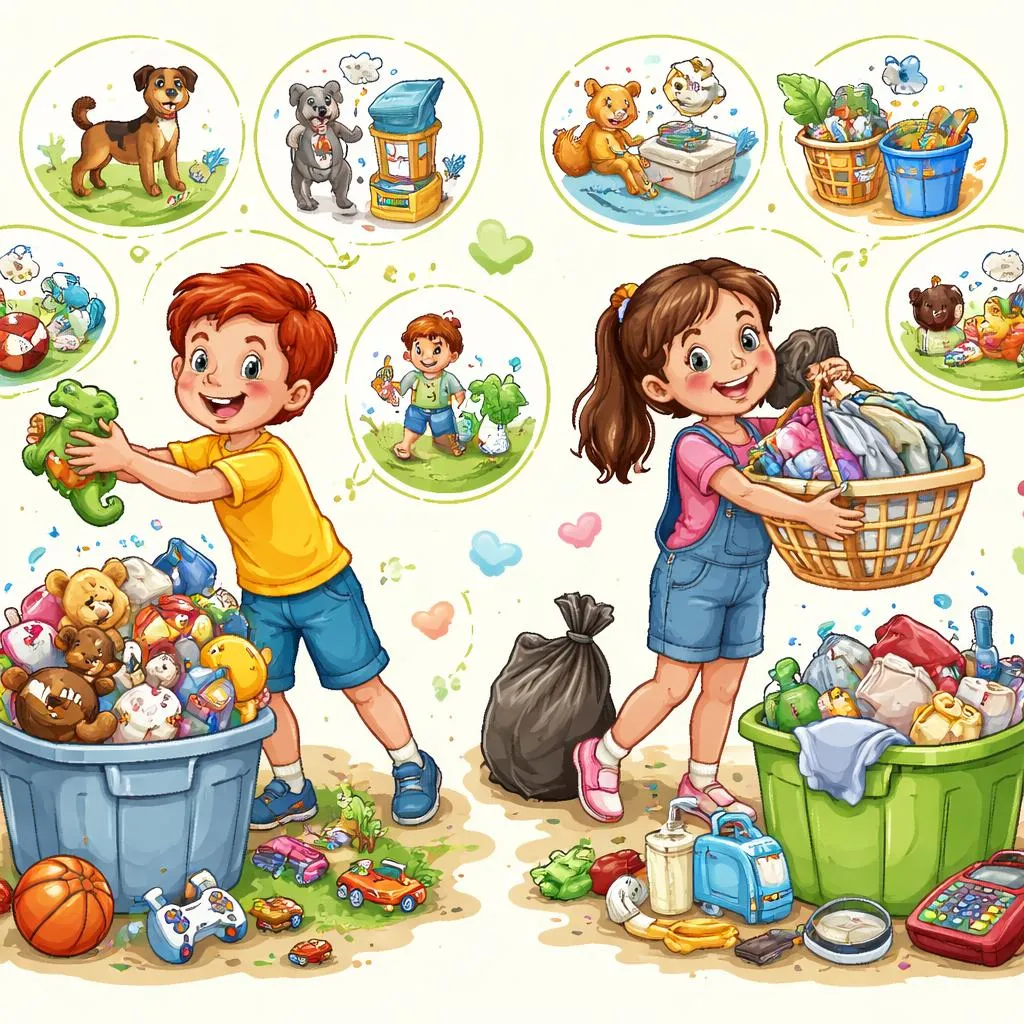

Fun Introduction
Last Saturday, Mia helped her mom clean up. She emptied the dishwasher. Plates and cups came out clean. Later, Mia unloaded heavy grocery bags. She carried them from the car. Both actions removed things. But emptying was gentle and careful. Unloading was strong and heavy. Mia wondered about the difference. She asked her dad. Dad smiled and explained. Emptying makes things empty. Unloading removes heavy loads. Let’s learn together.
Word Breakdown
Core Principle
We reject boring dictionary definitions. We use pictures in your mind. We add functions and memory hooks. This helps you remember forever.
Empty To Do
Image: Imagine emptying a glass of water. The water pours out slowly. That is empty to do. It means removing contents until empty.
Function: It is for clearing out contents. Like empty a lunchbox. Or empty a backpack.
Sensory Description: You hear water splashing. You feel the weight lessen. Your hands move gently.
Memory Anchor: A glass turned upside down. See the last drop fall? That is empty to do.
Unload To Do
Image: Think of unloading a truck full of boxes. You lift heavy items down. That is unload to do. It means removing a heavy load.
Function: It is for taking off cargo. Like unload a dishwasher. Or unload a bike basket.
Sensory Description: You hear boxes thumping. You feel strain in your arms. Your back might ache.
Memory Anchor: A truck with an open door. See the boxes being carried out? That is unload to do.
Advanced Comparison
Empty removes contents gently. Unload removes heavy loads forcefully. Empty is for light items. Unload is for heavy cargo. Use empty for small containers. Use unload for big loads.
Scene Comparison
Scene One happens in the kitchen. Leo empties his lunchbox after eating. He scrapes food into the bin. The box becomes light. This is empty to do—gentle removal.
Scene Two takes place in the driveway. Emma unloads grocery bags from the car. She carries heavy bags inside. Her arms feel the weight. This is unload to do—heavy removal.
Scene Three occurs at school. Ben empties his pencil case to clean it. He shakes out crumbs. Mia unloads her backpack of heavy books. She piles them on the desk. Notice the shift. Emptying is light. Unloading is heavy.
Pitfalls Deep Reminder
Mistake One is saying “I unloaded the glass of water.” Why wrong? Glasses need emptying. Unloading is for heavy things. Funny result? Glass thinks it is a truck. Correct phrase is I emptied the glass. Memory trick: Empty small containers.
Mistake Two is saying “I emptied the moving truck.” Why wrong? Trucks need unloading. Emptying is too gentle. Funny result? Truck stays full. Correct phrase is I unloaded the moving truck. Memory trick: Unload vehicles.
Mistake Three is saying “I unloaded my pockets of coins.” Why wrong? Pockets need emptying. Unloading is for heavy loads. Funny result? Coins think they are bricks. Correct phrase is I emptied my pockets. Memory trick: Empty light items.
Mistake Four is saying “I emptied the heavy suitcase.” Why wrong? Suitcases need unloading. Emptying is for small amounts. Funny result? Suitcase stays heavy. Correct phrase is I unloaded the suitcase. Memory trick: Unload heavy luggage.
Interactive Exercises
Read each sentence. Pick empty or unload.
I will ___ the trash can into the bin. (empty/unload)
She ___ the dishwasher after dinner. (empty/unload)
We ___ the wagon of toys after playing. (empty/unload)
He ___ his water bottle before refilling. (empty/unload)
They ___ the delivery boxes from the porch. (empty/unload)
Act with a friend. Use the phrases.
Scene A: Gentle Emptying
A: I need to empty this now.
B: Tip it slowly so nothing spills.
Scene B: Heavy Unloading
A: I will unload this carefully.
B: Bend your knees when you lift.
Spot the Mistake
Which sentence sounds odd? Explain why.
Sentence: I unloaded my backpack of pencils.
Reason: Backpacks of pencils need emptying. Use empty instead.
Sentence: I emptied the truck of furniture.
Reason: Trucks need unloading. Use unload instead.
Sentence: I unloaded the jar of cookies.
Reason: Jars need emptying. Use empty instead.
Create Sentences
Use both phrases.
Empty to do: I empty my lunchbox after lunch.
Unload to do: I unload the car after shopping.
Bonus Challenge
You have a basket of laundry. Do you empty or unload it? Answer: Unload. It is heavy.
Rhyme Time
Empty it out, unload it down.
One makes light, one makes frown.
Small and light? Choose empty.
Big and heavy? Unload with a sigh.
Homework Task
Pick one activity. Complete it this week. Share with family.
Option One: Observation Journal. Get a small notebook. Draw three pictures. Write a sentence under each.
Picture One: You empty something. Sentence: I emptied the cookie jar.
Picture Two: You unload something. Sentence: I unloaded the grocery bags.
Picture Three: You empty something else. Sentence: I emptied my backpack.
Show your journal to a parent. Explain the differences.
Option Two: Role Play. With a parent, act out moments. Use phrases correctly.
You: Mom, I will empty the dishwasher.
Parent: Put the plates in the cupboard.
You: Dad, I will unload the car.
Parent: Carry the heavy bags first.
Practice until it feels natural.
Option Three: Sharing Time. Tomorrow at school, tell a friend. Describe one empty and one unload. Say: Yesterday I emptied my water bottle. I unloaded the wagon. Ask your friend about theirs.
Life Practice
Week Challenge: Try one task. Complete within seven days. Share your success.
Task One: Observation Log. For three days, note empty and unload moments. Draw icons.
Day One: Empty a cup. Draw a cup icon.
Day Two: Unload a bag. Draw a bag icon.
Day Three: Empty a box. Draw a box icon.
Show your log to your teacher. Place it on the classroom wall.
Task Two: Action Demo. Use both phrases in real actions.
Step One: Empty gently. Say: I empty things with care.
Step Two: Unload firmly. Say: I unload things with strength.
Demonstrate to a sibling. Explain the difference.
Task Three: Social Mission. Use phrases with others.
Empty to help a friend. Say: I empty your trash can.
Unload to help a friend. Say: I unload your heavy books.
Record a short voice message. Send it to your teacher.
Task Four: Creative Story. Write a short tale. Include both phrases.
Title: The Cleanup Day.
Story: I emptied the toy box. Then I unloaded the laundry basket. Everything was tidy!
Share your story in class.
Remember, practice makes perfect. Use these phrases often. Soon they will feel easy.