
Fun Introduction
Last Saturday, Mia found a five-dollar bill. It was under her bed. She felt happy to buy a new comic. Her eyes sparkled like stars. Later, Mia saw her friend Lily. Lily shared her cookies. Mia felt glad to eat them. Both felt good. But happy made her jump. Glad made her smile softly. Mia wondered about the difference. She asked her dad. Dad smiled and explained. Happy is like fireworks. Glad is like sunshine. Let’s learn together.
Mia danced around the room. Money crinkled in her hand. She imagined the comic. Then she tasted the cookie. Sweetness filled her mouth. Her dad watched. He said happy bursts out. Glad warms inside. Mia understood now.
Word Breakdown
Core Principle
We reject boring dictionary definitions. We use pictures in your mind. We add functions and memory hooks. This helps you remember forever.
Happy To Do
Image: Imagine feeling happy to ride your new bike. You pedal fast and laugh. That is happy to do. It means big, bright excitement.
Function: It is for surprising joys. Like happy to get a puppy. Or happy to win a game.
Sensory Description: You hear loud cheers. You feel energy buzzing. Your feet might jump.
Memory Anchor: A kid riding a bike with arms up. See the huge grin? That is happy to do.
Glad To Do
Image: Think of feeling glad to help your mom. You dry the dishes. That is glad to do. It means quiet, warm contentment.
Function: It is for simple pleasures. Like glad to read a book. Or glad to see a friend.
Sensory Description: You hear soft humming. You feel a calm glow. Your shoulders relax.
Memory Anchor: A child drying a dish with a small smile. See the peaceful look? That is glad to do.
Advanced Comparison
Happy is loud and big. Glad is quiet and small. Happy uses cheers. Glad uses smiles. Use happy for surprises. Use glad for comforts.
Scene Comparison
Scene One happens at the park. Mia feels happy to swing high. She pumps her legs hard. Wind whistles past. She yells, “Whee!” This is happy to do—big excitement.
Scene Two takes place at home. Mia feels glad to read with grandma. They sit on the couch. Mia turns a page. She whispers, “I love this part.” This is glad to do—warm contentment.
Scene Three occurs at school. Ben feels happy to get a gold star. He waves it around. Mia feels glad to help Ben study. She points to a word. Notice the shift. Happy celebrates loudly. Glad appreciates quietly.
Pitfalls Deep Reminder
Mistake One is saying “I was glad to open my birthday presents.” Why wrong? Birthdays bring huge joy. Glad is too small. Funny result? You smile politely and say “thanks.” Correct phrase is I was happy to open them. Memory trick: Big surprises equal happy.
Mistake Two is saying “I was happy to finish my homework.” Why wrong? Homework is a small task. Happy is too strong. Funny result? You throw a party for finishing math. Correct phrase is I was glad to finish it. Memory trick: Small tasks equal glad.
Mistake Three is saying “I was glad to see my best friend after camp.” Why wrong? Missing a friend is big emotion. Glad is too mild. Funny result? You give a tiny nod. Correct phrase is I was happy to see her. Memory trick: Big reunions equal happy.
Mistake Four is saying “I was happy to eat my sandwich.” Why wrong? Eating lunch is normal. Happy is too much. Funny result? You dance on the table. Correct phrase is I was glad to eat it. Memory trick: Normal things equal glad.
Interactive Exercises
Read each sentence. Pick happy or glad.
I was ___ to get a new video game. (happy/glad)
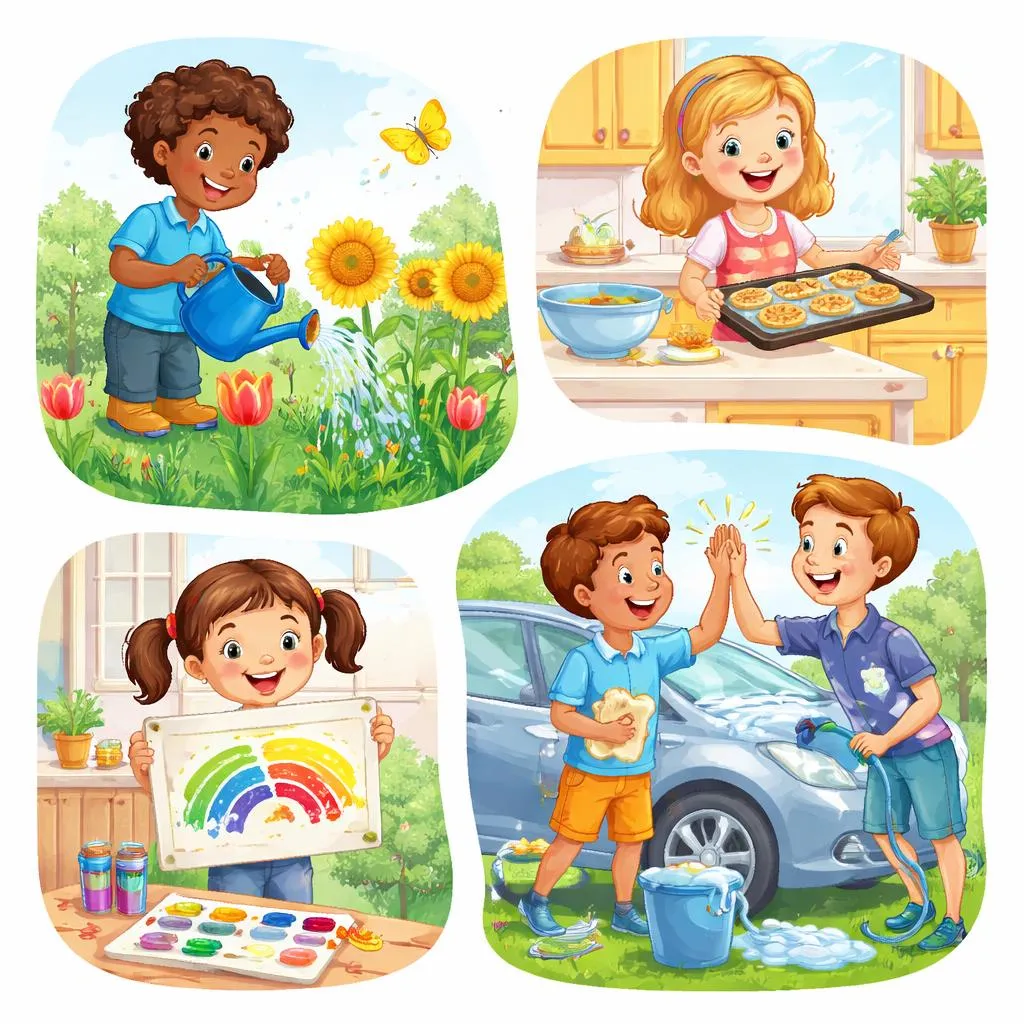
She was ___ to help her dad wash the car. (happy/glad)
We were ___ to visit the zoo. (happy/glad)
He was ___ to finish his puzzle. (happy/glad)
They were ___ to meet the famous author. (happy/glad)
Act with a friend. Use the phrases.
Scene A: Feeling Happy
A: I am happy to show you my trophy!
B: Wow! Tell me how you won.
Scene B: Feeling Glad
A: I am glad we could play together.
B: Me too. It was fun.
Spot the Mistake
Which sentence sounds odd? Explain why.
Sentence: I was glad to win the lottery.
Reason: Winning the lottery is huge. Use happy instead.
Sentence: I was happy to tie my shoes.
Reason: Tying shoes is small. Use glad instead.
Sentence: I was glad to see my new baby sister.
Reason: Seeing a new sister is huge. Use happy instead.
Create Sentences
Use both phrases.
Happy to do: I was happy to go to the water park.
Glad to do: I was glad to help my teacher.
Bonus Challenge
Your friend gives you a hug. Do you feel happy or glad? Answer: Glad. It is a warm comfort.
Rhyme Time
Happy shouts, glad smiles.
One jumps miles, one stays awhile.
Big joy? Choose happy.
Small joy? Glad, all the while.
Homework Task
Pick one activity. Complete it this week. Share with family.
Option One: Observation Journal. Get a small notebook. Draw three pictures. Write a sentence under each.
Picture One: You feel happy. Sentence: I was happy to get a new toy.
Picture Two: You feel glad. Sentence: I was glad to help my mom cook.
Picture Three: You feel happy. Sentence: I was happy to see my cousins.
Show your journal to a parent. Explain the differences.
Option Two: Role Play. With a parent, act out moments. Use phrases correctly.
You: Mom, I am happy to visit grandma this weekend.
Parent: We will bake cookies there.
You: Dad, I am glad to clean my room.
Parent: Good job. Let’s go play now.
Practice until it feels natural.
Option Three: Sharing Time. Tomorrow at school, tell a friend. Describe one happy and one glad. Say: Yesterday I was happy to ride my bike. I was glad to read with my sister. Ask your friend about theirs.
Life Practice
Week Challenge: Try one task. Complete within seven days. Share your success.
Task One: Observation Log. For three days, note happy and glad moments. Draw icons.
Day One: Happy moment. Draw a star icon.
Day Two: Glad moment. Draw a heart icon.
Day Three: Happy moment. Draw a sun icon.
Show your log to your teacher. Place it on the classroom wall.
Task Two: Action Demo. Use both phrases in real actions.
Step One: Show happy loudly. Say: I am happy to see you!
Step Two: Show glad quietly. Say: I am glad we are friends.
Demonstrate to a sibling. Explain the difference.
Task Three: Social Mission. Use phrases with others.
Feel happy to help a friend. Say: I am happy you won the race!
Feel glad to help a friend. Say: I am glad I could help you.
Record a short voice message. Send it to your teacher.
Task Four: Creative Story. Write a short tale. Include both phrases.
Title: The Perfect Day.
Story: I was happy to go to the park. Then I was glad to share my snack. It was perfect.
Share your story in class.
Remember, practice makes perfect. Use these phrases often. Soon they will feel easy.