
Fun Introduction
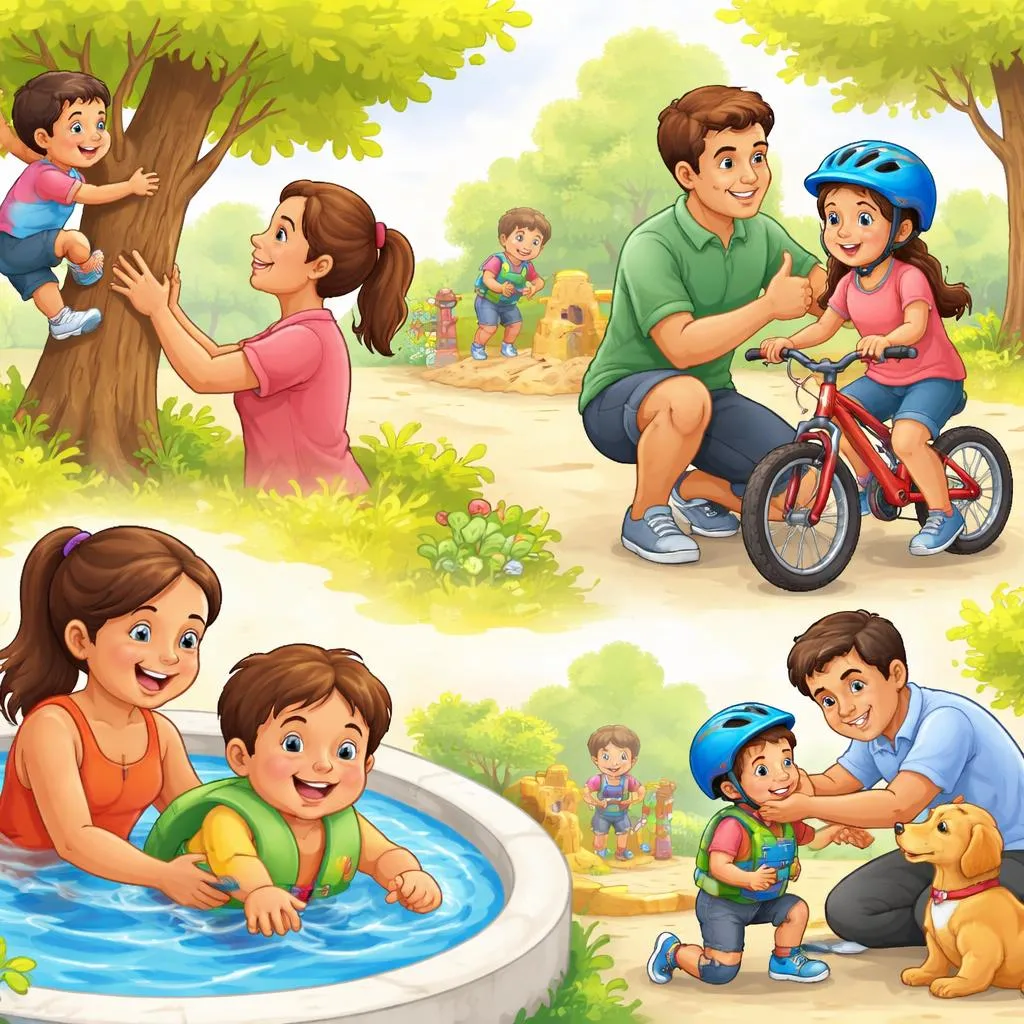
Last Saturday, Mia climbed a tall tree. She felt safe to jump onto the lower branch. Her brother Leo held the ladder. He made sure it was secure to the ground. Both felt careful. Mia swung her legs. Leo tightened the bolts. Dad watched them. He smiled and explained. Safe means free from danger. Secure means firmly fixed. Mia understood now. She skipped to the sandbox.
Mia touched the rough bark. The branch felt steady. Leo checked the ladder feet. Dad nodded slowly. He said safe is like wearing a helmet. Secure is like tying your shoelaces. Mia felt brave. She climbed higher.
Word Breakdown
Core Principle
We reject boring dictionary definitions. We use pictures in your mind. We add functions and memory hooks. This helps you remember forever.
Safe To Do
Image: Imagine being safe to cross the street. You look both ways first. That is safe to do. It means protected from harm.
Function: It is for avoiding danger. Like safe to pet a gentle dog. Or safe to eat washed berries.
Sensory Description: You hear a calm breath. You feel no fear inside. Your eyes scan the area.
Memory Anchor: A child wearing a helmet on a bike. See the chin strap? That is safe to do.
Secure To Do
Image: Think of being secure to tie your tent ropes. You pull them tight. That is secure to do. It means firmly attached or fixed.
Function: It is for making things stable. Like secure to lock your bike. Or secure to fasten a seatbelt.
Sensory Description: You hear a click of a latch. You feel solid resistance. Your hands pull firmly.
Memory Anchor: A child tightening a screw on a chair. See the steady leg? That is secure to do.
Advanced Comparison
Safe is about protection from harm. Secure is about stability and fixation. Safe keeps you unhurt. Secure keeps things from moving. Use safe for personal protection. Use secure for making objects stable.
Scene Comparison
Scene One happens at school. Mia is safe to use scissors. Teacher shows the correct way. She cuts paper carefully. This is safe to do—avoiding injury.
Scene Two takes place at home. Leo is secure to mount his tablet on the wall. He uses strong adhesive strips. The tablet stays stuck. This is secure to do—firmly fixed.
Scene Three occurs at the park. Ben is safe to go down the slide. He checks for bumps. Mia is secure to fasten her skateboard wheels. She tightens them with a tool. Notice the shift. Safe focuses on personal safety. Secure focuses on object stability.
Pitfalls Deep Reminder
Mistake One is saying “I was secure to touch the hot stove.” Why wrong? Secure means firmly fixed. Touching stove is about safety. Funny result? You think the stove is glued down. Correct phrase is I was safe to avoid it. Memory trick: Safe avoids harm.
Mistake Two is saying “I was safe to tie my shoes.” Why wrong? Tying shoes is about securing them. Safe is about protection. Funny result? You think your shoes will protect you from danger. Correct phrase is I was secure to tie them. Memory trick: Secure fixes things.
Mistake Three is saying “I was secure to wear sunscreen.” Why wrong? Sunscreen is for safety from sun. Secure is about stability. Funny result? You think sunscreen glues you to the ground. Correct phrase is I was safe to apply it. Memory trick: Safe protects you.
Mistake Four is saying “I was safe to lock the door.” Why wrong? Locking door is about securing it. Safe is about personal protection. Funny result? You think the door will save you from harm. Correct phrase is I was secure to lock it. Memory trick: Secure stabilizes.
Interactive Exercises
Read each sentence. Think of the right phrase.
I was safe to cross the road. She was secure to tape the poster. We were safe to pet the bunny. He was secure to tighten the screws. They were safe to eat the cooked food.
Act with a friend. Use the phrases.
Scene A: Being Safe
A: I am safe to climb this ladder.
B: Check the rungs first.
Scene B: Being Secure
A: I am secure to glue this model.
B: Press hard for ten seconds.
Spot the Mistake
Which sentence sounds odd? Explain why.
I was secure to wear my helmet.
Helmet is for safety. Use safe instead.
I was safe to bolt the shelf.
Bolting is securing. Use secure instead.
I was secure to drink clean water.
Drinking clean water is safe. Use safe instead.
Create Sentences
Use both phrases.
Safe to do: I am safe to ride my bike.
Secure to do: I am secure to attach my badge.
Bonus Challenge
You fasten your seatbelt in the car. Do you feel safe or secure? Answer: Both. Safe from harm, secure in place.
Rhyme Time
Safe protects, secure holds tight.
One shields from fright, the other grips right.
No harm? Safe, sound.
Firmly placed? Secure, bound.
Homework Task
Pick one activity. Complete it this week. Share with family.
Option One: Observation Journal. Get a small notebook. Draw three pictures. Write a sentence under each.
Picture One: You feel safe. Sentence: I was safe to swim in the shallow end.
Picture Two: You feel secure. Sentence: I was secure to tape my poster.
Picture Three: You feel safe. Sentence: I was safe to eat the washed grapes.
Show your journal to a parent. Explain the differences.
Option Two: Role Play. With a parent, act out moments. Use phrases correctly.
You: Mom, I am safe to use the microwave.
Parent: Stand back and watch.
You: Dad, I am secure to mount my medal.
Parent: Use the strong hook.
Practice until it feels natural.
Option Three: Sharing Time. Tomorrow at school, tell a friend. Describe one safe and one secure. Say: Yesterday I was safe to cross the busy street. I was secure to tie my shoelaces. Ask your friend about theirs.
Life Practice
Week Challenge: Try one task. Complete within seven days. Share your success.
Task One: Observation Log. For three days, note safe and secure moments. Draw icons.
Day One: Safe moment. Draw a helmet.
Day Two: Secure moment. Draw a locked padlock.
Day Three: Safe moment. Draw a crossed street.
Show your log to your teacher. Place it on the classroom wall.
Task Two: Action Demo. Use both phrases in real actions.
Step One: Show safe carefully. Say: I am safe to do this.
Step Two: Show secure firmly. Say: I am secure to do that.
Demonstrate to a sibling. Explain the difference.
Task Three: Social Mission. Use phrases with others.
Feel safe to help a friend. Say: I am safe to walk you home.
Feel secure to help a friend. Say: I am secure to fix your broken toy.
Record a short voice message. Send it to your teacher.
Task Four: Creative Story. Write a short tale. Include both phrases.
Title: The Sturdy Bridge.
Story: I was safe to cross the bridge. Then I was secure to hold the railing. The river flowed below.
Share your story in class.
Remember, practice makes perfect. Use these phrases often. Soon they will feel easy.