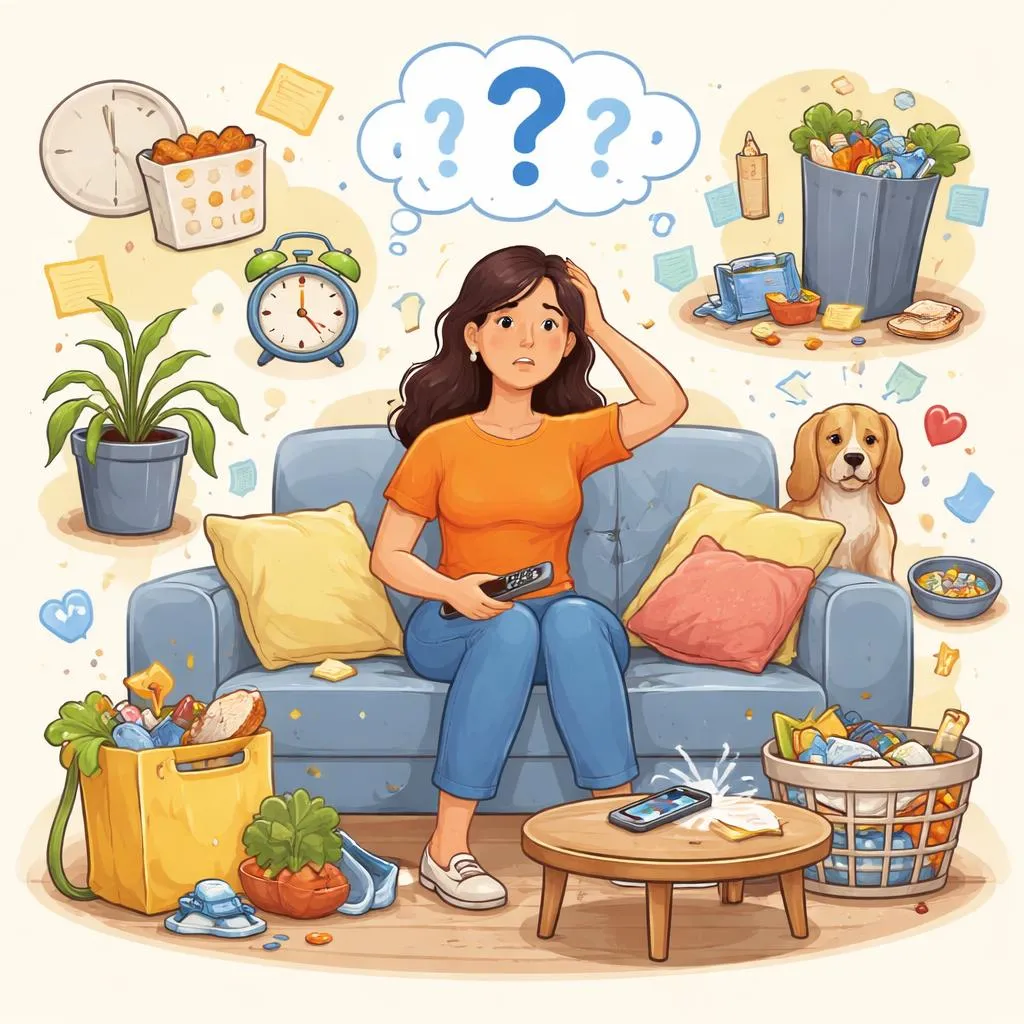

Fun Introduction
Last Tuesday, Mia rushed to school. She forgot to pack her math homework. Her teacher frowned at the empty folder. Later, Mia played at the park. She lost her favorite blue marble. She searched everywhere under the slide. Both were mistakes with different feelings. Forgetting was in her head. Losing was with her hands. Let’s learn the difference.
Word Breakdown
Core Principle
We reject boring dictionary definitions. We use pictures in your mind. We add functions and memory hooks. This helps you remember forever.
Forget To Do
Image: Imagine leaving your lunchbox on the kitchen counter. You realize it at school. That is forget to do. It means failing to remember an action.
Function: It is for mental slips. Like forget to feed the cat. Or forget to brush teeth.
Sensory Description: You feel a sudden panic. You hear your heart beat fast. Your face feels hot.
Memory Anchor: An empty lunchbox on the counter. See the forgotten item? That is forget to do.
Lose To Do
Image: Think of dropping your pencil in tall grass. You cannot find it again. That is lose to do. It means being unable to locate something.
Function: It is for physical disappearance. Like lose your keys. Or lose a sock in laundry.
Sensory Description: You feel frustrated searching. You hear rustling papers. Your hands move quickly.
Memory Anchor: A missing puzzle piece under furniture. See the empty space? That is lose to do.
Advanced Comparison
Forget is mental and invisible. Lose is physical and visible. Forget happens before action. Lose happens after having. Use forget for tasks not done. Use lose for things gone missing.
Scene Comparison
Scene One happens on a school morning. Leo grabs his backpack. He forgets to bring his water bottle. He feels thirsty all day. Later, he loses his water bottle at recess. He searches the sandbox. This shows forget before leaving, lose after arrival.
Scene Two takes place during art class. Emma forgets to bring her colored pencils. She borrows from a friend. Then she loses her eraser on the floor. She crawls under desks. This shows forget is preparation failure, lose is possession loss.
Scene Three occurs at home. Ben forgets to put away his LEGO set. His mom trips over bricks. He later loses one tiny wheel piece. He turns the room upside down. This shows forget causes problems, lose causes searching.
Pitfalls Deep Reminder
Mistake One is saying “I lost to bring my umbrella.” Why wrong? Umbrella bringing is forgotten mentally. Losing implies having then misplacing. Funny result? Friends imagine you had an umbrella and threw it away. Correct phrase is forget to bring your umbrella. Memory trick: Forget is for mental slips.
Mistake Two is saying “I forgot my library book.” Why wrong? Library books are physical objects. Forgetting applies to actions, not items. Funny result? Teacher thinks you never intended to return it. Correct phrase is lose your library book. Memory trick: Lose is for tangible things.
Mistake Three is saying “I lost to do my chores.” Why wrong? Chores are tasks to remember. Losing applies to objects. Funny result? Parents think you misplaced your chore list. Correct phrase is forget to do your chores. Memory trick: Forget is for undone tasks.
Mistake Four is saying “I forgot my phone at the cafe.” Why wrong? Phone is an object. Forgetting describes actions. Funny result? People think you mentally erased the phone from existence. Correct phrase is lose your phone at the cafe. Memory trick: Lose is for misplaced items.
Interactive Exercises
Choose the Right Phrase
Read each sentence. Pick forget or lose.
I ___ to set my alarm clock. (forget/lose)
She ___ her hair tie at the gym. (forget/lose)
We ___ to sign the permission slip. (forget/lose)
He ___ his favorite trading card. (forget/lose)
They ___ to water the plants. (forget/lose)
Mini Theater
Act with a friend. Use the phrases.
Scene A: Mental Slip
A: Oh no, I ___ to bring my project.
B: Can you call your mom?
Scene B: Physical Loss
A: I ___ my new pen somewhere.
B: Let’s retrace your steps.
Spot the Mistake
Which sentence sounds odd? Explain why.
Sentence: I lost to feed my fish.
Reason: Feeding is an action. Use forget instead.
Sentence: I forgot my jacket at school.
Reason: Jacket is an object. Use lose instead.
Sentence: We lost to do our homework.
Reason: Homework is a task. Use forget instead.
Create Sentences
Use both phrases.
Forget to do: I forget to make my bed sometimes.
Lose to do: I lose my hair clips often.
Bonus Challenge
You leave home without your lunch. Do you forget or lose it? Answer: Forget. It was never packed.
Rhyme Time
Forget it first, lose it later.
One is thought, one is matter.
Mental slip? Choose forget.
Missing thing? Lose to regret.
Homework Task
Pick one activity. Complete it this week. Share with family.
Option One: Observation Journal. Get a small notebook. Draw three pictures. Write a sentence under each.
Picture One: You forget something. Sentence: I forgot to bring my water bottle.
Picture Two: You lose something. Sentence: I lost my eraser under the desk.
Picture Three: You forget something else. Sentence: I forgot to feed my hamster.
Show your journal to a parent. Explain the differences.
Option Two: Role Play. With a parent, act out moments. Use phrases correctly.
You: Mom, I forgot to pack my swimsuit.
Parent: We will have to go back.
You: Dad, I lost my soccer cleats.
Parent: Check the garage carefully.
Practice until it feels natural.
Option Three: Sharing Time. Tomorrow at school, tell a friend. Describe one forget and one lose. Say: Yesterday I forgot my homework. I lost my pencil. Ask your friend about theirs.
Life Practice
Week Challenge: Try one task. Complete within seven days. Share your success.
Task One: Observation Log. For three days, note forget and lose moments. Draw icons.
Day One: Forget to lock door. Draw a key icon.
Day Two: Lose a sock. Draw a sock icon.
Day Three: Forget to charge tablet. Draw a battery icon.
Show your log to your teacher. Place it on the classroom wall.
Task Two: Action Demo. Use both phrases in real actions.
Step One: Realize a missed task. Say: I forget to do this.
Step Two: Search for a missing item. Say: I lose this thing.
Demonstrate to a sibling. Explain the difference.
Task Three: Social Mission. Use phrases with others.
Forget a friend’s birthday. Say: I forgot your party, sorry!
Lose a classmate’s borrowed book. Say: I lost your book, I will buy a new one.
Record a short voice message. Send it to your teacher.
Task Four: Creative Story. Write a short tale. Include both phrases.
Title: The Missing Morning.
Story: I forgot my lunch at home. Then I lost my bus pass. What a day!
Share your story in class.
Remember, practice makes perfect. Use these phrases often. Soon they will feel easy.