
Fun Introduction
Last Saturday, Mia played by the pond. She saw a frog hop into deep water. She rescued it with a net. The frog croaked happily. Later, Mia saved her allowance for a new toy. She put coins in a jar. Both actions helped someone or something. But rescuing saved from danger. Saving kept for later. Let’s learn the difference.
Word Breakdown
Core Principle
We reject boring dictionary definitions. We use pictures in your mind. We add functions and memory hooks. This helps you remember forever.
Save To Do
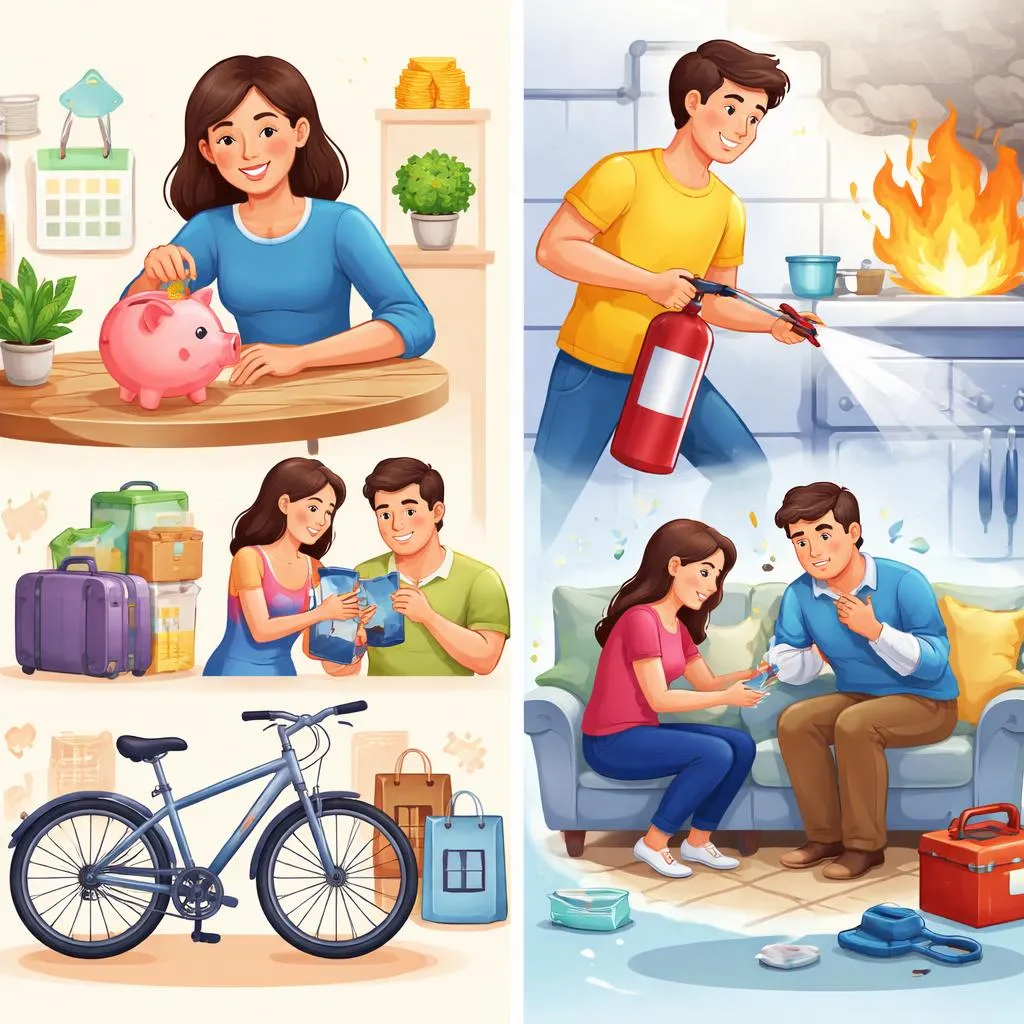
Image: Imagine putting coins in a piggy bank. You drop them in slowly. That is save to do. It means keeping something for future use.
Function: It is for preserving resources. Like save money for a bike. Or save energy for later.
Sensory Description: You hear coins clinking. You feel hope growing. Your hands move carefully.
Memory Anchor: A piggy bank with a slot. See the growing coins? That is save to do.
Rescue To Do
Image: Think of a firefighter carrying a cat. The cat is safe now. That is rescue to do. It means saving from immediate danger.
Function: It is for emergency help. Like rescue a friend from drowning. Or rescue a bird from a trap.
Sensory Description: You hear urgent shouts. You feel adrenaline rushing. Your arms move fast.
Memory Anchor: A firefighter with a rescued cat. See the relief? That is rescue to do.
Advanced Comparison
Save is slow and planned. Rescue is fast and urgent. Save preserves for later. Rescue saves from now. Use save for resources. Use rescue for emergencies.
Scene Comparison
Scene One happens at school. Leo saves paper for his art project. He stores sheets in his desk. Emma rescues a classmate from a fall. She catches her arm. This shows save for planning, rescue for urgency.
Scene Two takes place at home. Dad saves electricity by turning off lights. He flips switches. Mom rescues a burning toast from the toaster. She pulls it out quickly. This shows save for conservation, rescue for danger.
Scene Three occurs at the beach. Ben saves shells in his bucket. He collects them gently. Mia rescues a crab from a drying tide pool. She moves it to water. Notice the shift. Saving gathers. Rescuing saves lives.
Pitfalls Deep Reminder
Mistake One is saying “I saved my friend from the burning house.” Why wrong? Burning houses need rescuing immediately. Saving is for gradual preservation. Funny result? Friend thinks you stored them for later. Correct phrase is rescue my friend from the burning house. Memory trick: Rescue is for emergencies.
Mistake Two is saying “I rescued coins for my vacation.” Why wrong? Coins need saving over time. Rescuing is for sudden danger. Funny result? Coins think they are in a disaster movie. Correct phrase is save coins for my vacation. Memory trick: Save is for gradual gathering.
Mistake Three is saying “I saved the kitten from the tree.” Why wrong? Kittens in trees need rescuing now. Saving is for later use. Funny result? Kitten waits for you to finish saving. Correct phrase is rescue the kitten from the tree. Memory trick: Rescue is for immediate help.
Mistake Four is saying “I rescued water in a bottle.” Why wrong? Water needs saving for later. Rescuing is for beings in danger. Funny result? Water feels like it is drowning. Correct phrase is save water in a bottle. Memory trick: Save is for resources.
Interactive Exercises
Read each sentence. Pick save or rescue.
I ___ money for a new skateboard. (save/rescue)
She ___ a bird from a sticky trap. (save/rescue)
We ___ food for the winter camping trip. (save/rescue)
He ___ a soccer ball from rolling into the street. (save/rescue)
They ___ energy by walking to school. (save/rescue)
Act with a friend. Use the phrases.
Scene A: Planned Preservation
A: I will save my allowance for a toy.
B: Good, put it in your piggy bank.
Scene B: Urgent Help
A: I need to rescue my cat from the roof.
B: Call the fire department quickly.
Spot the Mistake
Which sentence sounds odd? Explain why.
Sentence: I rescued my lunch for later.
Reason: Lunch needs saving for later. Use save instead.
Sentence: I saved the drowning swimmer.
Reason: Swimmers need rescuing. Use rescue instead.
Sentence: We rescued paper for our project.
Reason: Paper needs saving. Use save instead.
Create Sentences
Use both phrases.
Save to do: I save my drawings in a folder.
Rescue to do: I rescue bugs from the pool.
Bonus Challenge
Your friend is stuck in quicksand. Do you save or rescue them? Answer: Rescue. Act fast to help.
Rhyme Time
Save it slow, rescue it fast.
One makes last, one helps blast.
Future plan? Choose save.
Danger now? Rescue to behave.
Homework Task
Pick one activity. Complete it this week. Share with family.
Option One: Observation Journal. Get a small notebook. Draw three pictures. Write a sentence under each.
Picture One: You save something. Sentence: I saved my coins for a gift.
Picture Two: You rescue something. Sentence: I rescued a leaf from the drain.
Picture Three: You save something else. Sentence: I saved my stickers in a box.
Show your journal to a parent. Explain the differences.
Option Two: Role Play. With a parent, act out moments. Use phrases correctly.
You: Mom, I will save electricity by turning off lights.
Parent: Good, help the planet.
You: Dad, I will rescue the cat from the tree.
Parent: Be careful climbing.
Practice until it feels natural.
Option Three: Sharing Time. Tomorrow at school, tell a friend. Describe one save and one rescue. Say: Yesterday I saved my snack. I rescued a worm. Ask your friend about theirs.
Life Practice
Week Challenge: Try one task. Complete within seven days. Share your success.
Task One: Observation Log. For three days, note save and rescue moments. Draw icons.
Day One: Save water. Draw a drop icon.
Day Two: Rescue a bug. Draw a bug icon.
Day Three: Save time. Draw a clock icon.
Show your log to your teacher. Place it on the classroom wall.
Task Two: Action Demo. Use both phrases in real actions.
Step One: Put coins aside. Say: I save this for later.
Step Two: Help a creature. Say: I rescue this from danger.
Demonstrate to a sibling. Explain the difference.
Task Three: Social Mission. Use phrases with others.
Save a friend’s seat in line. Say: I saved you a spot!
Rescue a classmate’s dropped books. Say: I rescued your books!
Record a short voice message. Send it to your teacher.
Task Four: Creative Story. Write a short tale. Include both phrases.
Title: The Heroic Day.
Story: I saved my coins for a gift. Then I rescued a bird from a net. What a day!
Share your story in class.
Remember, practice makes perfect. Use these phrases often. Soon they will feel easy.