
Fun Introduction
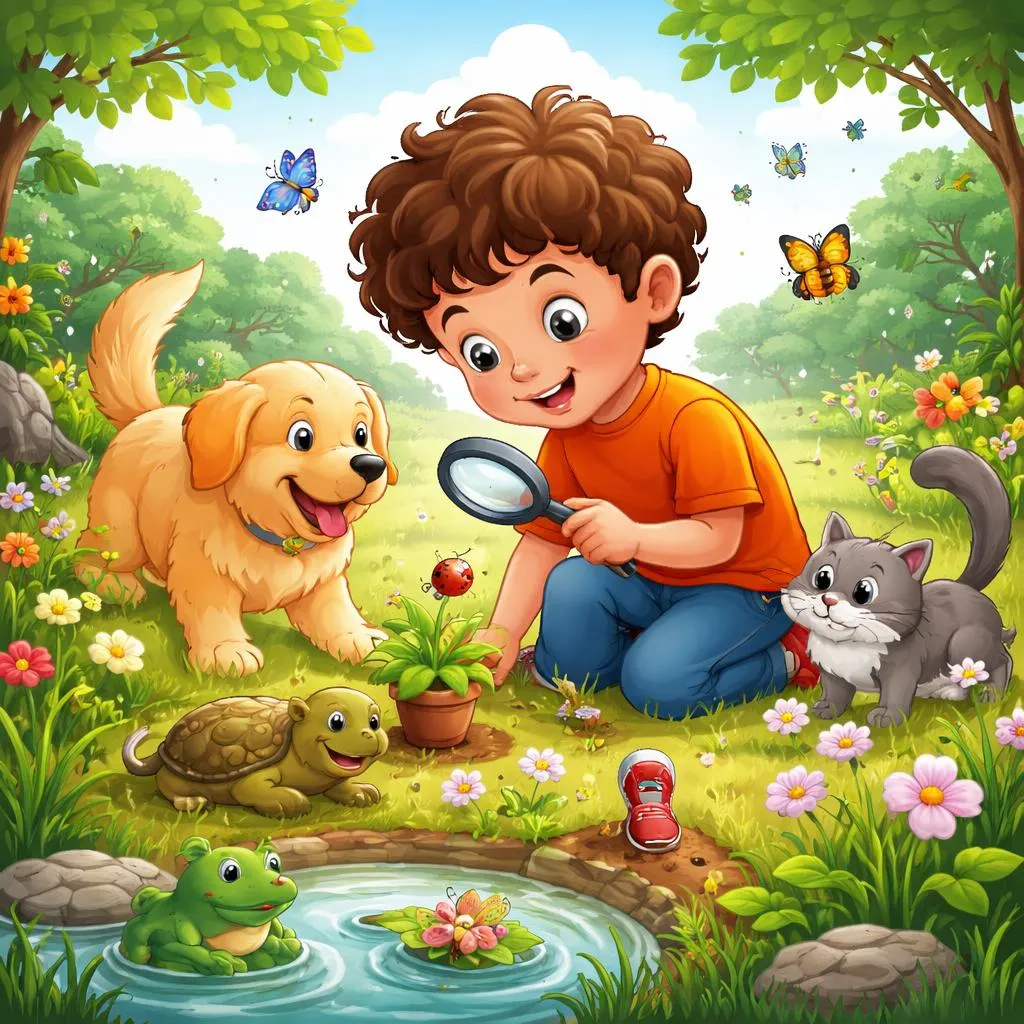
Last spring, Mia and Leo visited Grandma's farm. Mia touched a fluffy chick. It was alive to her gentle fingers. Leo watched a green plant. It was living to his curious eyes. Both felt warm inside. Mia giggled at soft feathers. Leo watered the dry soil. Dad watched them. He smiled and explained the difference. Alive means having life now. Living means staying alive over time. Mia understood now. She skipped to the kitchen.
Mia loved tiny moving things. The chick peeped loudly. Leo liked growing things. Dad nodded slowly. He said alive is like a heartbeat. Living is like a growing tree. Mia felt clever. She started checking her own backyard.
Word Breakdown
Core Principle
We reject boring dictionary definitions. We use pictures in your mind. We add functions and memory hooks. This helps you remember forever.
Alive To Do
Image: Imagine being alive to hold a wriggling worm. It squirms in your palm. That is alive to do. It means having life right now.
Function: It is for things with breath. Like alive to pet a puppy. Or alive to see a butterfly.
Sensory Description: You feel a soft pulse. You hear tiny chirps. Your skin tingles slightly.
Memory Anchor: A child holding a small animal. See the moving creature? That is alive to do.
Living To Do
Image: Think of being living to grow a tomato plant. You water it every morning. That is living to do. It means continuing to stay alive.
Function: It is for ongoing survival. Like living to eat healthy food. Or living to exercise daily.
Sensory Description: You smell fresh earth. You feel cool water. Your eyes watch new leaves.
Memory Anchor: A child tending a garden. See the growing stems? That is living to do.
Advanced Comparison
Alive is a momentary state. Living is a continuous process. Alive is a snapshot. Living is a movie. Use alive for quick checks. Use living for long-term care.
Scene Comparison
Scene One happens at school. Mia is alive to the class hamster. She sees it run on a wheel. Teacher says handle gently. This is alive to do—current life.
Scene Two takes place at home. Leo is living to his pet fish. He feeds it every day. Mom checks the water. This is living to do—ongoing survival.
Scene Three occurs at the park. Ben is alive to a ladybug. He lets it crawl on his arm. Mia is living to her rose bush. She prunes it weekly. Notice the shift. Alive notices brief life. Living maintains life.
Pitfalls Deep Reminder
Mistake One is saying “I living to the hopping frog.” Why wrong? Living means ongoing care. Frog is briefly alive. Funny result? You try to water the frog daily. Correct phrase is I alive to the frog. Memory trick: Living needs time.
Mistake Two is saying “I alive to my growing sunflower.” Why wrong? Sunflower needs living. Alive is too short. Funny result? You poke it once and leave. Correct phrase is I living to my sunflower. Memory trick: Alive is instant.
Mistake Three is saying “I living to the fallen leaf.” Why wrong? Leaf is no longer living. It was alive once. Funny result? You try to feed the leaf. Correct phrase is I alive to the leaf. Memory trick: Living implies health.
Mistake Four is saying “I alive to my bedtime routine.” Why wrong? Routine is living habit. Alive is for creatures. Funny result? You say your routine has a heartbeat. Correct phrase is I living to my routine. Memory trick: Alive is biological.
Interactive Exercises
Mini Dialogue
A: I am alive to the baby chicks. B: Touch them softly. A: I am living to my garden. B: Water it every morning.
Mini Theater
A: (Whispering) This bug is alive to me. B: Put it on a leaf. A: (Nodding) My cactus is living to me. B: Give it sunlight.
Spot The Mistake
Which sentence sounds odd? Explain why.
I was living to the fluttering moth. Moth is briefly alive. Use alive instead.
I was alive to my daily exercises. Exercises are living habit. Use living instead.
I was living to the sleeping cat. Cat is currently alive. Use alive instead.
Create Sentences
Use both phrases.
Alive to do: I am alive to the hatching egg. Living to do: I am living to my pet turtle.
Bonus Challenge
You see a sprouting seed. Alive or living? Answer: Living. It grows over time.
Rhyme Time
Alive is now, living is stay. One moves quick, the other day. Bug crawls? Alive, see. Tree grows? Living, be.
Homework Task
Pick one activity. Complete it this week. Share with family.
Option One: Observation Journal. Get a small notebook. Draw three pictures. Write a sentence under each.
Picture One: You feel alive. Sentence: I was alive to the hummingbird. Picture Two: You feel living. Sentence: I was living to my herb pot. Picture Three: You feel alive. Sentence: I was alive to the caterpillar.
Show your journal to a parent. Explain the differences.
Option Two: Role Play. With a parent, act out moments. Use phrases correctly.
You: Mom, I am alive to the new kitten. Parent: Stroke its fur gently. You: Dad, I am living to my fitness plan. Parent: Run with me outside.
Practice until it feels natural.
Option Three: Sharing Time. Tomorrow at school, tell a friend. Describe one alive and one living. Say: Yesterday I was alive to a firefly. I was living to my tomato plant. Ask your friend about theirs.
Life Practice
Week Challenge: Try one task. Complete within seven days. Share your success.
Task One: Observation Log. For three days, note alive and living moments. Draw icons.
Day One: Alive moment. Draw a bird in flight. Day Two: Living moment. Draw a potted plant. Day Three: Alive moment. Draw a goldfish.
Show your log to your teacher. Place it on the classroom wall.
Task Two: Action Demo. Use both phrases in real actions.
Step One: Show alive by touching a pet gently. Say: I am alive to do this. Step Two: Show living by watering a plant daily. Say: I am living to do that.
Demonstrate to a sibling. Explain the difference.
Task Three: Social Mission. Use phrases with others.
Feel alive to help a friend. Say: I am alive to your new hamster. Feel living to help a friend. Say: I am living to your garden project.
Record a short voice message. Send it to your teacher.
Task Four: Creative Story. Write a short tale. Include both phrases.
Title: The Tiny Survivor.
Story: I was alive to the rescued sparrow. Then I was living to nurse it back to health. It flew away strong.
Share your story in class.
Remember, practice makes perfect. Use these phrases often. Soon they will feel easy.