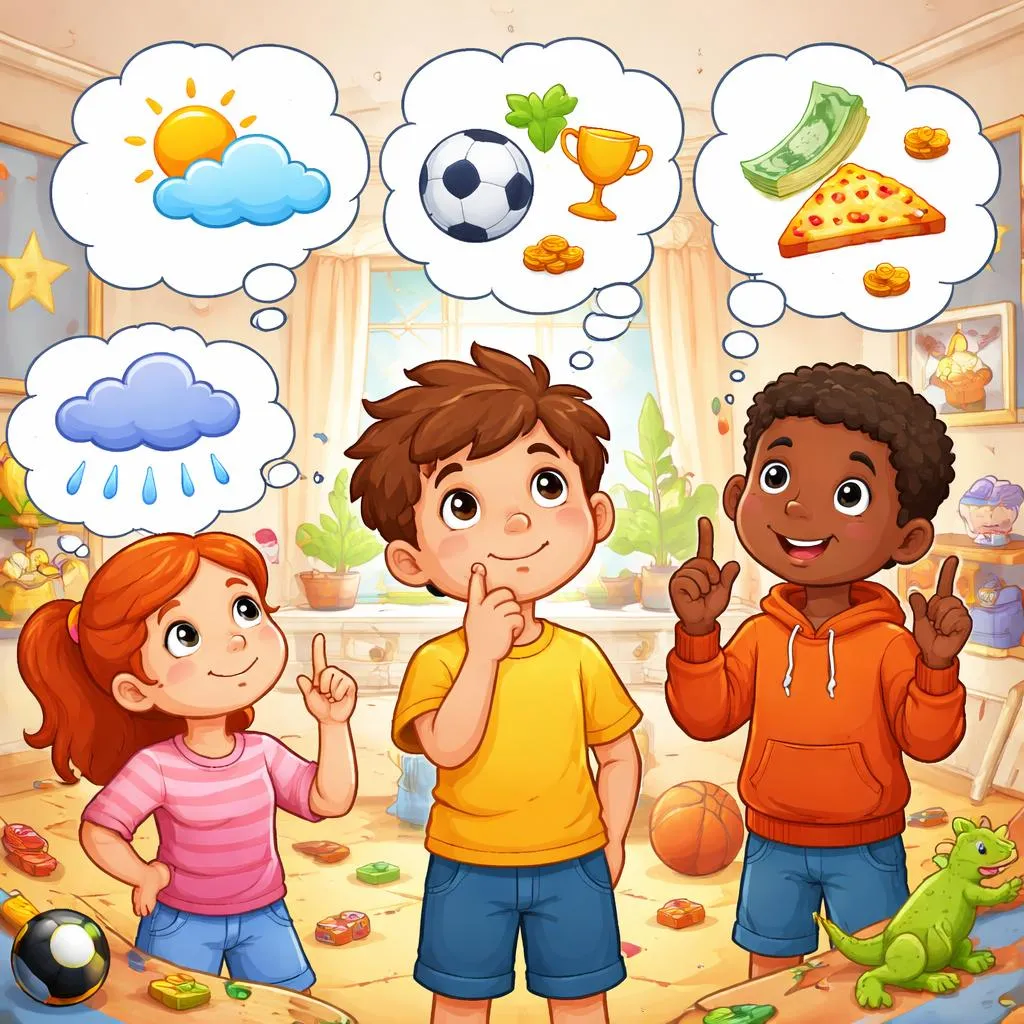

Fun Introduction
Last Saturday, Mia sat on the porch. Dark clouds rolled across the sky. She thought it was probable to rain soon. Her brother Leo nodded slowly. He said it was likely to ruin their picnic. Both felt disappointed. Mia sighed softly. Leo kicked a pebble. Dad watched them. He smiled and explained. Probable means it has a good chance. Likely means it is expected based on clues. Mia understood now. She skipped to the kitchen.
Mia traced raindrops on the window. The glass felt cool. Leo checked the picnic basket. Dad nodded slowly. He said probable is like guessing a coin toss. Likely is like knowing the sun rises. Mia felt clever. She grabbed an umbrella.
Word Breakdown
Core Principle
We reject boring dictionary definitions. We use pictures in your mind. We add functions and memory hooks. This helps you remember forever.
Probable To Do
Image: Imagine being probable to see a rainbow after rain. Clouds are dark and heavy. That is probable to happen. It means a strong chance based on evidence.
Function: It is for things with good odds. Like probable to win the game. Or probable to find a coin.
Sensory Description: You hear thunder rumble. You feel damp air. Your nose smells ozone.
Memory Anchor: A child watching dark clouds. See the grey sky? That is probable to rain.
Likely To Do
Image: Think of being likely to get ice cream after dinner. Mom always gives treats on Fridays. That is likely to happen. It means expected from past patterns.
Function: It is for things expected from habit. Like likely to play outside after homework. Or likely to see grandma on Sundays.
Sensory Description: You hear a familiar jingle. You feel warm inside. Your mouth waters.
Memory Anchor: A child waiting by the freezer. See the ice cream tub? That is likely to be eaten.
Advanced Comparison
Probable is about current evidence. Likely is about past patterns. Probable guesses from now. Likely predicts from before. Use probable for new clues. Use likely for old habits.
Scene Comparison
Scene One happens at school. Mia is probable to have a pop quiz. Teacher looks at the test papers. Students groan quietly. This is probable to happen—strong signs now.
Scene Two takes place at home. Leo is likely to get pancakes for breakfast. Dad makes them every Saturday. Mom flips them happily. This is likely to happen—past routine.
Scene Three occurs at the park. Ben is probable to find worms after rain. The ground is soaked and soft. Mia is likely to see squirrels every afternoon. They always visit the oak tree. Notice the shift. Probable uses fresh clues. Likely uses repeated patterns.
Pitfalls Deep Reminder
Mistake One is saying “I was likely to rain today.” Why wrong? Likely means from past habit. Rain is a current clue. Funny result? You check last year’s weather report. Correct phrase is I was probable to rain today. Memory trick: Probable sees now.
Mistake Two is saying “I was probable to get dessert.” Why wrong? Probable means from current signs. Dessert is a habit. Funny result? You look for dessert clues in the sky. Correct phrase is I was likely to get dessert. Memory trick: Likely knows habits.
Mistake Three is saying “I was likely to find my lost key.” Why wrong? Likely means from routine. Keys get lost randomly. Funny result? You expect to lose keys daily. Correct phrase is I was probable to find it under the sofa. Memory trick: Probable guesses now.
Mistake Four is saying “I was probable to visit grandma.” Why wrong? Probable means from current evidence. Visiting grandma is a plan. Funny result? You check the traffic forecast. Correct phrase is I was likely to visit her on Sunday. Memory trick: Likely follows plans.
Interactive Exercises
Read each sentence. Think of the right phrase.
I was probable to see lightning. She was likely to get a sticker. We were probable to miss the bus. He was likely to play soccer. They were probable to find shells.
Act with a friend. Use the phrases.
Scene A: Being Probable
A: I am probable to catch a cold.
B: Wear your jacket.
Scene B: Being Likely
A: I am likely to read a book tonight.
B: Pick a good one.
Spot the Mistake
Which sentence sounds odd? Explain why.
I was likely to hear thunder now.
Thunder is a current clue. Use probable instead.
I was probable to eat pizza on Fridays.
Pizza on Fridays is a habit. Use likely instead.
I was likely to slip on the wet floor.
Wet floor is a current clue. Use probable instead.
Create Sentences
Use both phrases.
Probable to do: I am probable to see a shooting star.
Likely to do: I am likely to brush my teeth.
Bonus Challenge
You see dark clouds. Do you feel probable or likely to rain? Answer: Probable. Current evidence.
Rhyme Time
Probable guesses, likely knows.
One sees signs, the other grows.
From now? Probable, near.
From before? Likely, clear.
Homework Task
Pick one activity. Complete it this week. Share with family.
Option One: Observation Journal. Get a small notebook. Draw three pictures. Write a sentence under each.
Picture One: You feel probable. Sentence: I was probable to see a rainbow.
Picture Two: You feel likely. Sentence: I was likely to get a cookie.
Picture Three: You feel probable. Sentence: I was probable to find a frog.
Show your journal to a parent. Explain the differences.
Option Two: Role Play. With a parent, act out moments. Use phrases correctly.
You: Mom, I am probable to need my boots.
Parent: Put them by the door.
You: Dad, I am likely to watch a movie.
Parent: Choose a funny one.
Practice until it feels natural.
Option Three: Sharing Time. Tomorrow at school, tell a friend. Describe one probable and one likely. Say: Yesterday I was probable to get a pop quiz. I was likely to play outside. Ask your friend about theirs.
Life Practice
Week Challenge: Try one task. Complete within seven days. Share your success.
Task One: Observation Log. For three days, note probable and likely moments. Draw icons.
Day One: Probable moment. Draw a storm cloud.
Day Two: Likely moment. Draw a calendar page.
Day Three: Probable moment. Draw a magnifying glass.
Show your log to your teacher. Place it on the classroom wall.
Task Two: Action Demo. Use both phrases in real actions.
Step One: Show probable with a gesture. Say: I am probable to do this.
Step Two: Show likely with a nod. Say: I am likely to do that.
Demonstrate to a sibling. Explain the difference.
Task Three: Social Mission. Use phrases with others.
Feel probable to help a friend. Say: I am probable to find your toy.
Feel likely to help a friend. Say: I am likely to tutor you.
Record a short voice message. Send it to your teacher.
Task Four: Creative Story. Write a short tale. Include both phrases.
Title: The Picnic Plan.
Story: I was probable to cancel the picnic. Then I was likely to eat sandwiches indoors. Rain poured outside.
Share your story in class.
Remember, practice makes perfect. Use these phrases often. Soon they will feel easy.